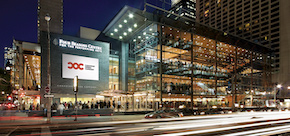
Pretty major announcements from both the COC and the TSO recently; the COC’s reinforced with an on-line Q&A with Alexander Neef last night. The substance of the COC announcement is that the fall season (Parsifal and Marriage of Figaro) is cancelled along with all other in-person performances for the rest of 2020. Parsifal has been rescheduled for the fall season 2022. At this point the rest of the 2020/21 season is still on. Officially at least. However Alexander made it pretty clear that the Four Seasons Centre won’t be reopened until they can sell at least the bulk of the seats which would mean the end of social distancing. I don’t see that happening until a Covid-19 vaccine is generally available and can’t imagine that being soon enough to save the winter season and maybe not the spring season either. Meanwhile the COC is looking at its virtual options.
Spare and compelling Tristan
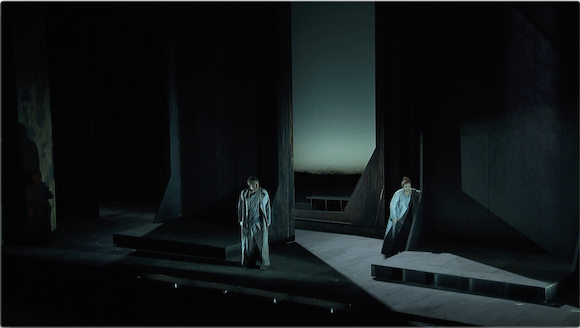
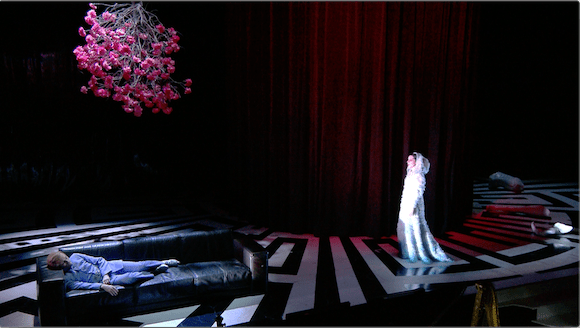
I’m rarely disappointed by a Pierre Audi production and his Tristan und Isolde for Teatro dell’opera di Roma, recorded in 2016, was far from that. It’s a bit of a slow burn but then so, really, is the work itself. It’s starkly simple. The sets contain few elements and no fuss. Costuming is almost drab but the direction of the singers is compelling and it builds to a brilliant staging of the Liebestod with Isolde silhouetted, motionless in a kind of frame and absolutely nothing happening which, paradoxically, is riveting.

Cantilena
Cantilena is a CD of art songs by various composers arranged for soprano, harp and cello. It’s an interesting twist on music that one is likely to be fairly (sometimes very) familiar with in the usual voice and piano format. It’s a generous disk with nineteen songs in all. The composers featured are Debussy, Duparc, Fauré, Massenet, Tosti, Tedeschi, Richard Strauss, Gregory and Villa-Lobos. The performers are soprano Gillian Zammit, harpist Britt Arend and cellist Frank Camilleri. Arend and Camilleri are principals with the Malta Philharmonic Orchestra.
Doras 2020
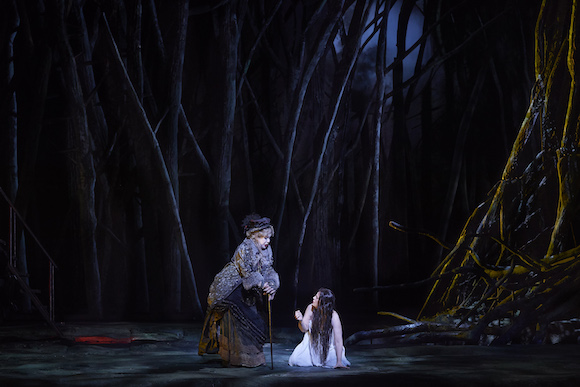
The Dora winners were announced last night. I don’t think there were any big surprises in the opera category. The COC’s Rusalka scooped most awards with four including Outstanding Production. The other three were Outstanding Direction (David McVicar), Outstanding Musical Direction (Johannes Debus) and Outstanding Achievement in Design (Lighting) (David Finn). It was probably the best thing overall the COC has done in a long time so not shocked.

Yvette Nolan and Dean Burry won the Outstanding New Opera category for Shanawdithit. I’m delighted about this one as I had rather more personal emotional investment in this project than most things I see and it was an important project in so many ways. Marnie Breckenridge received the Dora for Outstanding Performance by an Individual for her performance in Jacqueline. Also well deserved and a wee but surprising as there was every reason to give this one to Sondra Radvanovsky and usually that kind of name recognition wins out. In any event two big wins for Tapestry (and a nod to Opera on the Avalon for being a smaller regional company prepared to invest in something relevant).

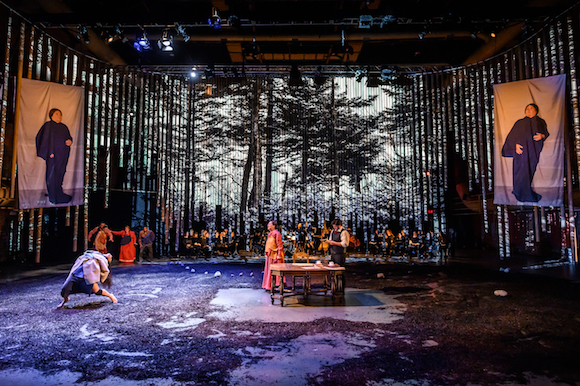
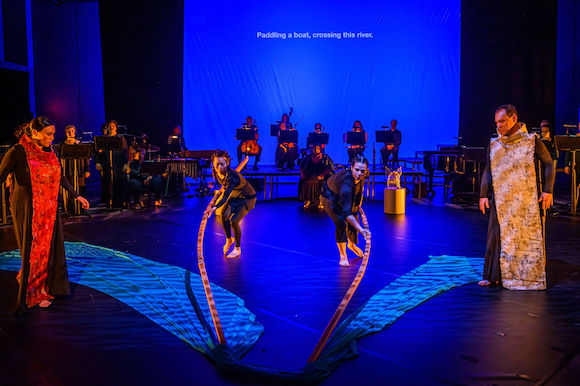
Finally, Soundstreams presentation of Two Odysseys: Pimooteewin / Gállábártnit won Outstanding Performance by an Ensemble. In this case Nicole Joy-Fraser, Karen
Weigold, Vania Chan, Deantha Edmunds, Jennifer Taverner, Rebecca Cuddy, Bó Bárdos, Michelle Lafferty, Jonathan MacArthur, Mitchell Pady, Evan Korbut, Bryan Martin and Neil Aronof. This was another fascinating show that deserved some recognition.

So, yes, the eight hundred pound gorilla came out on top but hardly by a knock out.
Grim, dark Hoffmann
One of the interesting things about Offenbach’s Tales of Hoffmann is that there is no definitive edition so creative teams have a lot of flexibility in how they cut and combine material. Director Tobias Kratzer and conductor Carlo Rizzi created a really interesting take for their production at Dutch National Opera in 2018. It’s a very modern, very dark interpretation that while it keeps Offenbach’s music (though not interpolations like Scintille diamante) and the words are all from (some version of) the libretto the storyline varies a lot from what we are used to while keeping intact the central psychological fact that Hoffmann is incapable of relating to real women.

Let’s Stay Together
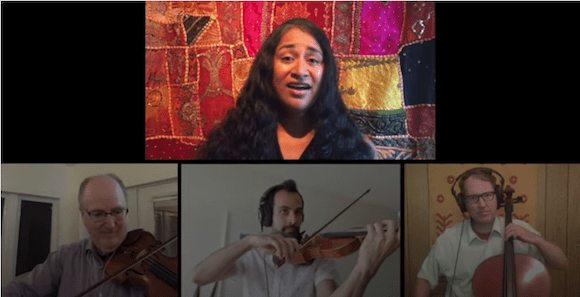
Last night’s virtual salon by Confluence; Let’s Stay Together, featured an extremely, if unsurprisingly, eclectic selection of music and poetry and some serious techno-wizardry. Two numbers featuring Suba Shankaran and her technical whizz husband Dylan Bell exemplified the techy side. Come Together was an overdubbed. live looped, east meets west version of the Lennon and McCartney number in which the pair built up layers of sound incrementally. Meditation Round, which rounded out the evening, was a moving new work by Suba dealing with how we need to move forward, not back, as life, perhaps, returns to some sort of normality. There was an almost 16th century quality to the music and the performance in which pretty much everyone took part remotely. Brilliant mixing and post production here backing up an extremely affecting work.

Things virtual coming up
June 24th sees the return, virtually, of Larry Beckwith’s Confluence Concerts. Let’s Stay Together: A Confluence Salon will air on the Confluence Youtube Channel at 7pm EST with a pre-show Q&A at 6.30pm. Larry Beckwith, Dylan Bell, Andrew Downing, Gordon Gerrard, Robert Kortgaard, Marion Newman, Patricia O’Callaghan, Suba Sankaran and Bijan Sepanji will perform music by Randy Newman, Ernest Chausson, Edith Piaf, Béla Bartok, Peter Maxwell Davies, Gustav Mahler, Leonard Cohen, Suba Sankaran, The Beatles, Charlie Chaplin and others. In addition, the renowned Canadian author André Alexis will read poems by Anna Akhmatova, Roo Borson and one of his own, Johnson Grass, from his 2019 novel Days by Moonlight. I’m excited. Since the series started Confluence has been one of the most interesting and fun gigs in town. Free!

La morte d’Orfeo
Stefano Landi’s La morte d’Orfeo of 1619 is interesting for several reasons. It’s one of relatively few operas from this early in the history of the art form that we have enough information on to perform. It was also written in and for Rome so it reflects the clerical influences of that environment rather than the more secular Venice of Monteverdi. It’s also an unusual take on the Orfeo legend. It takes off from where Monteverdi and many others leave off. Euridice is dead, for good this time, and the opera deals with the balance of Orfeo’s life. Briefly, he is heartbroken and renounces Pleasure; including wine and women. He compounds this by not inviting Bacco to a birthday celebration attended by most of the other gods. Bacco and his female followers are not pleased. Orfeo is torn to pieces by the Maenads. Orfeo is quite OK with this because now he will be united with Euridice but Charon refuses to take him; a demi-god, across the Styx. Mercury fetches Euridice from the Elysian Fields but she has drunk from Lethe and doesn’t recognise him. She’s quite clear that she wants nothing to do with this so-called Orfeo. Giove makes it up to Orfeo (who also drinks the water of Lethe and forgets Euridice) by making him into a constellation and all the gods rejoice. (for consistency’s sake I’ve used the Italianised versions of the Roman versions of the various Greek characters in the same way as the libretto).

“Live” from Covent Garden
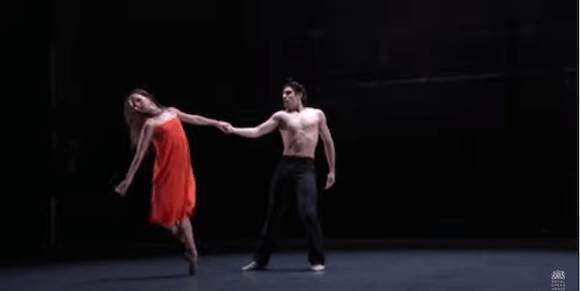
If you didn’t catch it live last night there’s a really lovely concert up on the Royal Opera House Youtube channel which should be available for a couple of weeks. Tony Pappano is at the piano with Louise Alder singing Britten, Strauss and Handel, Toby Spence with some Butterworth plus Gerald Finley with Finzi, Turnage and Britten. The boys finish off with the Pearl Fishers duet. Along the way, Morgen is sung by Louise and danced quite beautifully to choreography by Wayne McGregor by Francesca Hayward and Cesar Corrales. It’s weird, and even eerie, to see a concert from a large empty theatre but there we are. Highly recommended.

Sephardic Treasures
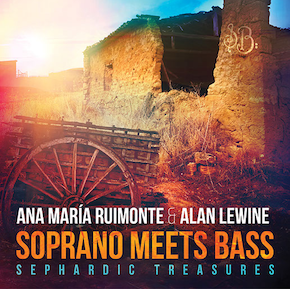
Sephardic Treasures is a collection of traditional Sephardic songs in less traditional arrangements. The texts (Ladino and Spanish) and melodies are original and drawn from a collection of songs thought to originate in the 12th to 15th centuries. The arrangements, by bassist Alan Lewine, draw on jazz, flamenco and Israeli folk music incorporating instruments like bass, trumpet, flamenco guitar, piano, flute, shofar and percussion to create quite a range of styles that fit the texts well. All of this is grounded in the stylish and idiomatic singing of soprano Ana Maria Ruimonte. It’s fun listening. Some of the songs have that twisted, even gruesome, quality of a lot of medieval songs; husbands who have their wives executed, wives who feed their step children to their husbands etc, but others are very light hearted, like the one about the cat who is so surprised by a proposal of marriage that he falls off the roof and is killed but when they try to bury him in a sardine box the smell revives him!