My review of the COC’s revival of Mozart’s Le nozze di Figaro is now up at Bachtrack.

A scene from the Canadian Opera Company’s production of The Marriage of Figaro, 2023. Photo: Michael Cooper


My review of the COC’s revival of Mozart’s Le nozze di Figaro is now up at Bachtrack.
A scene from the Canadian Opera Company’s production of The Marriage of Figaro, 2023. Photo: Michael Cooper
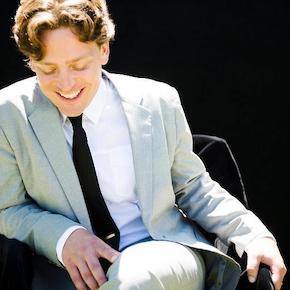 The 21C Afterhours concert in Temerty Theatre last night featured a candle lit performance by a varied ensemble of conservatory students conducted by Brian Current. Brian did a great job of introducing the music; contextualizing it and suggesting what the audience might listen for. That could maybe be done more often with complex contemporary music.
The first piece was Bekah Simms’ Foreverdark. It’s a ten minute concertino for amplified cello, ensemble and electronics playing homage to heavy metal. It’s scored for a quite a large group including strings, brass, woodwinds and lots of percussion including a drum kit. It starts out very abrasively then becomes somewhat more lyrical and the then the texture lightens up but it’s still pretty complex. David Liam Roberts was the soloist and did an excellent job.
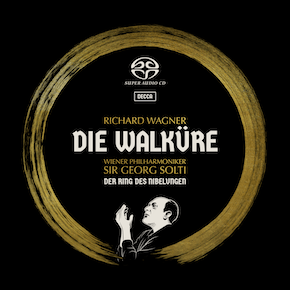 I have now had a chance to listen to the new SACD release of the 1965 Solti recording of Wagner’s Die Walküre. (For some reason Das Rheingold hasn’t arrived yet). I’m not going to do a detailed review of the performance since pretty much everything that could be said about it has been, and by people better qualified than me. As you might expect for a recording twice voted “recording of the century”. I’ve also already written about the technical details of the new transfer in my review of the sampler disk.
I went to the Toronto release concert for Payadora Tango Ensemble’s Silent Tears: The Last Yiddish Tango last night at Heliconian Hall. Nearly all the music played was on the CD which I described in some detail here. There were a few “extras”. There was a song from Lenka Lichtenberg’s new Album Thieves of Dreams. There was also an upbeat Argentinian tango to finish which I was rather in need of.
It being Holocaust Remembrance Week it was entirely appropriate that Tuesday’s lunchtime concert in the RBA was given by the Likht Ensemble of Jaclyn Grossman, soprano, and Nate Ben-Horin, piano. The material was mostly drawn from music written/collected at either Theresienstadt or in the ghettos of Lithuania.
 Here’s what I’m looking forward to in February plus a few gigs I can’t make:
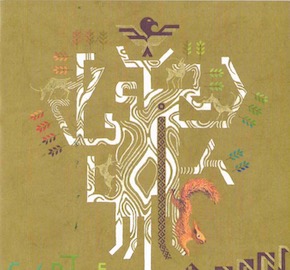 Yggdrasil is a new record by the Norwegian women’s choir Cantus conducted by Tove Ramlo-Ystad. There are eleven works on the record by various composers and all inspired, more or less loosely. by the idea of the World Ash Tree of Norse legend. Sometimes they are a fairly literal telling of some episode from myth, other times they explore broader ideas around a tree that lasts for a long time, but not for ever, and contains within it its own destruction and the seed of its rebirth. So, themes of humanity and Earth’s place in the Cosmos, the destructiveness of war, greed and climate change all have their place.
The 21C Festival gave us new works by Ian Cusson and Stewart Goodyear yesterday afternoon. The first half of the programme was three works by Ian Cusson inspired by paintings by Hieronymus Bosch. The first was The Garden of Earthly Delights scored for piano and violin and played by Duo Concertante (Timothy Steeves and Nancy Dahn). Slow melodic, evocative sections are interspersed with livelier, somewhat ecstatic, sections using the upper ranges of the violin extensively. I think it effectively catches the various moods of Bosch’s complex triptych.
 Saturday evening’s Cinq à Sept
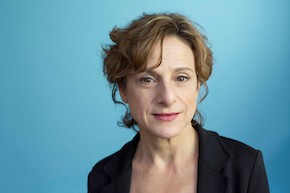 concert in the 21C Festival at the Royal Conservatory was intriguing. The first half of the programme was a new song cycle, After the Fires, with words by Liza Balkan and music by Lembit Beecher. It set seven pieces about the 2020 fires on the central California coast and their aftermath based on interviews with local residents. It’s a really interesting piece scored for piano, clarinet, soprano, mezzo-soprano and baritone. It’s very “text first”. Although the accompaniment is often intricate it never overpowers the words and there’s a real harmony between words and music. The mood varies but, given it’s about really awful events, it’s more elegiac and lyrical and even funny than angry or sad. It got a fine, nuanced performance from Henry From (piano), Zachary Gassenheimer (clarinet), Xin Wang (soprano), Andrea Ludwig (mezzo-soprano) and Korin Thomas-Smith (baritone). Continue reading
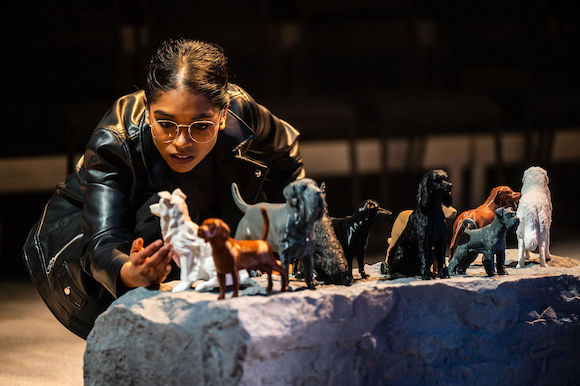
I saw Marie Farsi’s adaptation for the stage of André Alexis novel Fifteen Dogs at Crow’s Theatre last night. I read the book back in the fall and was impressed. It’s a clever, witty, perceptive novel and I was very curious as to how it would translate to the stage; especial since most of the characters are dogs. Bottom line, it works wonderfully well.


 operaramblings