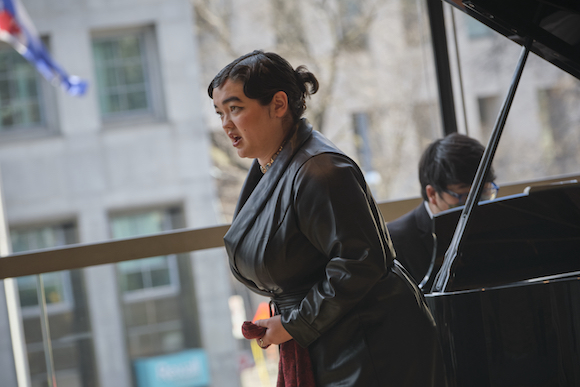
Thursday’s concert in the Music in the Afternoon series at Walter Hall was curated by Canadian-Icelandic composer Fjóla Evans and had a distinctly Icelandic flavour (fortunately not fermented shark flavour).


Thursday’s concert in the Music in the Afternoon series at Walter Hall was curated by Canadian-Icelandic composer Fjóla Evans and had a distinctly Icelandic flavour (fortunately not fermented shark flavour).
What do we mean by “forgiveness” or “redemption”? Prodigal, written and directed by Paolo Santalucia currently being presented by the Howland Company at Crow’s Theatre asks us to consider just that. It’s a curiously structured play. On one level it’s a black comedy about a seriously dysfunctional elite family but there’s an intro to each act in which a preacher exegises on the Parable of the Prodigal Son and the Parable of the Lost Sheep. We are invited to compare the characters we are about to see with the dramatic personae of Christ’s teaching. But are they really comparable?”

It’s that time of year when departing members of the COC Ensemble Studio give their farewell recitals in the RBA. On Tuesday it was the turn of Midori Marsh and Alex Halliday and they did it in style. The programme was interesting and the music making excellent. Although they alternated sets it’s probably easy to deal with each singer in turn.
 Things are a bit sub fusc at the COC these days. The season reveal isn’t a glitzy gala with a big fight to grab the charcuterie. It isn’t even a 10am doughnuts and coffee presser in the RBA where the ghost of Robert Everett-Green could ask what happened to the promised new Canadian operas . It’s just an email arriving at the prescribed time. There isn’t even an embargoed press only version to let us get our ducks in a row before the broader public get the news. Such is life.
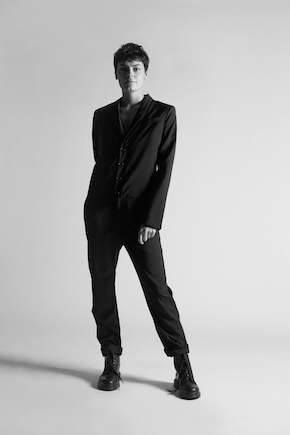 There was never a chance that Emily D’Angelo’s solo recital at Koerner Hall was going to be a steady procession of German lieder and French chansons with the odd Broadway number thrown in and it wasn’t. It was what D’Angelo fans would expect and (some of us at least) crave; lots of women composers and lots of contemporary music. There were five sets.
The first linked Hildegard von Bingen, Arnold Schoenberg and Missy Mazzoli. I’m going to focus on the Mazzoli. There was “Hello Lord” from Vespers for a New Dark Age and “You Are the Dust” from Songs from the Uproar. Both of these are stage works scored for chamber ensemble and electronics so they sound very different in piano score. Emily sang the with great purity and clarity and Sophia accompanied beautifully though there’s just no way one can capture the synth pop inflections of Mazzoli on piano. That said, it was a great advert for two works a I really admire. Continue reading
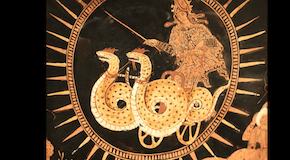 Cherubini’s Médée is a French opéra comique (i.e. with spoken dialogue) which premiered in March 1797. It’s based on Euripides by way of Corneille whose Médée of 1635 was written, as one might expect, in alexandrines. So its roots, and the work itself, are very much in the French classical tradition. The complication is that the work is much better known in its Italian version with sung recitatives (not authorised by Cherubini) and has developed as a “show off” vehicle for star sopranos; notably Maria Callas and, more recently, Sondra Radvanovsky. Along the way it’s lost a lot of its classicism and become almost verismo like. So I was intrigued to see how much Guillermo Silva-Marin, in presenting the work “in concert” at the St. Lawrence Centre, would try, and how much he would succeed, in reclaiming the Cherubini of a Paris tipping from revolution to Bonaparte.
 To 918 Bathurst last night to hear the Happenstancers’ latest offering Hypersuite. The concept was to take movements from Bach suites and partitas for solo instrument and combine them into sets with (mostly) contemporary music of like form. The one exception was some Telemann but we’ll come to that.
So the first set consisted of cellist Sarah Gans playing Ana Sokolovic’s vez before a brief segue brought in Katya Poplanskaya on violin for the adagio from Bach’s Violin Sonata BWV 1005. It’s really interesting as, although the Sokolovic piece uses a fair amount of extended technique there’s a definite sense that they belong to the same soundworld. Both are spare and spiky and eschew anything that might conventionally be called melody.
 The second set had a lot in common with it. Brad Cherwin on clarinet played Augusta R. Thomas’ d(i)agon(als) followed by the sarabande from Bach’s Partita BWV 1013 (usually played on flute). This segued into Telemann’s fantasie 8 played on English horn by Aleh Remezau. Completely different from the first set; more melodic and dance like, these three pieces also had much in common.
The second half kicked off with The allemande from BWV 1013 on clarinet, followed by Sokolovic’s cinq danze, II on violin and the gigue from from BWV 1008 on cello. Here there is more contrast with the Sokolovic exploring a more complex sound world though still with clear affinities to the Bach. This was followed by Elliott Carter’s a 6 letter letter on English horn. It’s a quite long and complex piece which clearly places serious physical demands on the player. Continue reading
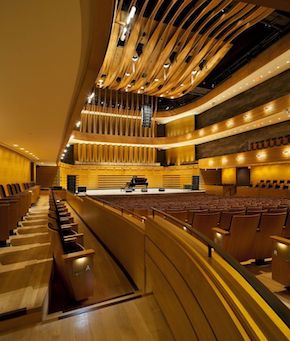 It’s the time of year when people start to make season announcements. First out of the blocks is the Royal Conservatory of Music with the Koerner hall line up. It’s more a teaser than a comprehensive announcement but there’s some interesting dope in it. On the vocal front Peter Sellars is back with the LA Master Chorale; this time with music by Heinrich Schütz. That’s on February 7th 2024. There’s also a recital by Ema Nikolovska with Charles Richard-Hamelin on March 24th 2024. If you haven’t erased all memories of the pandemic you will probably remember that Ema’s streamed recital with Steven Philcox was the highlight of the grim summer of 2020. The Glenn Gould spring opera will be on 2oth and 22nd March 2024. There are also some pretty classy orchestral visits with Daniel Barenboim conducting the Staatskapelle Berlin and Yannick Nézet-Seguin bringing the Philadelphia Orchestra. Full details of the season will be released in June but tickets go on sale next Tuesday. There’s more information on programming and ticket options here.
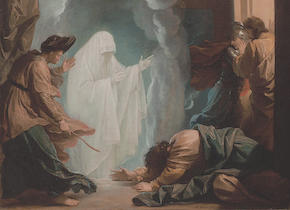 So the COC will announce the upcoming season on the 23rd. I’m really hesitant to try and predict what might be in it because with the change of management and the COVID hangover old patterns don’t seem to mean much anymore. But here goes anyway.
Last year they did one new production and five revivals. I can’t see them doing that again. But then, finances being what they are I’d be surprised if they did more than two new shows. There’s a hot rumour that one of those will be Janáček’s The Cunning Little Vixen. It makes sense if it’s true. It hasn’t been done by the COC since 1998, it’s a relatively easy sell and there are a bunch of recent productions out there for the COC to choose from thus avoiding creating one from scratch.
 Here are a few more gigs that I didn’t check in my earlier February post.
This Saturday (18th) at 7.30pm at 918 Bathurst the Happenstancers have a concert. It’s called Hypersuite and it will consist of movements from Bach works for solo instrument interspersed with contemporary works in like vein. Composers to be featured include Ana Sokolovic, Augusta Read Thomas and Elliot Carter. More info and tickets here.
 operaramblings