Shout out to Washington

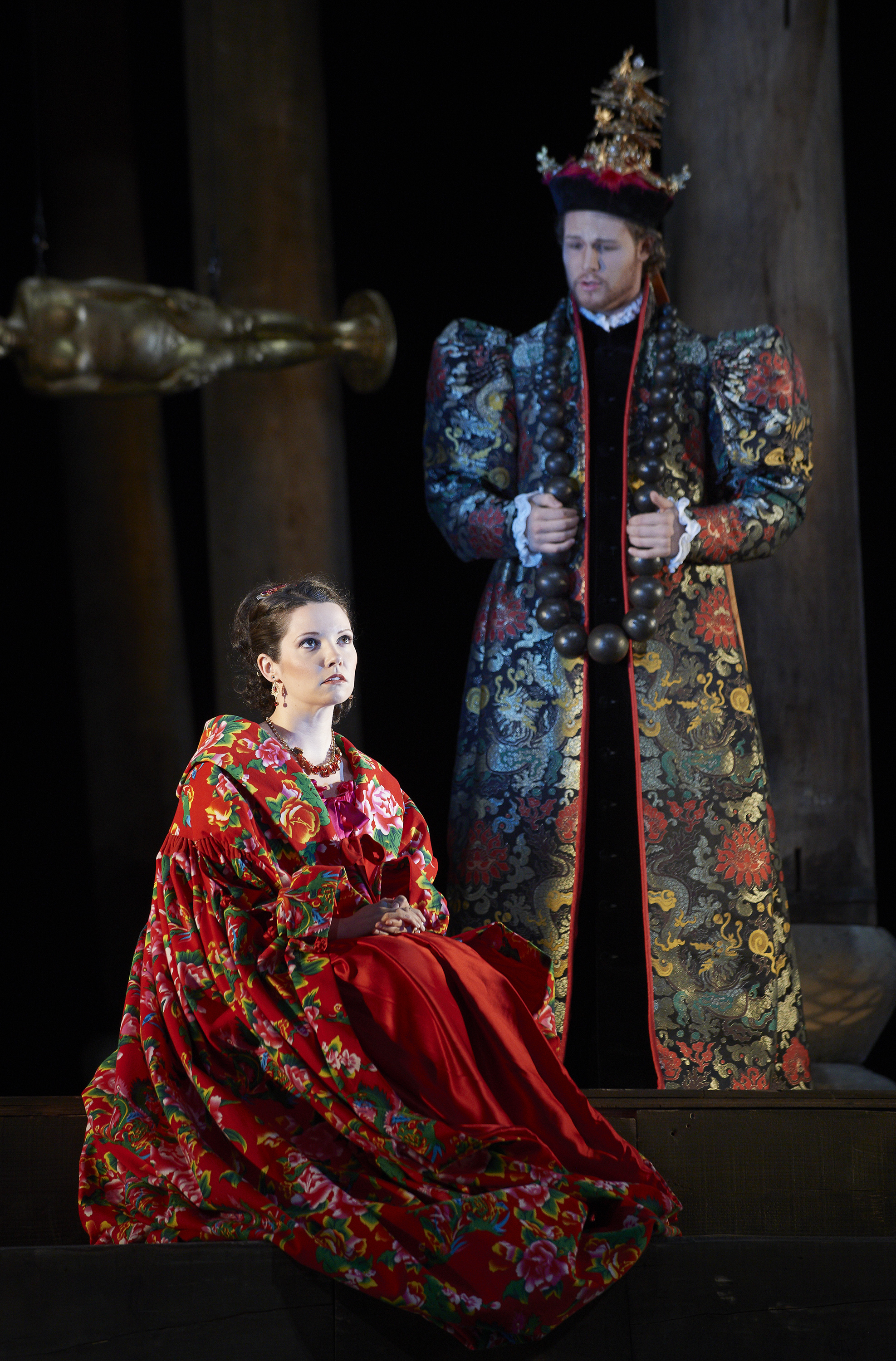
Rihab Chaieb and Mireille Asselin

Rihab Chaieb and Mireille Asselin

In February I attended a brilliant lunchtime concert of vocal music by Kaija Saariaho sung by three singers from the COC Ensemble Studio.  I wasn’t the only one who was impressed.  The composer was so taken with the standard of performance that she has arranged for them to perform a slightly different selection of her works in Washington DC in February.

If you aren’t from Toronto or Montreal (or perhaps Paris, Lyon, Dublin or Belgrade) you probably haven’t heard much about Mireille Asselin, Rihab Chaieb or Jacqueline Woodley (except maybe on this blog) but you will!  Strongly recommended both for the music and the singers.

Against the Grain Theatre’s season announcement

The following just in from arguably Toronto’s most exciting opera company; Against the Grain Theatre.  So a party, György Kurtág’s Kafka Fragments and Leoš Janáček’s The Diary of One Who Disappeared (with the brilliant Jacquie Woodley) and Figaro’s Wedding; a Toronto centred reworking of the Mozart classic with an orchestra for the first time.  Following on from successes like their Tranzac based La Bohème and a brillian The Turn of the Screw, this looks very exciting.

Full details, links for tickets etc, below the fold.

Continue reading

An engaging Semele from the COC’s Ensemble Studio

Mireille Asselin and Phillipe Sly

Last night saw the annual main stage performance by the COC’s young artist programme, the Ensemble Studio.  This year it was Handel’s Semele in the production which I saw a couple of weeks ago.  The main roles were cast from the Ensemble Studio with the the exception of the countertenor role of Athamas which was played by Ryan Belongie, an Adler Fellow.  The title role was split with Mireille Asselin singing the first two acts and Ambur Braid coming in for the third act.  This seemed like a sensible solution given the size of the role and the two singers’ strengths. Continue reading

Adieu to Jacqueline

At lunchtime today, in the Richard Bradshaw Amphitheatre, Jacqueline Woodley gave her final recital as a member of the COC Studio Ensemble. In the two years she has been in the programme Jacqueline has given me maybe more pleasure than any other Ensemble Studio singer (stop sniggering at the back). What’s become clear in that time is that she’s an exceptional talent when it comes to interpreting difficult modern and contemporary music. Realistically I doubt we’ll see her sing Verdi at La Scala but few people who do that could do what Jacquie does with works by composers like Golijov, Saariaho and Sokolovic.  Perhaps no surprise then that she chose a recital programme that was 100% art song. Continue reading

Spring in Toronto

It’s Spring in Toronto. The Canadian Opera Company has three productions in rehearsal and load ins and set building have started once more at the Four Seasons Centre. Here’s my take on what’s coming up.

Offenbach – Tales of Hoffmann April 10th to May 14th

Photo Credit: Kurt Van der Elst © 2000

This is a house debut for British director Lee Blakeley who brings his production previously seen at Vlaamse Opera.  The production looks on the face of it fairly conventional but word from the rehearsal studio is that it’s fairly “out there”.  The casting is a typical mix of “A list” talent, local favourites and Ensemble Studio members.  Probably the biggest draw is local boy John Relyea who is playing the four villains.  American tenor Russell Thomas sings the title role.  The four main female roles will be sung by Andriana Chuchman, Erin Wall, Keri Alkema and Lauren Segal; all familiar faces to Toronto audiences.  Johannes Debus conducts. More information.

Continue reading

Collaborations

Each year the Studio Ensemble at the Canadian Opera Company does an exchange with its counterpart the Atelier Lyrique de’l’Opéra de Montréal. Part of this collaboration is a free concert in the Richard Bradshaw Amphitheatre featuring singers from both companies. Last year I found it quite hard to write about as, frankly, Montreal didn’t bring much to the party. This year, happily, was different.

Philip Kalmanovitch

Two of the Montreal singers really impressed me this time. Philip Kalmanovitch is a tall, slim baritone with an engaging stage manner and a very nice voice indeed. He kicked off the programme with the Largo al factotum from Rossini’s Il barbiere di Siviglia. I would not have thought it possible to overact this piece but Kalmanovitch came close! It was very characterful, well sung and he communicated that he was having fun very effectively. We also got a characterful Là ci darem la mano from Don Giovanni sung with Jacqueline Woodley. Their voices blended very well and the acting was good too. His final piece was the much more romantic Mein Sehnen, mein Wähnen from Korngold’s Die tote Stadt. He didn’t seem quite as at home in this repertoire and he could use some work on shaping his lines but, again, he sang with beautiful tone and the closing pianissimo was very well done.

Emma Parkinson

I was just as impressed by mezzo-soprano Emma Parkinson. She has a lovely smoky voice of some power. In her first number, Come ti piace, imponi from La clemenza di Tito she was singing with the Studio Ensemble’s biggest voice, soprano Ileana Montalbetti. I was worried going in that she’d be blown away (probably literally) but it wasn’t so. They actually worked very well together. Emma and Ileana collaborated again with the addition of baritone Philippe Sly in Soave sia il vento from Cosi fan tutte. This wasn’t so successful. Even when she’s throttling back, Ileana has a distinct ‘slice’ which doesn’t really suit a Mozart number like this and the voices didn’t really blend. I really want to hear what she can do with an orchestra in a genuine spinto role. Also, Philippe sang well enough but it’s going to be a long, long time before he sings Don Alfonso.  Getting back to Emma, she also sang a spirited Parto, parto, agian from La Clemenza di Tito. This was the real deal and raised hairs on the back of my neck. There was power, passion and variation of tone colour. Her coloratura was a bit ragged in places but that will come. Ms. Parkinson is one to watch.

Aidan Ferguson

The Montreal contingent was rounded out by mezzo Aidan Ferguson and tenor Isaiah Bell. Ferguson sang Va! laisse couler mes larmes from Massenet’s Werther, Sein wir wieder gut from Strauss’Ariadne auf Naxos and collaborated with Mireille Asselin in the Presentation of the Rose from Der Rosenkavalier. She and Jacqueline Woodley also sang a very musical version of Belle nuit, ȏ nuit d’amour from Offenbach’s Les contes d’Hoffmann. Ferguson is musical, she’s got plenty of power and was markedly better in the Strauss and Offenbach pieces than in the Massenet where she was a bit wobbly. She just doesn’t sound like a mezzo to me. The voice is very bright and open and I wonder whether she won’t end up as a dramatic soprano.


Bell seems very young. He started out with a very diffident Unis dès la plus tendre l’enfance from Gluck’s Iphigénie en Tauride. He sounded a bit underpowered and undercharacterised. He was better in the duet My Tale Shall be Told from Stravinsky’s The Rake’s Progress (sung with Philippe Sly as a characterful Nick Shadow) where he showed he could convey some real feeling. He finished up with Si, ritrovaria io giuro from Rossini’s La Cenerentola. This really needed more power. he has the notes but he doesn’t have the exciting, ringing top end needed to bring a piece like this to life. He is very young though and with a bit more power and confidence could be quite promising.

The Toronto singers were really in back up roles in this gig but they all performed very well. Mireille Asselin showed she has the classic qualities of a young lyric soprano in her cameo as Sophie and Jacqueline Woodley was excellent in the Offenbach though to be honest I’d much rather hear her singing Weir, Golijov or Saariaho where she truly excels.  Philippe and Ileana I’ve already mentioned.   Accompaniment on the piano was by the Studio Ensemble’s Jenna Douglas and Timothy Cheung who were, as ever, just excellent.

All in all, a very worthwhile effort all round.

Another lunchtime with Kaija Saariaho

Kaija Saariaho

Today’s concert in the RBA consisted of more works by Saariaho performed by members of the COC orchestra and the Studio Ensemble. Both the the composer and General Director, Alexander Neef, were there. The four works performed were most definitely not “easy listening”. To me they seemed firmly in the tradition of modern continental European composition in the same sort of mould as Henze or Berio. The pieces were all very dense with complex tonality and dissonance and placing great demands on the performers.


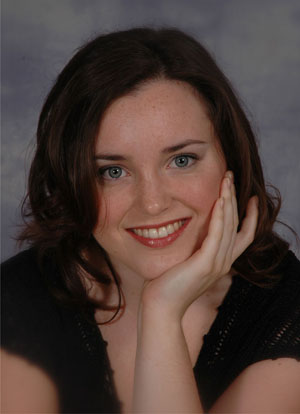
Jacqueline Woodley - Photo by Helen Tansey

First up was Changing Light described by the composer as a dialogue between soprano and violin. It’s a setting of a text by Rabbi Jules Harlow and was commissioned in the wake of 9/11. It may be a dialogue but the instrument doesn’t support the singer in any way. The violin is in a world of comples slides while the singer has some very tough intervals and the sustained, loud, high notes that characterize much of Saariaho’s vocal writing. That said in some ways this was the most conventional and accessible piece on the program. The performance by soprano Jacqueline Woodley and violinist Marie Bérard was first rate.

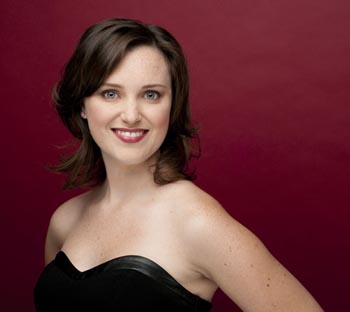
Mireille Asselin

Next came Mirage. This a setting for soprano, piano and cello of an English translation of a text from Mazatec healer and shaman Maria Sabina. It’s a rewriting of a piece originally written for soprano, cello and orchestra. The composer described this version as “more intimate”. It’s an uncompromising piece. Much of the piano part is played directly on the strings (rather than the keys) and the keyboard part is furiously virtuosic. The cello part is no easier with complex slides and atonality. The writing for soprano demands some characteristically difficult singing with something akin to Sprechstimme and some phrases that are whispered into the piano, using the piano as a reflector/amplifier. It’s quite a compelling piece. Again the performance was excellent. Jenna Douglas was on piano with Olga Laktionova on cello and Mireille Asselin singing.

The third piece seemed to me even more demanding. Lonh is a longish setting for soprano with electronic tape of fragments of medieval Occitan poetry by Jaufré Rudel. It requires an array of vocal techniques; singing, semi-singing, modulated speech, whispers, the works really. It’s quite haunting and the electronic tape which combines nature noises, bird sounds and fragments of spoken Occitan is very atmospheric. This was another fine performance by Jacqueline Woodley. We were told that this was composed as a “study” during the process of conceiving L’Amour du Loin so I guess it serves as an introduction to that sound universe.

Rihab Chaieb

The final piece was an early work for mezzo and soprano; From the Grammar of Dreams to texts by Sylvia Plath. It was described as “tenser” by the composer and to my ear sounded most influenced by the fashionable idiom of the 1960s and 1970s. It uses just about every vocal technique in the book and interweaves fragments of two different Plath poems; Paralytic and The Bell Jar. The composer tells us that dreams are “non linear” and that’s certainly reflected in the piece. Rihab Chaieb and Mireille Asselin were the singers and I thought their voices blended really well. The mix of Mireille’s very bright soprano with Rihab’s much darker tone was very pleasing.

I was really impressed with everyone on show today. It’s hard to express in words just how difficult this music is to perform. Here we had young singers and, I think, equally young instrumentalists putting on a truly impressive show. In particular, I was intrigued to see how much Mireille has come on. I first heard her sing a couple of Servilia’s arias from La Clemenza di Tito and my impression was of a perfectly competent light lyric soprano but nothing special. The last couple of times I have heard her she seems to have grown quite a bit musically and her performances today were top notch.

COC Ensemble Studio – Works by female composers

It feels good to be back listening to live music after a bit of a drought. Today I was at a lunchtime recital in the Richard Bradshaw Amphitheatre given by members of the Canadian Opera Company Studio Ensemble. It was very good indeed. I want to start with the undoubted highlight; Jacqueline Woodley‘s performance of Judith Weir’s piece for unaccompanied soprano, King Harald’s Saga. It’s a complex, fascinating and very difficult piece requiring the singer to switch between voices and to pull off a range of singing styles. Woodley was awesome. I’ve heard her now in quite a few contemporary pieces, though perhaps none as hard as this, and she has always impressed.

Almost as impressive was Ileana Montalbetti’s performance of Libby Larsen’s Donal Oge. It’s a work that requires considerable power from the singer and Ileana, unsurprisingly delivered. She’s got a big voice and she knows how to use it. Neil Craighead gave us two songs by Cecile Chaminade. He sounds a good deal more powerful than last time I heard him. He has a lovely tone and now the power too. He hasn’t quite got the knack of throttling it back yet but that will come I expect. We also got some fiendishly difficult Alma Mahler songs which clearly taxed tenor Chris Enns. They would have taxed anyone I think. Mireille Asselin gave a pleasing unaccompanied performance of a piece from Hildegard von Bingen and the programme was rounded out by two duets by Fanny Hensel sung by Asselin and Craighead and Montalbetti and Enns.

The pianists were the excellent Jenna Douglas and the even more impressive Timothy Cheung. All in all, this was as good a concert as I have heard in the COC’s free lunchtime series.

Svadba-Wedding revisited

Back in June I attended and wrote up the world premiere of Ana Sokolovic’s Svadba-Wedding. Today it was given again in a concert performance by the original cast in the Richard Bradshaw Amphitheatre at the Four Seasons Centre. I’m not going to repeat what I said in the earlier review but focus on my reactions to seeing it again. First off, it works very well as a concert piece losing less than a more obviously narrative work might. Second, I was struck by the interesting way the piece weaves two very different musical strands together; the high tempo, almost percussive, onomatopoeic elements as referred to before but also a more lyrical element where a long, slow, folk derived line is introduced and then a second and maybe a third or even a fourth melody are woven in to create a rather dense harmonic texture. This second element is particularly apparent in the final number “Farewell”. The contrast is very effective. Finally, Jacqueline Woodley sounded even more like a young Dawn Upshaw. Her ability to sing powerfully with next to no vibrato is very compelling in this sort of music. [Image by John Lauener is from the staged production at Berkeley Street and was lifted from today’s performance flyer]

Svadba-Wedding

Last night was the world premiere of Montreal composer Ana Sokolovic’s Svadba-Wedding performed by Queen of Puddings Music Theatre at the Berkeley Street Theatre. The 400 or so seat theatre was packed and I had the splendid company of lemurcatta and sabotabby.

Svadba is an interesting work. I guess one can call it an opera. It lasts about an hour and is sung a cappella in Serbian by six singers. The seven scenes take place the night before Milica’s wedding as her best friends prepare her. There isn’t really a linear narrative but the scenes do unfold with a certain coherence. Similarly, although all the characters are named, only the bride to be Milica has any definable identity. The other five sing mostly ensemble and to someone who hasn’t seen the score seem essentially interchangeable.

The music draws on Serbian folk motifs but also has a lot of play with pure sound elements. That much it had in common with the other Sokolovic piece I’ve seen which was a short opera about mobile telephones. It’s not the sort of music one comes away humming but it is quite accessible and very interesting

The production, by Dairine Ni Mheadhra and John Hess, was quite spare but effective. Fabric drapes at the back of the stage are lit for various effects, a flexible piece of mirror serves multiple roles , most notably as Milica’s bath, and long strios of translucent material unroll to represent water. On occasion some Klieg lights make an onstage appearance and there is a ladder that serves as a sort of throne for Milica in the final scene. It’s all quite unfussy and interesting.

The highlight of the show though is the performers themselves. We got to see and hear six of Toronto’s best young singers and they were excellent. Jacqueline Woodley sang Milica and was wonderful. She seems to improve every time I hear her sing. The “friends” consisted of sopranos Laura Albino (last seen as Mimi at the Tranzac), Carla Huhtanen and Shannon Mercer with mezzos Andrea Ludwig and Krisztina Szabo. The nature of the piece makes it impossible to single out individual performances. What we got was crisp, rapid fire ensemble work covering some pretty challenging material nicely held together by Dairine Ni Mheadhra who conducted.

All in all, it’s a really good piece beautifully performed. It runs until July 2 and there five more performances.