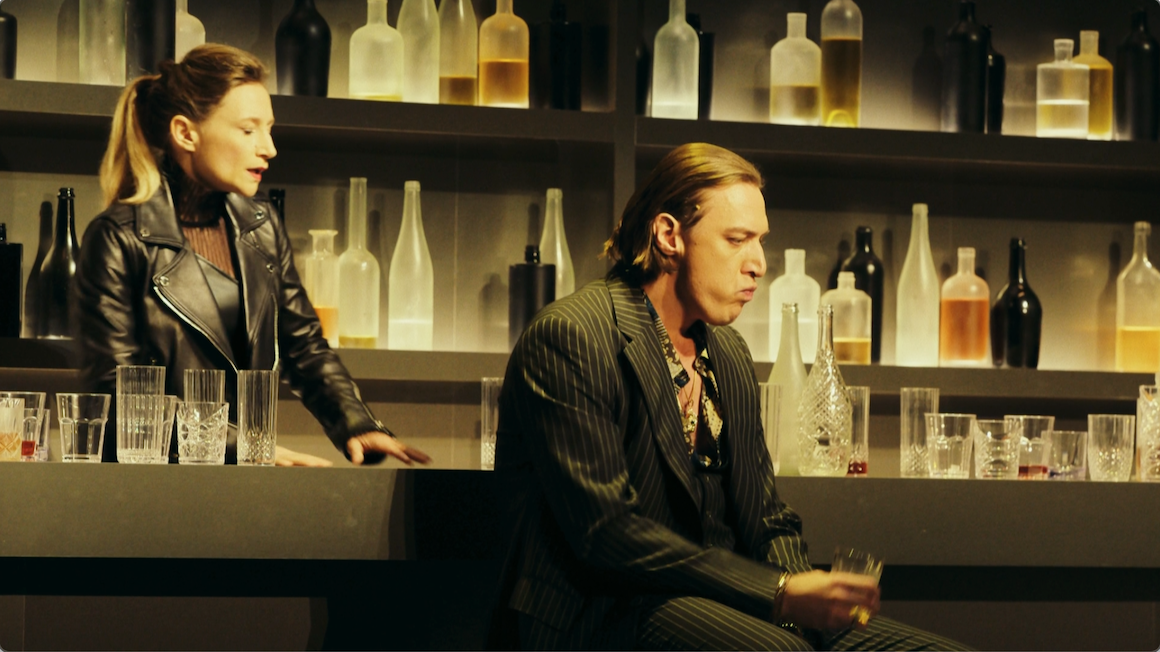
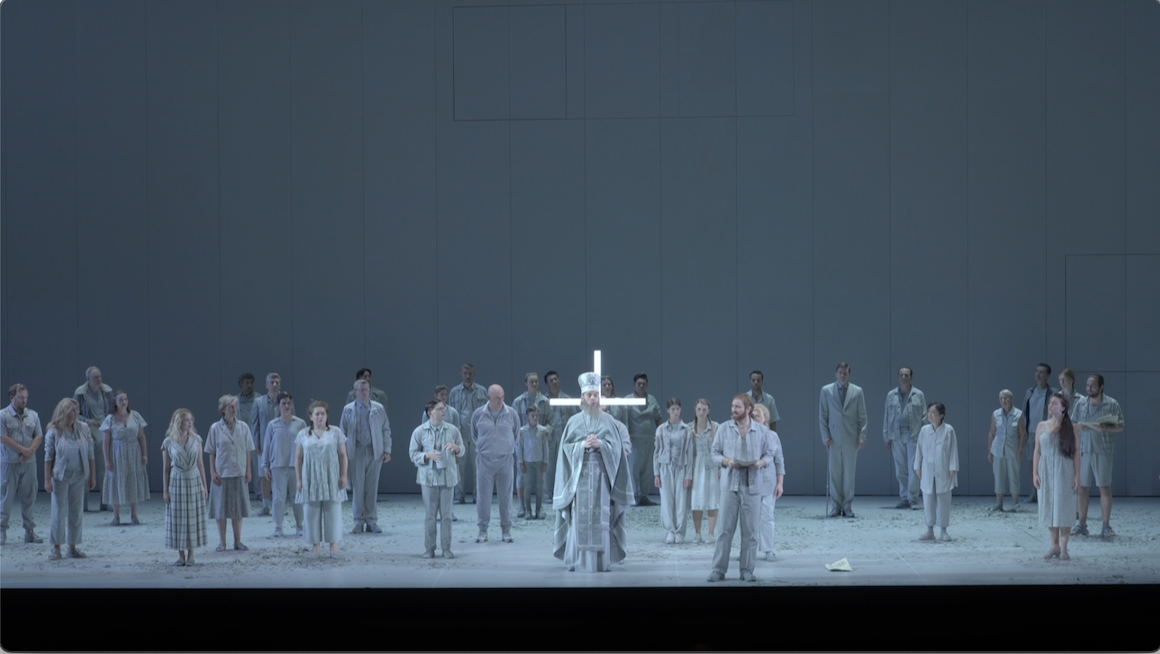
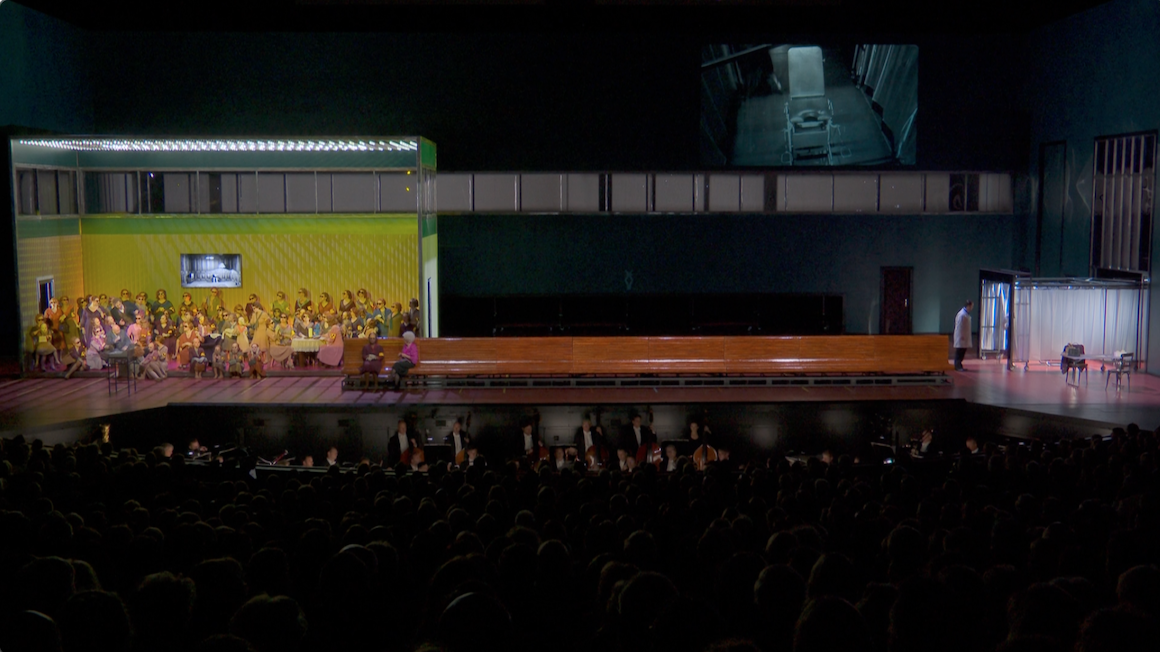
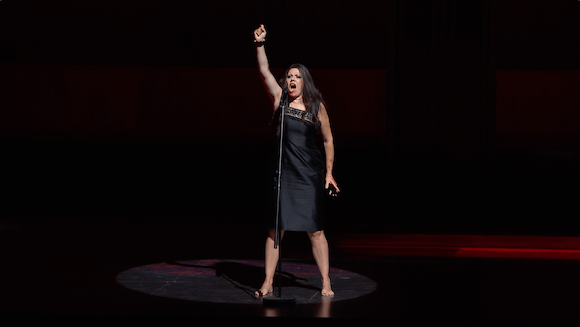
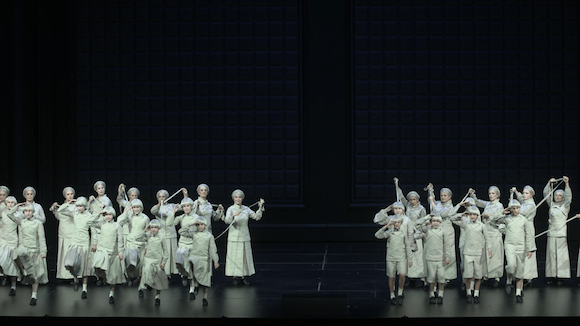
Miecysłav Weinberg’s The Idiot, based on the Dostoevsky novel, was composed in 1986/7 but didn’t get a full premiere until 2013 in Mannheim. The neglect of Weinberg’s music in USSR/Russia is probably explained by him being a Polish Jew but why he’s so little known elsewhere is a bit of a mystery as The Idiot shows that The Passenger wasn’t a fluke. Anyway, The Idiot got a second outing at Salzburg in 2024 in a rather complex production by Krysztof Warlikowski.
Tag Archives: wiener philharmoniker
Frustrating Gambler in Salzburg
I don’t think I’ve been as frustrated by a video recording of an opera since I watched the 2007 recording of Unsuk Chin’s Alice in Wonderland. This time the culprit is a recording of the 2024 production of Prokofiev’s The Gambler at the Salzburg Festival. It’s a Peter Sellars production set in the Felsenreitschule and it’s fascinating on many levels. The problem is that, as is wont, Sellars directs the video too and he seems to think people watch opera videos on their phones. There’s been a welcome trend since the advent of HD cameras to, generally, show as much of the stage action as possible and ration extreme close ups. Sellars takes the opposite approach and it drives me nuts. Not only do I feel that I’m missing a lot; especially in the cavernous Felsenreitschule, but I just don’t need to know how fast Asmik Gregorian is moving her tongue when she’s going for fast vibrato.
Salzburg’s Hoffmann is hard to decode
Mariane Clément’s production of Offenbach’s Les contes d’Hoffmann recorded at the 2024 Salzburg Festival is not the sort of production that one dismisses as pointless and/or ill conceived but it is complex and difficult to read; at least on first viewing. That said, being on video rather than live probably doesn’t help.
Almaviva’s gangster gang
Martin Kušej’s production of Mozart’s Le nozze di Figaro at Salzburg in 2023 came 20 years after he had last directed a Mozart opera at Salzburg. My reviews (and follow up pieces) of his productions of Don Giovanni (2002, revived 2006) and La clemenza di Tito (2002) are probably two of the most commented on on this blog. So I’m interested to see where this goes.

The Greek Passion
Bohislav Martinů’s The Greek Passion is a 1961 opera based on the novel Christ Recrucified by Nicos Kazantzakis. The English language libretto is by the composer. It was staged in the Felsenreitschule in Salzburg in 2023 in a production directed y Simon Stone and recorded for video.

A fascist Macbeth
Krysztof Warlikowski’s production of Verdi’s Macbeth; recorded for video at Salzburg in 2023 is certainly not short of ideas. Whether it all hangs together is another matter. There seem to be two main ideas in play. We are in a 1940s-ish fascist state with party armbands and so on. This gets more explicit as the piece develops. On top of this there’s a foregrounding of Lady Macbeth as the real driving force of the drama coupled with the idea that what’s driving her is her inability to provide an heir. For example, she’s clearly the one being crowned after Duncan’s murder and babies are a recurrent visual motif.

Psychological Elektra
Strauss’ Elektra, for all its “grand” music, is essentially a rather intimate psychological study of the psyches and relationships of three women. Given this, one might think that the enormous stage of the Felsenreitschule in Salzburg a very odd choice of venue. Krzysztof Warlikowski’s approach to the challenge is bold but almost impossible to do justice to on video. Despite that, what does come across on video is a rather compelling version of the work.

Searing Simon Boccanegra
Sometimes a video recording just seems to have it all and I would put the 2019 Salzburg Festival version of Verdi’s Simon Boccanegra in that category. It’s quite an interesting production but it’s the sheer quality of the music making that puts it in the very top bracket. It’s also technically very good in all departments.

Orphée à Salzburg
The Salzburg Festival rarely does operetta but in 2019 they decided to commemorate the 200th anniversary of Offenbach’s birth with a new production of Orphée aux enfers by Barrie Kosky. With Kosky and comedy one sort of knows what to expect but there’s always something very original. Here, in order to get the (German) dialogue as crisp as possible he takes it away from the singers and gives it to a new character; John Styx, played by actor Max Hopp, who not only speaks all the dialogue in an amazingly wide range of voices but also produces all the sound effects. The only other character who speaks is Anne Sofie von Otter as L’Opinion publique and even she is doubled by Hopp. Not that the singers have nothing to do during the dialogues. They pantomime their words, often in quite an exaggerated fashion and to great effect.

Pique Dame in Salzburg
Tchaikovsky’s Pique Dame is a rather odd opera. It’s not just that the main plot turns on a pretty bizarre tale of the supernatural but that it also contains a significant number of big set piece numbers that don’t advance the plot at all; the “military children” in Act 1, the Pastoral in Act 2 and the bizarre “Glory to Catherine” chorus in Act 3 aren’t the only ones. One assumes that they are there so that the composer could interpolate some suitably “Russian” bits because without them it’s just any other opera that happens to be in Russian.