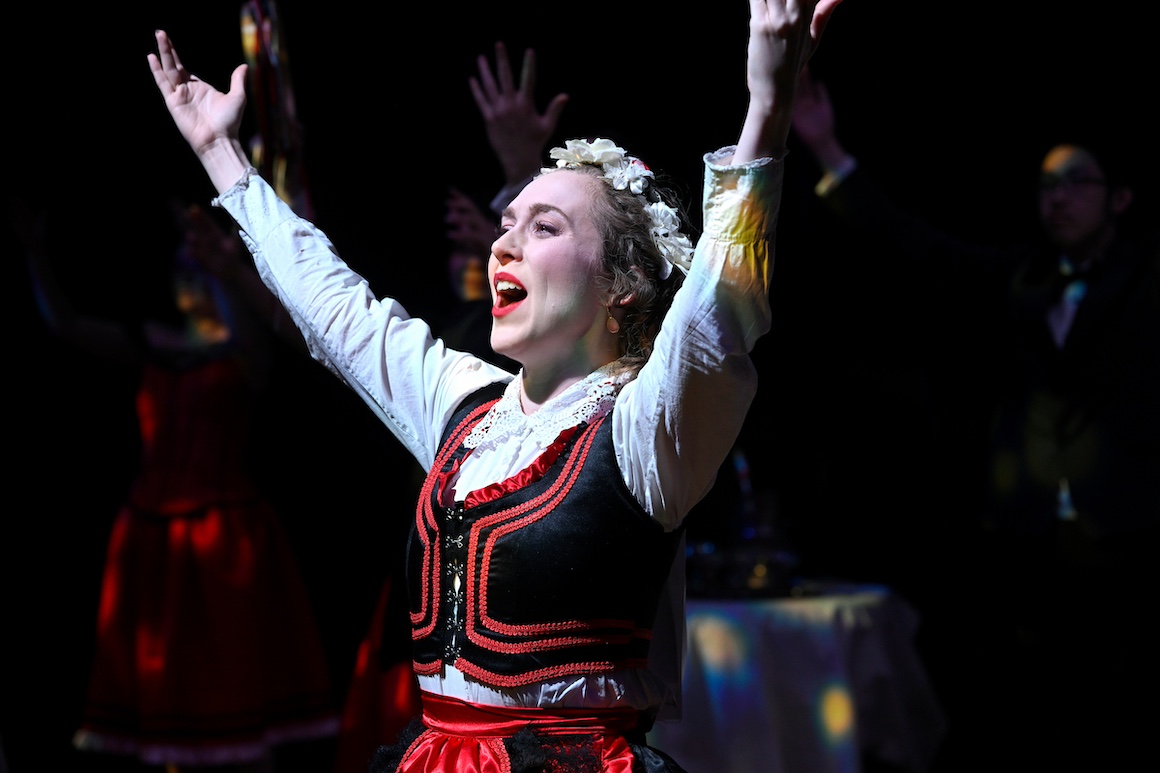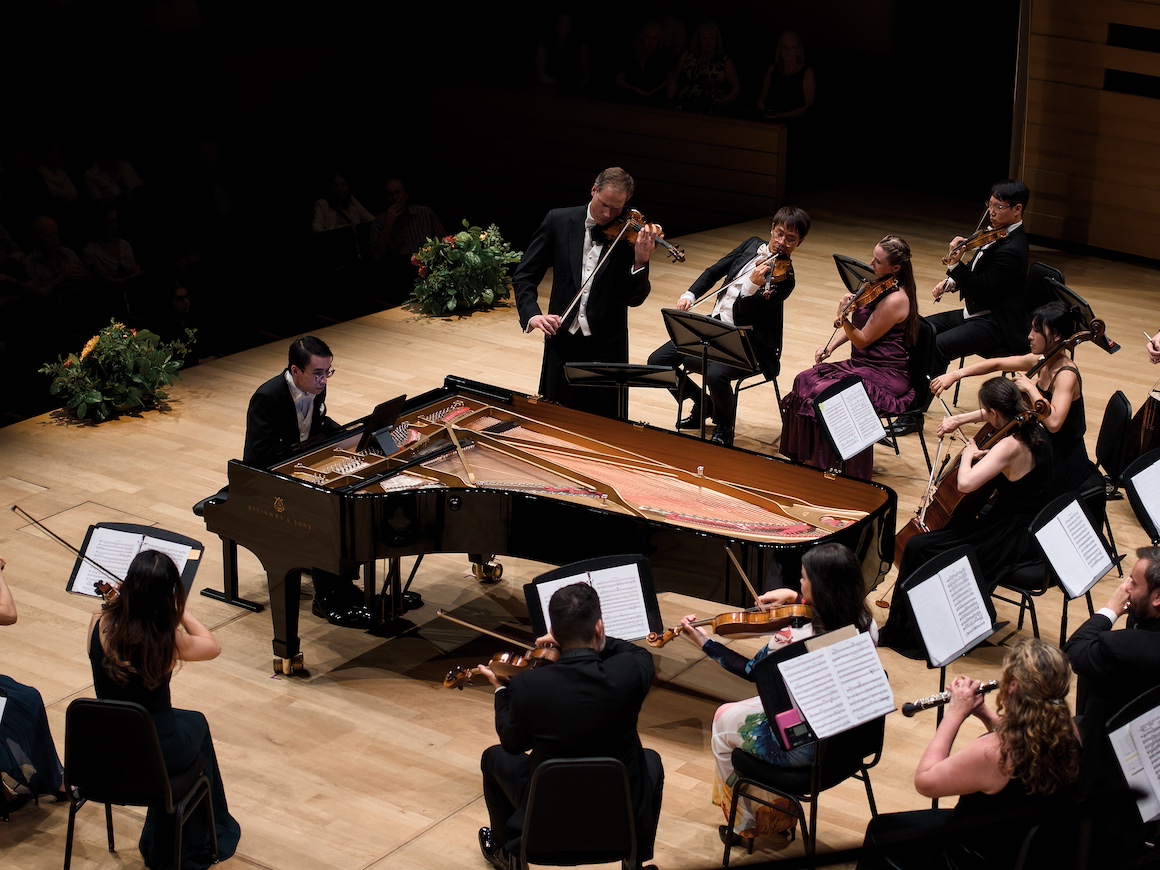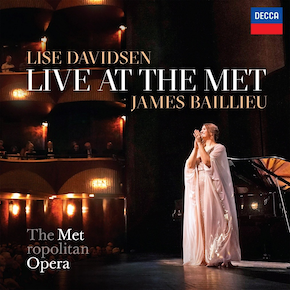
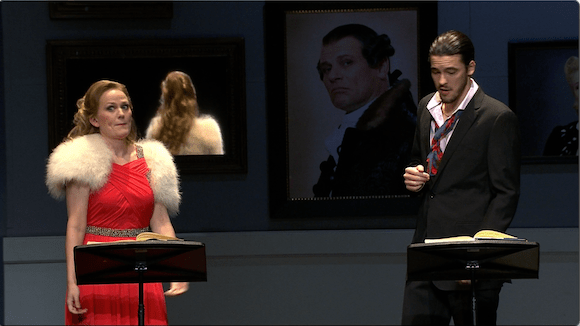
The last Koerner Hall concert of this year’s Toronto Summer Music riffed off the Vienna Phil’s traditional New Year extravaganza with lots of Johann Strauss waltzes and the cheesiest fake Magyar (mezzo) soprano arias from operetta. I was skeptical when I first saw the programme but it turned out to be extremely enjoyable; partly on account of excellent musicianship and partly because everyone involved was having so much fun.
Tag Archives: kalman
Countess Maritza
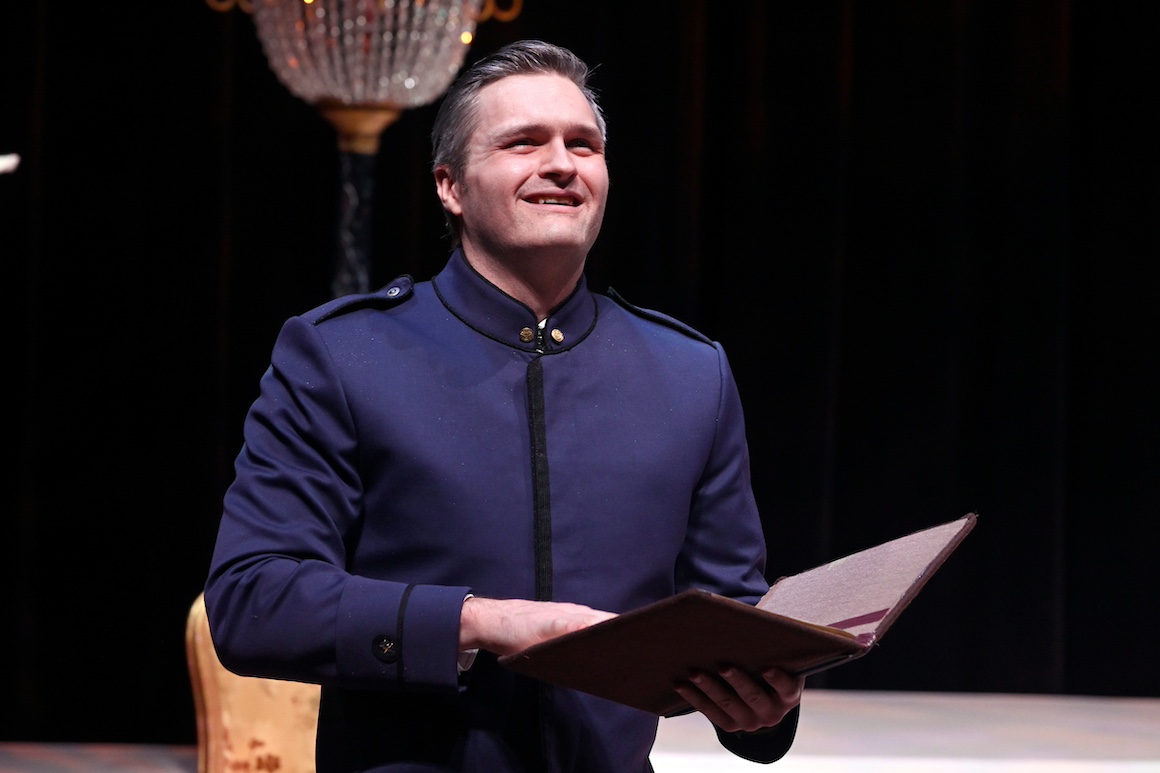
This year’s New Year offering from Toronto Operetta Theatre is Imre Kálmán’s 1924 work Countess Maritza presented in Nigel Douglas’ English language version. It’s a pretty typical TOT offering. The work itself is a rather silly love story full of just about every cliché about central Europe bar vampires but it’s tuneful and the ten piece orchestra conducted by Derek Bate provides colour and volume enough for the Jane Mallett Theatre.
Almaviva’s gangster gang
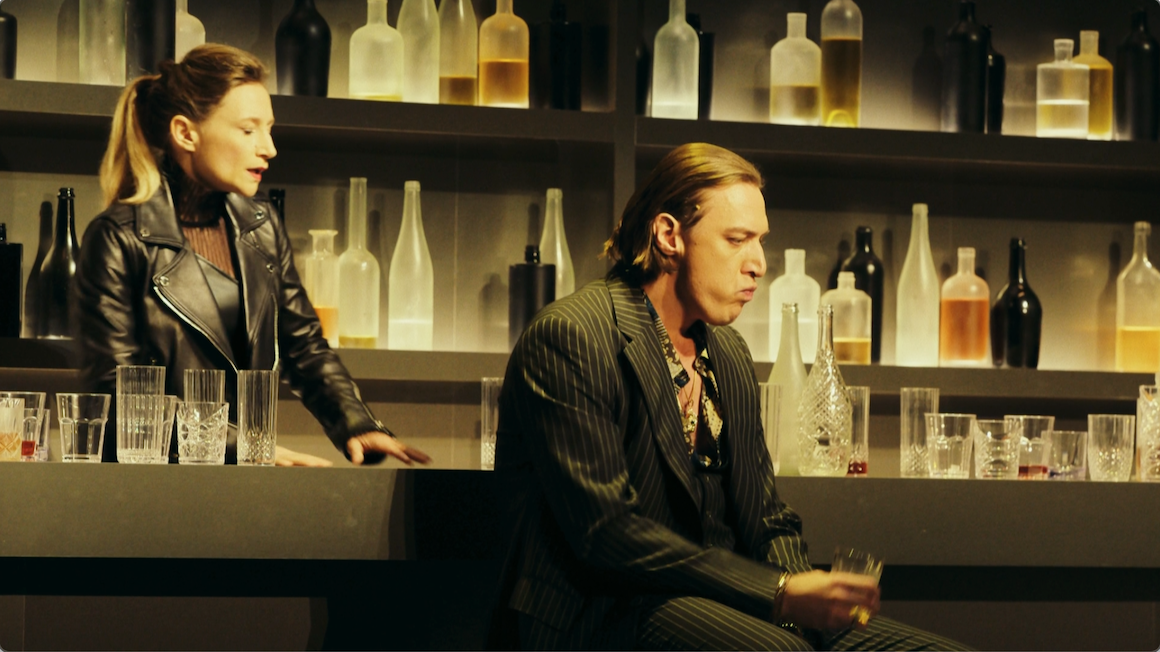
Martin Kušej’s production of Mozart’s Le nozze di Figaro at Salzburg in 2023 came 20 years after he had last directed a Mozart opera at Salzburg. My reviews (and follow up pieces) of his productions of Don Giovanni (2002, revived 2006) and La clemenza di Tito (2002) are probably two of the most commented on on this blog. So I’m interested to see where this goes.

TOT’s streamed The Csardas Princess
Toronto Operetta Theatre are offering a streamed performance of Emmerich Kálmán’s The Csardas Princess. It’s another film made in the Edward Jackman Studio and with TOT’s usual team in charge. The cast includes Lauren Margison in the title role with Michael Barrett as Prince Edwin. The cast also includes TOT regulars Caitlin Wood as Countess Stasi, Ryan Downey as Boni and Gregory Finney as Feri, Rosalind McArthur and Sean Curran appear as Edwin’s parents Anhilte and Leopold Maria.
The stream will be available from July 9th to 23rd and an access code is $20 plus fees and can be purchased here.
.
Black and white Barber
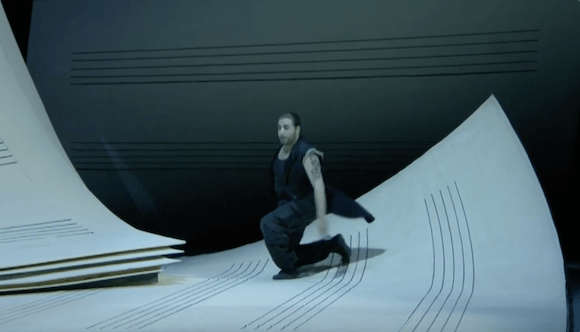
Laurent Pelly’s 2017 production of Rossini’s Il barbiere di Siviglia for the Théatre des Champs Élysée is classic Pelly. The sets and costumes are very simple and essentially monochrome. The sets in fact are constructed from flats painted as music paper. The black, white and grey costumes are more or less modern and pretty nondescript. But, in the classic Pelly manner, the action is fast paced and convincing. There’s lots of synchronised movement and the physical acting and facial expressions are a bit exaggerated. I toyed with the word “cartoonish” but that’s a bit crude if not entirely inaccurate. The overall effect is positive.

Harnoncourt’s Mozart cycle
Back in 2014 Nikolaus Harnoncourt launched a project to present all three Mozart/da Ponte operas, concert style, on the stage of the Theater an der Wien in a single month. They are now being released on DVD/Blu-ray. The first is Le nozze di Figaro and it comes with a 52 minute documentary by Felix Breisach; Nikolaus Harnoncourt – Between Obsession and Perfection – part 1.

The other Otello
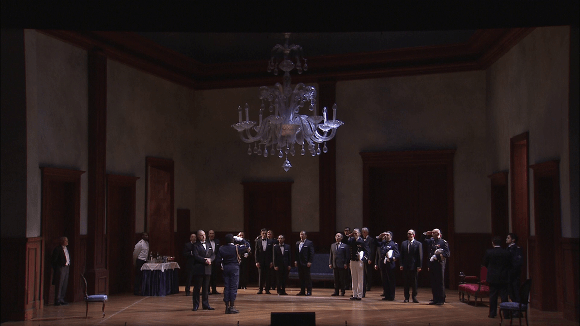
Just as Rossini’s version of Il barbiere di Siviglia completely eclipsed Paisiello’s version, so Verdi’s Otello sounded the death knell for an earlier version; ironically enough by Rossini. It’s a bit surprising as the Rossini version is not bad at all despite having a rather patchy libretto and being hard to cast. The first thing one notices is that the story isn’t even close to Shakespeare/Verdi. This is because the libretto was based on a French play by Jean-François Ducis that was popular in the 18th century. I don’t know whether the plot’s weaknesses are due to Ducis or the librettist but there are a few. There’s no Cassio so the motivation for Jago’s plotting is unclear. All the Venetian notables (bar perhaps the Doge) hate Otello but Jago doesn’t seem to have any special reason for animosity. Between the end of Act 2 and the beginning of Act 3 Otello is exiled. There is no explanation. The finale is abrupt and weak. Immediately after Otello kills Desdemona the gang of notables burst in to the room and appear to be completely reconciled to Otello and to him marrying Desdemona, despite having spent the rest of the opera chewing chips about this. In fact one could argue that the happy ending variant (yes, there was one) is the more plausible as it would only take the guys to arrive about ten bars sooner for that to be the logical outcome. As it is, Otello listens with incredulity to the change of heart and, not unreasonably, kills himself.

Another fine Cesare
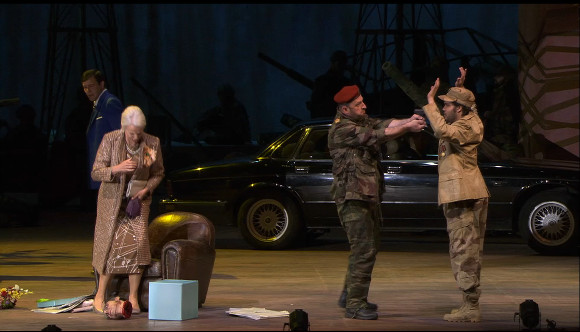
Handel’s Giulio Cesare is pretty well served in terms of video recordings. The very fine Glyndebourne and Copenhagen versions get some serious competition from the 2012 production that inaugurated Cecilia Bartoli’s reign as director of the Salzburg Whitsun Festival. The production is by Moshe Leiser and Patrice Caurier. It’s set in somewhere like Iraq in an immediately post-war period. It’s quite dark, probably darker than Negrin’s in Copenhagen and world’s away from McVicar’s almost RomCom version. There’s a lot of violence and some pretty sleazy sex. A lot of this centres around Tolomeo who is portrayed as beyond revolting. There’s a scene where he rips guts out of a statue of Caesar and starts to gnaw on them and there is a fair bit in that vein. Caesar and Cleopatra are portrayed ambiguously too. Sure they are the “heroes” of the piece but Cleopatra’s delight in flogging off her country’s oil wealth to the Romans shows a degree of cynicism. This is not a production for the Konzept averse but I think all the choices made have a point and the overall effect is coherent. It’s not without humour either. Cleopatra sings V’adore pupille in a 70s blonde wig while riding a cruise missile with Caesar watching through 3D glasses.

Glorious Alcina
The 2011 production of Handel’s Alcina at the Wiener Staatsoper marked the first time Handel, or any other baroque work, had appeared in the house since Karajan’s reign in the 1960s. In mounting it they went big. There’s a starry cast headed by Anja Harteros, Marc Minkowski and Les Musiciens du Louvre – Grenoble, a large group of dancers and former Royal Shakespeare Company boss Adrian Nobel. It paid off.
Brotherly love
Rameau’s Castor et Pollux is a tragédie lyrique in five acts. It’s a mythology based libretto which, ultimately, celebrates the fraternal love of the twins who rise to immortality while rather callously discarding the female human love interest. Pierre Audi’s 2008 production for De Nederlandse Opera nods both to the baroque and to the mythological by staging the work in a rather abstract Sci-Fi sort of way but with moving sets and Fx that suggest, rather than reproduce, the stagecraft of the baroque.