 Ontario’s state of emergency seems to have slowed the production of on-line content to a trickle. The only new things I’ve seen recently are from the ever reliable Opera Revue and Alexander Hajek.
Opera Revue’s eighth isolation production features five pieces from Frank Horvat’s Music for Self Isolation; a set of thirty one short pieces for one or two musicians written last spring. The concert features the five pieces with a vocal part. I have to say I liked the texts; taken from various sources, more than the music. The music is sort of “singer sonwriterish”; simple, tonal, melodic, a bit repetitive. It’s fine of its type but it’s not my bag. Performances by various combos of sopranos Emily Ding and Dani Friesen, pianist Claire Harris and guitarist Michael McKenzie are very nice though and the recording; despite being done via Zoom, is perfectly acceptable. The music may not be entirely my thing but I’m delighted that someone is doing projects like this. You can find it on Opera Revue’s channel on Youtube.
Alex Hajek’s contribution is another intriguing Toronto based film this time featuring Der Doppelgänger from Scubert’s Schwanengesang. It’s beautiful to look at and beautiful to listen to and, again, featurers Claire Harris on piano as well as Alex’ lovely baritone. This one’s on Youtube too. The channel is Alexander Hajek.

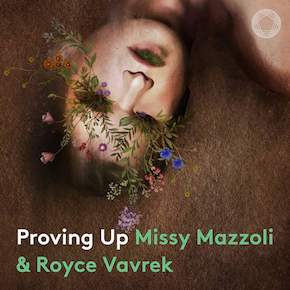 Missy Mazzoli’s Proving Up is an 80 minute opera consisting of a prologue, six scenes and an epilogue. The libretto is by Royce Vavrek after a short story by Karen Russell. It was recorded after a production at Opera Omaha in 2018. One might perhaps expect an opera about homesteading in Nebraska to be a worthy piece of uplifting Americana but nothing could be further from the truth here. The Prologue, it’s true, is based on a 19th century popular song Uncle Sam’s Farm which appears to offer the American Dream to all comers but after that we get a surrealistic tale of drought, despair, drinking and death all based on the search for an elusive glass window that will allow the Zegner family to “prove up” and gain title to their land under the 1862 Homestead Act. What then, of the American Dream?
 Carlisle Floyd’s Prince of Players was originally written for the Opera Studio in Houston as a chamber work. It was subsequently reworked as a full scale piece and taken up by Milwaukee’s Florentine Opera where it was performed and recorded in 2018. It’s a two act piece with a libretto by the composer that deals with the transition from men playing women on stage to the roles being taken by women for the first time in the reign of Charles II. It’s framed by the final scene of Shakespeare’s Othello. First time around Desdemona is played by noted actor Ned Kynaston to rapturous applause and praise from the king. The rest of the first act is the story of how Charles; influenced by his mistress and aspiring actor Nell Gwynn and the much more talented Meg Hughes who, to complicate matters, is Kynaston’s dresser and secretly in love with him, decides that times must change and women must play women on the stage. The act culminates in a confrontation between the king and Kynaston where the latter accuses the former of destroying his art and livelihood and the theatre with it. The king is unrelenting. This act is tight and well crafted with quite a lot of humour as well as some pathos.
 The idea of recreating an accademia musicale (private concert) at the home of Roman artist/patron Pier Leone Ghezzi in 1723 and putting on works that might have been played at such an event is an intriguing one. Add to that that we were promised caricatures; Ghezzi being a noted pioneer of the form. Marco Cera, who conceived the show, seemed to be onto a good thing.
 operaramblings