 This is a really interesting and unusual album. French mezzo-soprano Stéphanie d’Oustrac teams up with a small baroque ensemble, Le Poème Harmonique (accordion, theorbo, strings, bassoon/flute) led by Vincent Dumestre to present a selection of music that ranges from traditional songs through 17th century opera/oratorio arias to cabaret music and modern chansons.
The music is grouped into Three “life stages”; Jeunesse, Les vieux airs and Les amours passée; a sort of lifetime of music. I was really excited after the first four numbers because they were touching a whole bunch of things I really love; jazzy cabaret on played freely on baroque instruments, traditional music sounding a bit like a band like Malicorne, a freedom of vocal expression etc. It did quieten down a bit after that with arias by Cavalli and Monteverdi sung in a properly period appropriate way but also other music freely interpreted by all the musicians. It finishes up in a fun way too. There’s a very silly song; Les canards Tyroliens, which features yodelling and coloratura ducks. Then there’s a tango and a plangent rendering of the title track.
Continue reading →

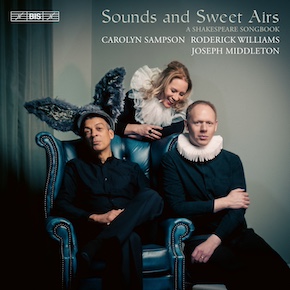 Sounds and Sweet Airs: A Shakespeare Songbook is a long and unusual CD by Carolyn Sampson, Roderick Williams and Joseph Middleton. The songs set texts (mostly) by Shakespeare but some of it is translated into German or French and in the case of Hannah Kendall’s Rosalind it’s fragments stitched together. Some of the material will be familiar to amateurs of art song but less than one might expect. There’s no Finzi or Quilter!
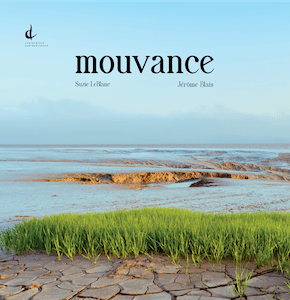 mouvance is a CD of music by Jerome Blais performed by Suzie LeBlanc (soprano), Eileen Walsh (clarinets), Jeff Torbert (guitars), Norman Adams (cello) and Doug Cameron (percussion). At first glance it looks like a set of songs or maybe a song cycle in the sense that it sets a series of French texts by various writers. In fact it has its origins in a multi-media show about, to quote Blais, “the universal themes of movement, migration and uprooting”. I think this is why I found it more satisfying to think of it as an integrated whole because there’s really no sense of separation between the “songs”.
 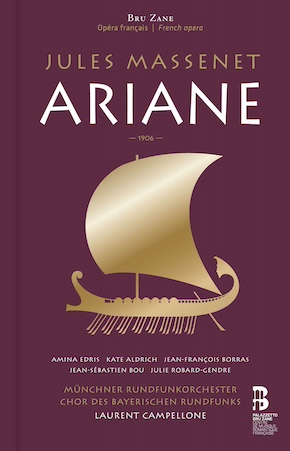 Ariane is a late opera (1906) by Jules Massenet. Now largely forgotten it has recently been recorded by the Palazzetto Bru Zane in their admirably produced series of French rarities. Unfortunately, unlike some of their other rediscoveries I wasn’t much taken with it.
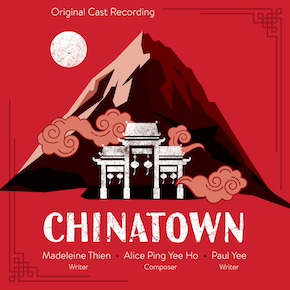 Chinatown; music by Alice Ho, words by Madeleine Thien and Paul Yee, is a multilingual opera about the Chinese immigrant experience in British Columbia. It ws commissioned by Vancouver City Opera where it played in 2022. It’s now been recorded for CD by the original cast.
 Mi País: Songs of Argentina is a CD from bass-baritone Federico de Michelis and an ensemble that includes Steven Blier on piano, Shinjoo Cho on bandoneon, Sami Merdinian on violin and Pablo Lanouguere on bass. The songs are basically from the middle decades of the 20th century and mostly by classically trained composers such as Carlos Guastavino and Carlos López Buchardo.
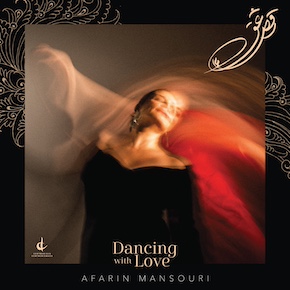 Dancing with Love is a new CD of music by Afarin Mansouri on the theme of “love” in its many variants from the erotic to the transcendent. Eleven of the twelve tracks set Persian/Farsi poetry, from the 12th century CE to the present. The twelfth is a lament for solo flute. The musical style varies a lot with traditional Persian influences combining with modern Western compositional techniques in different ways. It leads to interesting results. Just to pick a few tracks, “Unattainable” for mezzo-soprano and piano sounds rather like a French chanson whereas a track like “Pain (Sorrow)” for mezzo-soprano, clarinet, piano, tar, cello and udu sounds much more like traditional Persian music. Other tracks incorporate electronics or jazz elements. One thing almost all the tracks have in common is that there’s a lot of melodic invention which makes it a very easy, as well as a very varied, listening experience.
 Dean Burry’s setting of Alfred Noyes’ The Highwayman has now been released on CD. I think it’s the same performance that was previously released on Youtube by Queen’s University. If it’s not the same performance then it’s certainly the same performers and I really don’t have more than a few incidental thoughts to add to
 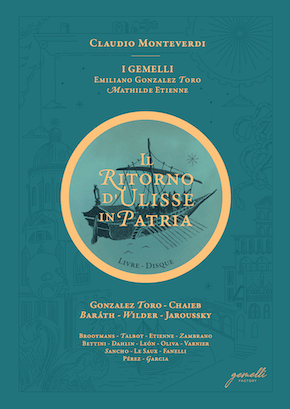 I use the word sumptuous in at least two senses. This is a really good recording with a fine period instrument ensemble and voices carefully matched to parts. It’s also very carefully researched in the quest to get as close as what Monteverdi’s audience heard as possible. It’s also sumptuous in presentation. It’s a beautiful hardback book with 3 CD slots built in. The binding and printing are Folio Society quality. It’s sumptuous also in terms of book content. The English language version has 165 pages of explanatory essays plus libretto and translation! There is a wealth of information on what was happening in Venetian theatre , as well as influences from further afield. There’s a section on how discoveries in the sciences were reshaping perspectives on art and aesrthetics and there’s a load of detail on the links between the commedia dell’arte and the opera stage. For a music loving bibliophile it’s a real treat.
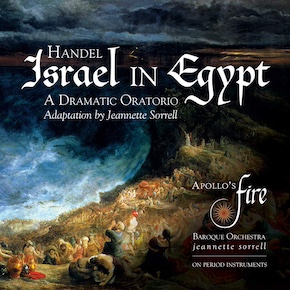 Handel’s Israel in Egypt is one of the less well known of his English language oratorios. It’s also got a bit of an ofdd performance history with the first of the three acts often omitted. The new recording from period instrument ensemble Apollo’s Fire includes all three acts but omits some numbers and shortens others in a selection made by music director Jeannette Sorrell. This appears not to be uncommon. A quick scan of available recordings revealed performance durations of anywhere from 75 minutes to 150 minutes. This one comes in right on the bottom end of that range.
