
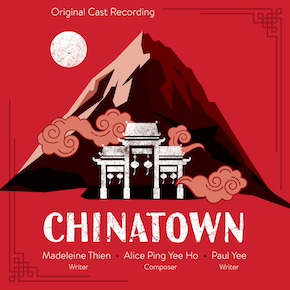
 Chinatown; music by Alice Ho, words by Madeleine Thien and Paul Yee, is a multilingual opera about the Chinese immigrant experience in British Columbia. It ws commissioned by Vancouver City Opera where it played in 2022. It’s now been recorded for CD by the original cast.
Like some of Alice Ho’s previous work (The Monkiest King, The Lesson of Da JI) Chinatown is cross cultural in many ways. It combines Western and Chinese instruments, musical styles and vocal styles and in this case it uses three languages; Hoisan dialect, Cantonese and English. Unlike the previous two operas though this one isn’t based in myth and legend. Rather, it’s a gritty and moving story that doesn’t shy away from confronting the brutal institutional racism that Chinese people faced in BC well into the 20th century. Continue reading
 Mi País: Songs of Argentina is a CD from bass-baritone Federico de Michelis and an ensemble that includes Steven Blier on piano, Shinjoo Cho on bandoneon, Sami Merdinian on violin and Pablo Lanouguere on bass. The songs are basically from the middle decades of the 20th century and mostly by classically trained composers such as Carlos Guastavino and Carlos López Buchardo.
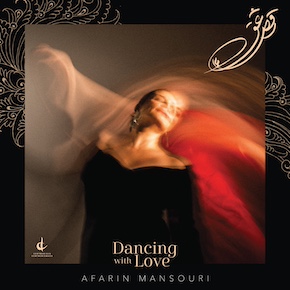 Dancing with Love is a new CD of music by Afarin Mansouri on the theme of “love” in its many variants from the erotic to the transcendent. Eleven of the twelve tracks set Persian/Farsi poetry, from the 12th century CE to the present. The twelfth is a lament for solo flute. The musical style varies a lot with traditional Persian influences combining with modern Western compositional techniques in different ways. It leads to interesting results. Just to pick a few tracks, “Unattainable” for mezzo-soprano and piano sounds rather like a French chanson whereas a track like “Pain (Sorrow)” for mezzo-soprano, clarinet, piano, tar, cello and udu sounds much more like traditional Persian music. Other tracks incorporate electronics or jazz elements. One thing almost all the tracks have in common is that there’s a lot of melodic invention which makes it a very easy, as well as a very varied, listening experience.
 Dean Burry’s setting of Alfred Noyes’ The Highwayman has now been released on CD. I think it’s the same performance that was previously released on Youtube by Queen’s University. If it’s not the same performance then it’s certainly the same performers and I really don’t have more than a few incidental thoughts to add to
 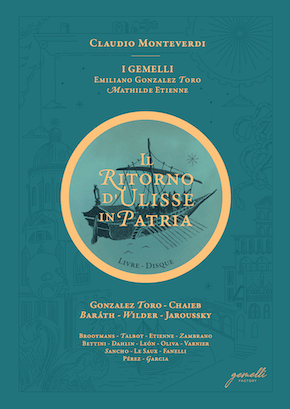 I use the word sumptuous in at least two senses. This is a really good recording with a fine period instrument ensemble and voices carefully matched to parts. It’s also very carefully researched in the quest to get as close as what Monteverdi’s audience heard as possible. It’s also sumptuous in presentation. It’s a beautiful hardback book with 3 CD slots built in. The binding and printing are Folio Society quality. It’s sumptuous also in terms of book content. The English language version has 165 pages of explanatory essays plus libretto and translation! There is a wealth of information on what was happening in Venetian theatre , as well as influences from further afield. There’s a section on how discoveries in the sciences were reshaping perspectives on art and aesrthetics and there’s a load of detail on the links between the commedia dell’arte and the opera stage. For a music loving bibliophile it’s a real treat.
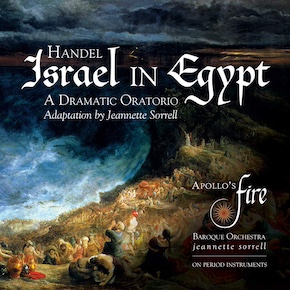 Handel’s Israel in Egypt is one of the less well known of his English language oratorios. It’s also got a bit of an ofdd performance history with the first of the three acts often omitted. The new recording from period instrument ensemble Apollo’s Fire includes all three acts but omits some numbers and shortens others in a selection made by music director Jeannette Sorrell. This appears not to be uncommon. A quick scan of available recordings revealed performance durations of anywhere from 75 minutes to 150 minutes. This one comes in right on the bottom end of that range.
 This is a really interesting and unusual album. French mezzo-soprano Stéphanie d’Oustrac teams up with a small baroque ensemble, Le Poème Harmonique (accordion, theorbo, strings, bassoon/flute) led by Vincent Dumestre to present a selection of music that ranges from traditional songs through 17th century opera/oratorio arias to cabaret music and modern chansons.
 Dame Ethel Smyth’s one act opera Der Wald is certainly of some historical interest. It was the first opera by a woman given at the Metropolitan Opera. That was in 1903 and 113 years would pass before the Met did another one; Kaija Saariaho’s L’Amour de loin in 2016.
 Probably pretty much everyone is familiar with Géricault’s painting Le Radeau de la Méduse, depicting scenes of horror after a shipwreck. The story behind it is much less well known. The year is 1816 and a French expedition is off to reoccupy Senegal which had been occupied by the British during the recent wars. The flagship of the expedition is the frigate La Méduse, which carries the governor and his staff and so on. Well ahead of the rest of the flotilla, and out of sight, La Méduse runs aground and is eventually abandoned. The governor, the officers and other nobs take to the boats towing the rest of the crew (154 men and boys) on a hastily improvised raft. Finding progress too slow after 24 hours they cut the raft adrift. When the raft is finally spotted fifteen men are still alive. A fitting allegory for the Bourbon restoration perhaps.
 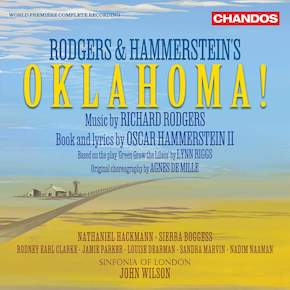 So, you may ask, what is Opera Ramblings doing reviewing a recording of Rodgers & Hammerstain’s Oklahoma!? Well, it’s a project in the same vein as my reviewing the Bru-Zane recordings of more or less forgotten late 18th and 19th century French operas. It’s an attempt to put the piece in the context of its early performances and also to look at how it was originally performed for, like many early 19th century French operas, if and when Oklahoma! does get performed it’s usually in a style very different from the original The occasion for doing so is a new Chandos recording that attempts to reconstruct the sound of the original 1943 Broadway run. That the recording is very high definition and released in SACD format only increased my interest.
 operaramblings