The Excursions of Mr. Brouček is a rather odd opera by Leoš Janáček. It’s currently being streamed on the Opera Vision Youtube channel in a production at the National Theatre Brno directed by Robert Carsen.
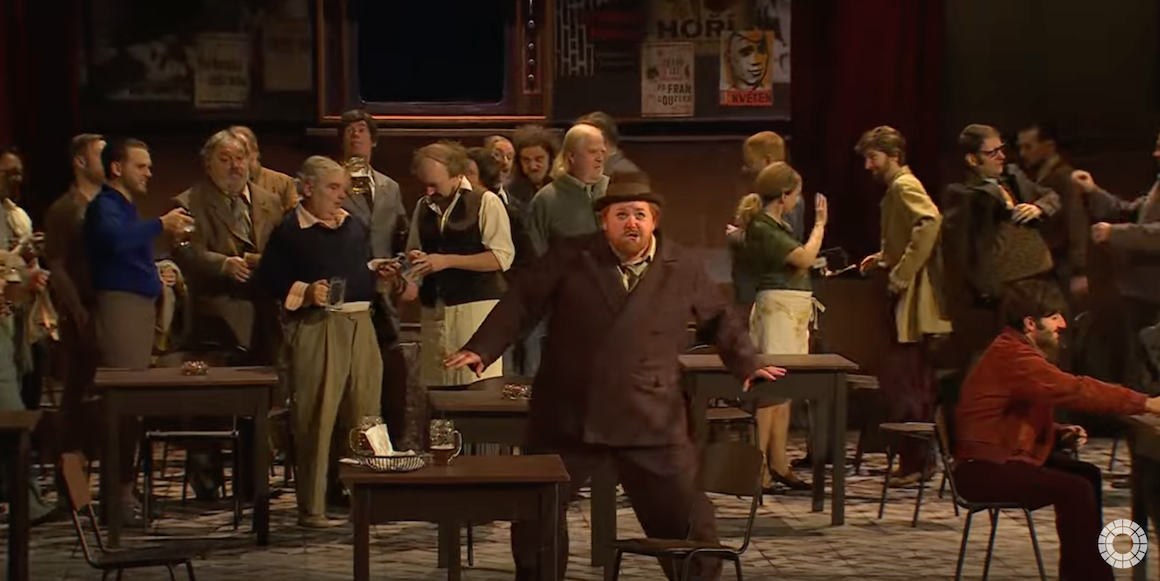

The Excursions of Mr. Brouček is a rather odd opera by Leoš Janáček. It’s currently being streamed on the Opera Vision Youtube channel in a production at the National Theatre Brno directed by Robert Carsen.
Robert Carsen’s production of Verdi’s Aida seen at Covent Garden in 2022 is a very good example of what Carsen can do. In this case it’s to strip out elements he considers non-essential and focus on the essentials of the drama. In the rather good “extra” feature on the video recording Carsen summarises it as focussing “on the story not the place”.
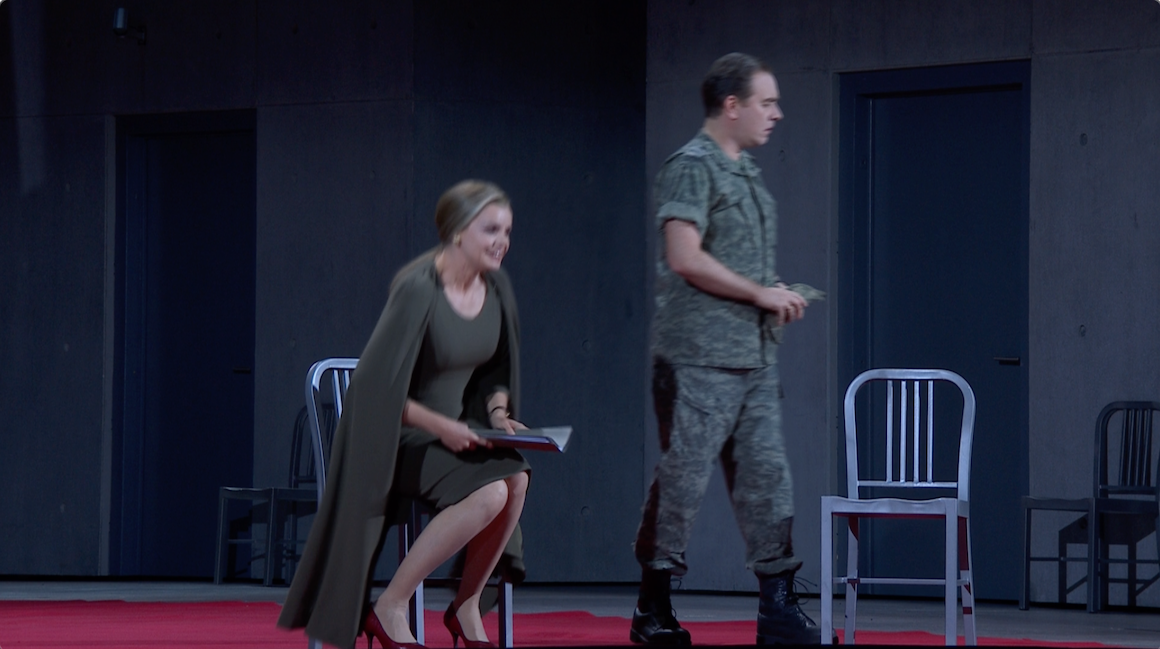
My review of the Robert Carsen’s production of Emilio de’ Cavalieri’s 1630 allegorical opera Rappresentatione di Anima et di Corpo is now up at Opera Canada.
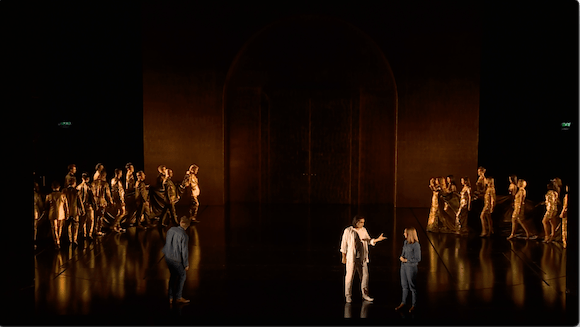
Catalogue number: Naxos Blu-ray – NBD0161V
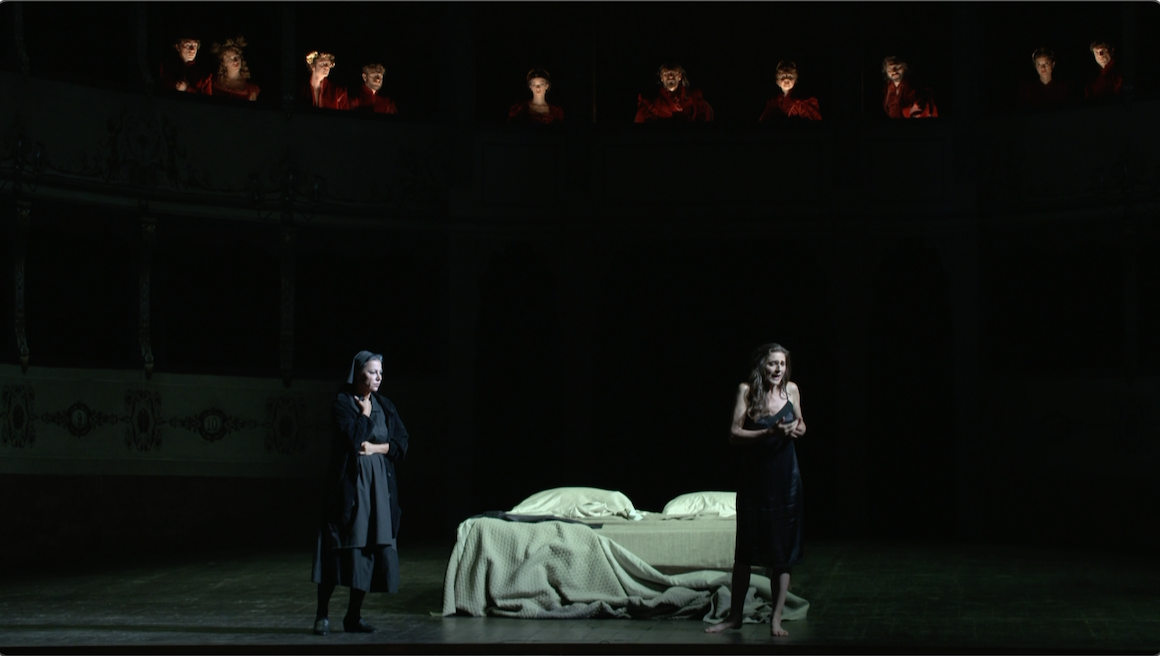
Robert Carsen’s 2021 production of Monteverdi’s Il ritorno di Ulisse in patria was recorded at the Teatro della Pergola during the Maggio Musicale Fiorentino. The theatre, opened in the 1660s and very much a “renaissance theatre”, is very much part of the production; the loge boxes are used during the prologue, entrances are made through the unusual parterre (individual chairs not rows of seats) and the gallery behind the stage is used by the gods to observe the action below. Monteverdi used three distinct styles of music for gods, royals and lesser folk, Carsen mimics this by giving the three orders distinct costume and acting styles. The gods (and there is the full pantheon, not just the ones who appear in the opera, each with his or her distinctive emblem), costumed in opulent crimson 16th century style costumes, act in a stylised manner. The royals get smart modern dress and naturalistic acting while the others are scruffier and act more broadly.
Rameau’s Platée is a rather cruel satire on appearance and perception. Jupiter woos the unattractive swamp nymph Platée in order to prove to Juno how ridiculous her jealousy is. Platée is led to think that she is so beautiful that Jupiter will marry her only to be mocked and deflated when the crowd turns on her.

Robert Carsen’s productions of the classic pairing of Leoncavallo’s Pagliacci and Mascagni’s Cavalleria Rusticana, filmed at Dutch National Opera in 2019, are an attempt to extend the meta-theatricality of the former to the latter. To this end he reverses the normal order which allows the prologue of Pagliacci to apply to both works and elements of the Pagliacci to be extended in Cavalleria Rusticana.

John Gay’s The Beggar’s Opera has been around since 1728 and is revived with some regularity but has never quite made into the opera canon. The latest incarnation is a version heavily rewritten by Robert Carsen and Ian Burton with a musical concept by William Christie. It first saw light at the Théâtre des Bouffes du Nord in 2018 before touring extensively.

Agrippina is definitely one of the most interesting of Handel’s early operas. It has very good and very varied music including a ravishing love duet in Act 3 which reminds one of Monteverdi; perhaps not surprisingly since Poppea is one of the characters singing it! The libretto, too, has something of L’incoronazione about it. It’s smart, sexy and utterly cynical which I suppose is about par for an 18th century cardinal. It’s said that Grimani based the character of Claudio, here portrayed as an oversexed buffoon (oace Robert Graves), on his arch enemy Clemens XI. s a bonus in Robert Carsen’s version there’s a rather shocking ending in which Nerone, literally, gets the last laugh.

No, not the opera by Prokofiev but Robert Carsen’s rather brilliant take on Mozart’s Idomeneo recorded last year at the Teatro Real in Madrid*. It’s a contemporary Mediterranean setting. Crete is a completely militarised society. Everyone is uniformed and carries weapons. The Trojans are refugees living in a camp with all the pathetic accoutrements of refugee camp life. Idomeneo and Elettra stand for the traditional “Make Crete Great Again” kind of nationalism while Idamante and Ilia look forward to a world where “Us” and “Them” dissolve in our common humanity. Carsen, Neptune, this writer and, I think, listening closely to the music, Mozart side with the young lovers.

My review of yesterday’s opening performance of Robert Carsen’s production of Eugene Onegin at the COC is now up on Bachtrack.

Gordon Bintner as Eugene Onegin and Joyce El-Khoury as Tatyana in the Canadian Opera Company’s new production of Eugene Onegin, 2018, photo: Michael Cooper
 operaramblings