I was at a bit of a loose end yesterday so I made a very last minute decision to catch countertenor Daniel Cabena and pianist Stephen Runge in recital in the Great Hall at Hart House. It was a free concert and I hadn’t seen a program listing so I was pleasantly surprised to find a rather varied mix of early 20th century Canadian and English art song as well as piano pieces by York Bowen. I guess I was expecting baroque and earlier material since that’s what countertenors do!
Tag Archives: britten
Filming Gloriana
Phyllida Lloyd’s 2000 BBC film of Britten’s Gloriana, based on her production for Opera North, is quite fascinating. The bonus interviews reveal the utter disdain for films/videos of stage opera productions held by pretty much everyone involved in the project. It’s an interesting perspective to hear in a world where Cinema and streaming HD broadcasts are increasingly common and where Blu-ray/DVD has clearly overtaken CD as the preferred medium for opera recordings. In some ways, of course, it’s because the technology has improved enormously. DVD was still relatively new in 2000 and widescreen, flat screen TVs were yet to come. In any event, this attitude led to the creation of a rather interesting film.
Roots
I was talking to Leslie Barcza of barczablog at a concert yesterday. He asked me what I was most looking forward to in the upcoming season and I was a bit stumped for an answer because there’s lots of good stuff in Toronto this season but nothing that really sets my pulse racing. Finally I answered with the TSO’s Dream of Gerontius, which, it turns out, is not exactly high on Lesley’s bucket list. This led to a brief discussion about how origins affect our reactions; that is until the actual concert interrupted our talk.
TSMF begins
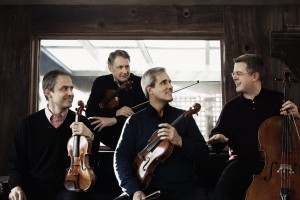
The Toronto Summer Music Festival kicked off last night with a concert by the venerable and renowned Emerson Quartet. The theme for the festival is “The Modern Age”; explained to us by the festival director as meaning the many threads and styles that emerged in the opening years of the 20th century. It might seem a bit odd then that the Emersons chose a programme of Beethoven, Britten and Schubert but in fact the rest of the programming doesn’t seem much closer to the tree with Bach, Haydn and Brahms all featured in upcoming concerts.
Death, in Venice
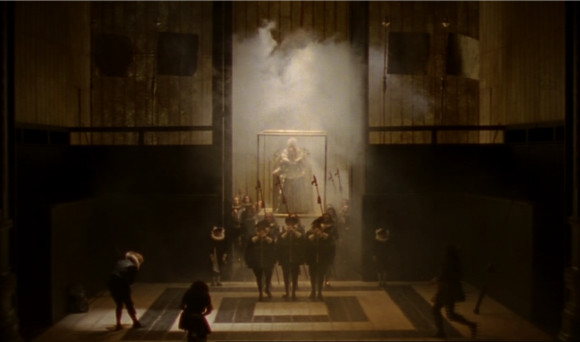
If I have a beef with Britten’s Death in Venice it’s that it’s a bit cerebral and bloodless, at least as it has come down in the Aldeburgh-Glyndebourne-ENO performing tradition. I think it’s fair to say that in its bloodlessness it mirrors the Thomas Mann novella (and indeed a lot of Mann’s other writing) but, for me, it’s a challenge to engage with the piece and, especially, with Gustav von Aschenbach. So, it was with surprise and growing pleasure that I watched Pier Luigi Pizzi’s production for, appropriately enough, Venice’s La Fenice. His take is bold and seems to centre less on Aschenbach’s relationshsip with the Polish boy, Tadziu, and more on the conflict between Dionysian and Apollonian ways of thinking and doing and I think it’s clear that Pizzi is a Dionysian.
Up close with Aschenbach
Death in Venice is a curious opera. Based on a Thomas Mann novella, it concerns the aging writer Gustav von Aschenbch and his meditations on aging and art, as well as his obsession with a Polish boy encountered at his Venice hotel. Very little actually happens. Aschenbach has a series of encounters with quotidien characters such as the hotel manager and a hairdresser but mostly he observes and what we hear are a series of inner monologues. To work as theatre Aschenbach must capture our interest and our sympathy. If he doesn’t the piece can be incredibly boring and irritating.
In the summer of seventeen hundred and ninety seven
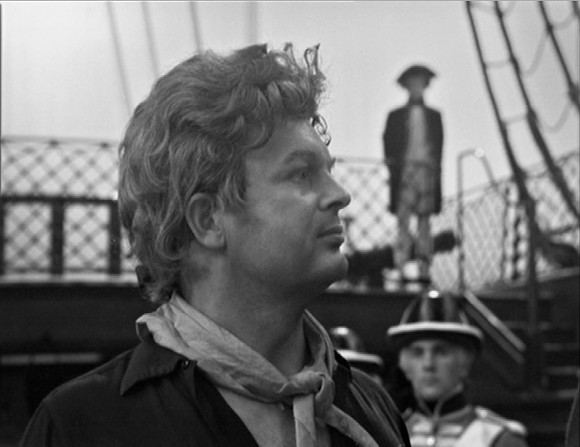
Billy Budd is the second of Britten’s large scale operas. Originally envisaged as a four act piece with prologue and epilogue it was later reorganised into two acts and that’s the version the BBC recorded and broadcast in 1966. That broadcast has now been released on DVD. Technically it shows it’s age. The picture is 4:3 black and white though there’s a remastered, and very decent, LPCM mono sound track. There’s also an enhanced Dolby mono track. The video too has been restored and looks pretty decent.
Of love and longing
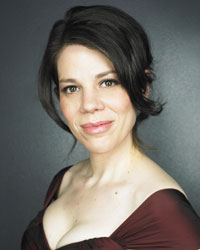
Allyson McHardy’s lunchtime recital in the Richard Bradshaw Amphitheatre today was unusual and effective; combining contrasting works by Brahms, Robert Fleming and Britten. Accompanied by Liz Upchurch on piano throughout, she was joined for the first set; Brahms’ Two Songs for Alto, Viola and Piano, Op. 91 by the COC’s principal violist, Keith Hamm. They were rather beautifully sung and played and were true to music and text; both of which are a bit too German Romantic for my taste. Continue reading
Albert Herring fifty years on
It was quite a party at the MacMillan Theatre this afternoon. The MacMillan opened fifty years ago with a production of Britten’s Albert Herring and this afternoon marked the final performance of a new production to celebrate the occasion. Directed by Joel Ivany, it was a straightforward but lively and very well characterised interpretation that brought out many of the very specific and quirky elements of the local culture while taking it mysteriously up market in some ways. (*). Coupled with very good singing by any standard, and this was a student production, it made for a most enjoyable afternoon.
Another chance to hear Sir Thomas Allen
Having seen him sing Don Alfonso in the COC’s Così fan tutte three times as well as having attended his RBA lunchtime recital and having interviewed him one would be forgiven for thinking that I might have had my fill of Sir Thomas Allen. But no, Durham University organised a reception on Thursday evening for alumni at which Sir Thomas was the guest of honour in his capacity as Chancellor. It was one of the filthiest nights of a filthy winter and a very nasty walk from the conference I was attending to the Music Room at Hart House but around fifty people turned up. They were mostly Durham grads but the Dean of Music from UoT was there, as was the Chancellor of Queen’s (which was rather a surprise). It was basically a drinks and canapés do but our esteemed Chancellor was prevailed on to sing a few numbers with the help of Rachel Andrist. We got a ballad I didn’t recognise, Deh vieni alla fenestra, The Foggy Dew (arr. Britten) and Cole Porter’s Miss Otis regrets. Fun, and a very welcome opportunity to hear something from Don Giovanni from a master of the role.
I had an interesting conversation with Sir Tom and Rachel about music in hospitals and now have a “to do” to sort out who to talk to at Sick Kids. Oh yes, and to cap a filthy night, the lemur and I were engulfed in a tidal wave of filthy slush on our way to the subway and home.