
It was my first time seeing Welsh bass-baritone Bryn Terfel live and my expectations were high. They were met, possibly exceeded, but not perhaps in the way I expected.The singing was brilliant across a wide spectrum of moods and genres (I’ll come back to that) but what really stood out was the man’s rapport with the audience which was extraordinary. It’s really hard to describe but let me try with just one example. It’s that thorny issue of people applauding for ages in the middle of sets. The usual approach is to have some functionary come out and announce that “Herr Poffel-Woffel respectfully (huh) asks that the audience not applaud until the end of the set because he believes it spoils the atmosphere”. Bryn’s approach was to wait for the first time it happened, gently shh the audience and announce “I don’t mind at all if you applaud every song but we’ll all get a home a lot earlier if you wait until the end of the set”. There was a lot of that kind of thing and it seemed quite natural and not at all stagey.
Bryn!
5


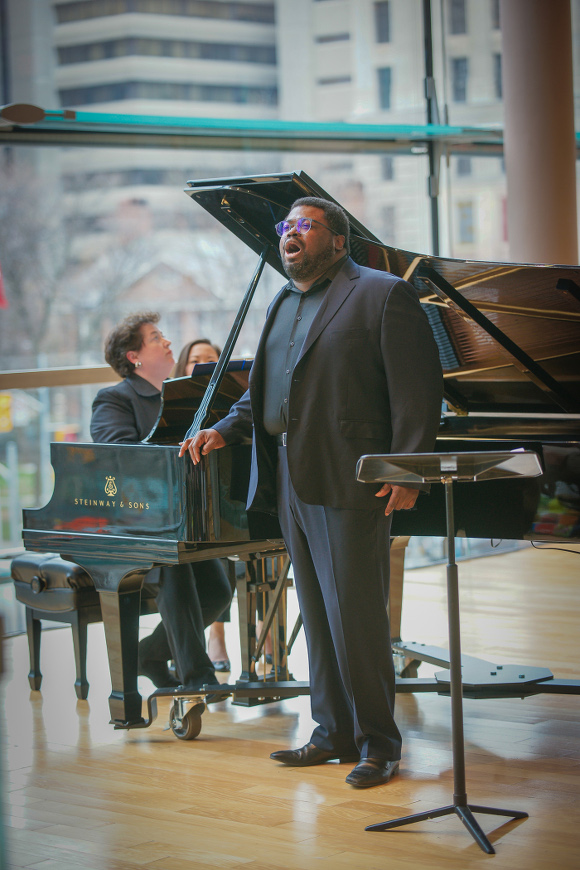

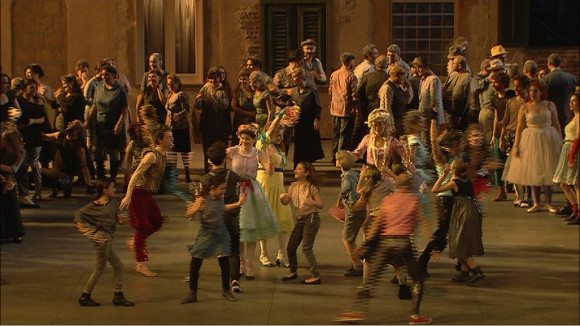
 I didn’t do a preview post on Sunday so let’s remedy that with one covering the balance of this week and next week. Carmen continues at the COC with the first chance to see the second cast tomorrow evening. There’s also a slew of lunchtime concerts in the Richard Bradshaw Amphitheatre:

 Off Centre Music Salon concluded their 2015/16 season with their 21st annual Schubertiad concert. It kicked off, in normal OC style with young artists. In this case Kallas and Vikas Chari with a very competent rendering of the Allegro vivace from the Marches Militaires. Then it was onto the main event; tenor Jeffrey Ollarsaba and Boris Zarankin performing Die Schöne Müllerin. It was good. Ollarsaba has quite a light, bright, rather pretty tenor and he can float rather beautiful high notes. I don’t know how it would go in a big opera house but it was well suited to the music and the relatively intimate Trinity St. Paul’s. His diction and phrasing were close to ideal and his vocal acting was appropriately expressive without getting histrionic. Some would consider him a bit over demonstrative in the hand and face gestures department but that rather seems to be the American way with lieder. Zarankin accompanied sensitively. He can play quite beautifully but he was also quite aggressively percussive in the more dramatic sections. All in all most satisfying. The concert concluded with Ilana Zarankin and clarinetist Colleen Cook joining Boris for Der Hirt aus dem Felsen. It’s a curious work; somewhere between a lied and a concert aria with it’s many repeated sections and variations. There was some really beautiful clarinet playing here which worked very well with Ilana’s bright timbre. So, a pleasant way to spend an April Sunday afternoon but a bit of a downer to head out of a concert that pretty much concludes with “Der Frühling will kommen, Der Frühling, meine Freud'”into a snowstorm. Some Frühling!
