
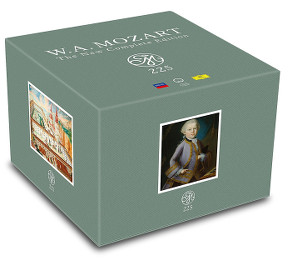
 Today marks the 225th anniversary of Mozart’s death. To commemorate it Universal Records (Deutsche Grammophon and Decca basically) have put together a special commemorative edition which I have had a chance to dip into, but not much more than dip into, because it is huge. It’s a cuboid about the size of an LP record and a little over half as deep. It weighs 10kg. Inside are 200 CDs containing the complete works of Mozart including juvenalia, fragments, arrangements and alternative versions. There’s also a copy of the latest Kerchel catalogue, some prints and two very handsome hardback books; a new biography by Cliff Eisen and a second volume containing essays and work by work commentary. What there isn’t is libretti for the vocal works but it actually gets better. One can go to the website mozart225.com and download an app, offered in a choice of languages, with the libretti of all the works plus translation. (You do need the code from the set to do this). OK so I’m a bit of a gadget freak but all the Mozart libretti on my phone? How cool is that?
Mozart 225
4
 Messiah season gets underway with
  It’s that time of year when one ponders the vexed question of how many Messiahs, and which ones, one is going to see this year. For Torontonians there seem to be four principal contenders; two fairly conventional and two less so. At the conventional end of things there’s the TSO of course. This year it’s back to the usual performing edition though fans of Sir Andrew’s “Big Fat Messiah” as heard last year can now acquire it on CD from the Chandos label. Baroque specialist Nicholas McGegan conducts so it’s probably as close to HIP as the TSO are ever going to get. Soloists are Yulia Van Doren, Abigail Levis, Isaiah Bell and Daniel Okulitch. I’m not familiar with either of the ladies but the guys are top notch. As ever the orchestra will be joined by the Toronto Mendelssohn Choir. There are five performances at Roy Thomson Hall on the 18th at 3pm and the 19th, 20th, 21st and 23rd at 8pm.
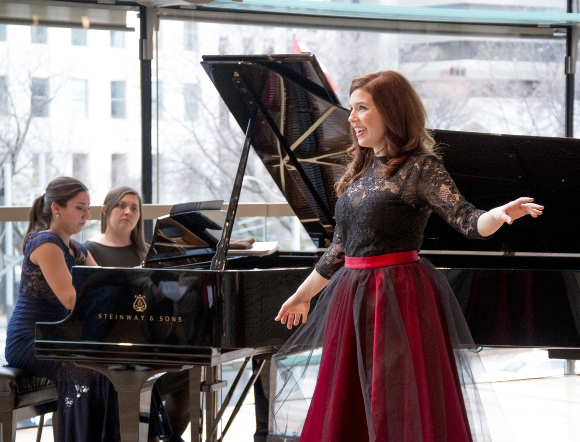


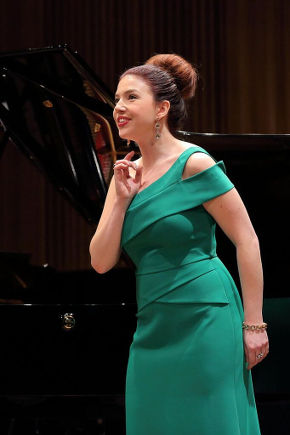 Next week is a bit quiet. The lull before Messiah madness perhaps There are though three shows on Thursday December 1st. You can see soprano Chelsea Rus in recital with Marie-Ève Scarfone at lunchtime in the RBA. She will be performing the program that won her the inaugural Wirth Vocal Prize at the Schulich School of Music at McGill.
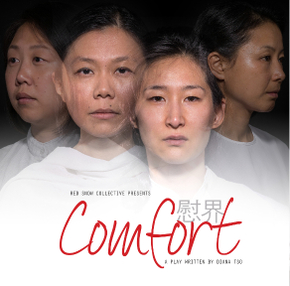 Over 200,000 women from across Asia were conscripted into sexual slavery by the Japanese army in WW2. They were euphemistically described as “comfort women”. In 2009 playwright Diana Tso met some of the survivors, heard their stories and wrote a play based on their testimony. The result was Comfort, currently playing at the Aki Studio in a production directed by William Yong with music by Constantin Caravassilis.
