
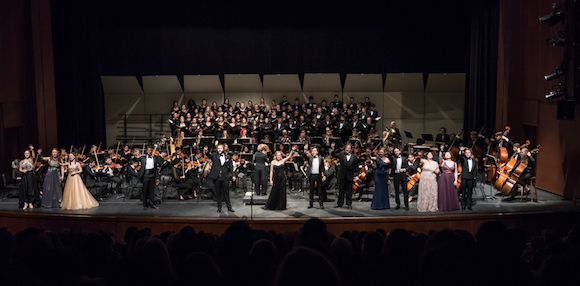
The line ups for both the COC’s Centre Stage competition and the IRCPA’s Ten Singing Stars: The Next Generation have been announced. The former, besides cash prizes, is also the principal route into the COC’s Ensemble Studio program. The latter gets the winner an IRCPA Career Blueprint which includes three days at the National Opera Center in New York, new photographs, video and audio recordings, website consultation and mentoring with professionals.
At Centre Stage at the Four Seasons Centre on November 1st you can see:
- Tenor Matthew Cairns of St. Catharines, ON
- Soprano Vanessa Croome of Nanaimo, BC
- Bass-baritone Aaron Dimoff of Owen Sound, ON
- Bass-baritone Vartan Gabrielian of Toronto, ON
- Tenor Rocco Rupolo of Toronto, ON
- Mezzo-soprano Jamie Groote of Oakville, ON
- Soprano Andrea Lett of Humboldt, SK
- Soprano Noelle Slaney of Gander, NL
This is a gala starting with a reception at 5.30 pm. Tickets at coc.ca.
The IRCPA concert is on November 5th at 7.15pm at Zoomer Hall. Tickets at http://ircpa.net. The line up is:
Sopranos: Tonia Cianciulli, Jocelyn Fralick, Beth Hagerman, Teiya Kasahara, Kathleen Promane, Sara Schabas, Gwenna Fairchild-Taylor
Mezzo-soprano: Georgia Burashko
Tenors: Zachary Rioux, John-Michael Scapin
 How, collectively, we remember is a cultural act defined by both choices and the general milieu in which the remembering takes place(*). Sometimes this results in stories being distorted and “misremembered”. The story of Shanawdithit, the last survivor of the Beothuk people is, perhaps, one such story. Her life and death, the final act in the campaign of genocide against her people is still “remembered” in Newfoundland culture but how much do we really know? The “evidence” boils down to a handful of sketches by Shanawdithit, annotated by one William Cormack; pretty much the only white person to show her any kindness or to display any interest in her people. Dean Burry and Yvette Nolan’s new opera; a co-production of Tapestry Opera and Opera on the Avalon asks what we know and how we know it. I attended a workshop presentation of the incomplete work yesterday.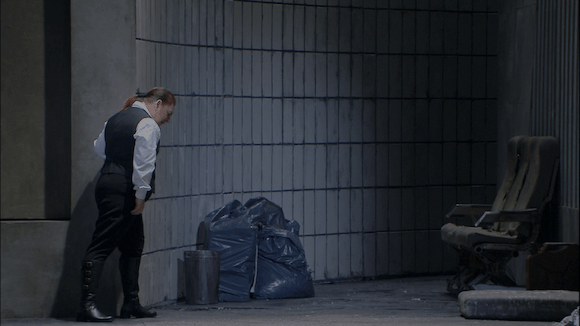
 Toronto City Opera puts on fully staged productions with young professional soloists and an amateur, unauditioned chorus. It’s piano accompaniment. I’ve never been to one of their shows, not least because until recently they have performed at the Bickford Centre which I loathe. Now they are at the Miles Nadal JCC which is a huge improvement and both Jennifer Tung and Alaina Viau are on the creative team, which is promising. This year they are opening their season with Le nozze di Figaro running on December 6th, 7th and 9th. The cast includes Dylan Wright as Figaro, Brittany Rae as Susanna, and Lillian Brooks as Cherubino. There’s also a Traviata in March with Beth Hagerman as Violetta.
 Coming up later this month…
 Against the Grain Theatre have announced an ambitious 2018/19 season. There are two main stage shows. The first is Bound, which had a
 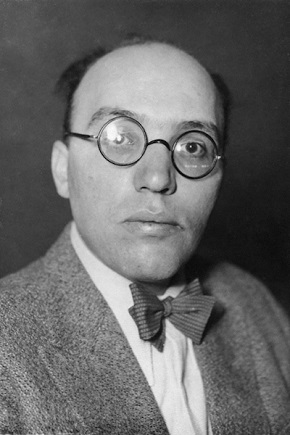 Things are starting to liven up again in the Toronto scene. Here’s a look ahead to the balance of September and the first half of October. This week sees a performance of Weill’s Little Mahagonny by VOICEBOX at Gallery 345. That’s on Tuesday 25th at 7.30pm and will be followed by a wine and cheese reception. Tickets are available at Eventbrite.
 That headline is taken from the eighth movement of Jonathan Dove’s 2016 work for orchestra and children’s chorus; A Brief History of Creation, which takes us in thirteen movements from the stars to man via, inter alia, rain, sharks, whales and monkeys. The text, by Alasdair Middleton, is clever, engaging and singable. The music is eclectic. There are elements of atonality but also intense lyricism. It’s by turns shimmery, frantic, doom laden and meditative. It engages beautifully with the text and Dove has a very sure sense of what is and is not reasonable to ask of a children’s choir. Some short text sections are left as spoken (with a very authentic Mancunian accent). All in all, it’s a witty and enjoyable piece that doesn’t outstay it’s 45 minutes or so.
