Sing unto the Lord a new song

Judith_Beheading_Holofernes_by_CaravaggioHubert Parry’s 1888 work Judith got its North American premiere yesterday in a performance by Pax Christi Chorale at Koerner Hall.  It’s a typical English high Victorian oratorio, commissioned by the Leeds Choral Society Birmingham Festival (Wikipedia strikes again).  It’s got some very grand choruses and some tuneful solos (one was later used for the hymn tune Repton setting the words “Dear Lord and Father of Mankind”).  If one like’s that sort of thing, and Peter Simple’s Alderman Footbotham of the Bradford Tramways and Fine Arts Committee would certainly have approved, it’s very enjoyable.  And if that’s not enough, there’s human sacrifice, seduction and murder to keep one’s interest.

Continue reading

Führerbunker

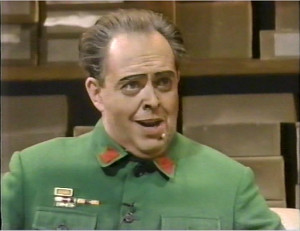
Andrew Ager’s Führerbunker is a short chamber opera depicting the events leading up to Hitler’s suicide in April 1945.  It’s a tautly constructed work in which many short scenes are woven into a seamless and compelling whole.  It flies by and its 45 minute length seems even shorter.  The score is spare, even brutal, as befits the subject matter.  The composer told me he had initially envisioned something Wagnerian but feared that that must descend into pastiche.  He made the right decision.  So, the piano line is minimalist with elements of serialism and very  little support for the singers.  It’s a style that has perhaps been largely discarded (in north America at least) but here it was startlingly effective.  Perhaps the crappy Tranzac Club piano contributed to the effect!

Continue reading

In a handbag?

One probably can’t go far wrong with an adaptation of Wilde’s The Importance of Being Earnest and the operetta, Earnest,The Importance of Being by Victor Davies and Eugene Benson doesn’t.  In fact it doesn’t go far from Wilde at all following the plot of the original faithfully and containing all the well known lines.  It means too, of course, that it has the flaws as well as the virtues of the original.  The first act can drag a bit as Wilde gets a bit too clever but t builds to a very effective second half which flies by.  The duet for the girls, To Speak With Perfect Candour is probably the best number in the piece.  Davies’ music too does not try to be too portentous.  It’s a bit of a pot pourri of styles with, at least, big band music, classical operetta, popular song of the period and what seems to be a nod to Andrew Lloyd-Webber.  It’s perfectly consistent with the text.  I don’t think though that there’s a single number that one would call truly hummable.

Lady Bracknell 1 Continue reading

The Futile Precaution

Yesterday lunchtime the Ensemble Studio gave us a preview of their upcoming performance of the Barber of Seville.  The production, of course, will be the one currently on stage at the Four Seasons Centre and there were clear echoes of that in the way yesterday’s event was put on though they also played with the fact that Almaviva will be split between Andrew Haji and Jean-Philippe Fortier-Lazure with much pulling and pushing into place.

SONY DSC Continue reading

Much Ado

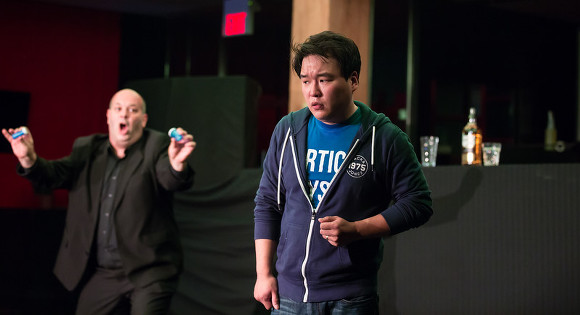
11160680_986649388020560_2336906169017147576_nI really wasn’t at all familiar with Berlioz’ Béatrice at Bénédict before last night’s opening of a production by Metro Youth Opera at the Daniels Spectrum.  All I knew was that it had something to so with Shakespeare’s Much Ado About Nothing and a reputation for being rather tedious.  For the record it’s basically the Shakespeare play shorn of all the darker elements; no Don John, no fake funeral, resulting in a RomCom in which the title characters, after much verbal sparring,  are finally brought to admit that they are in love and get married along with Claudio and Héro.  Further compressed a little (Somarone is axed) for this production it runs a pleasingly untedious two hours or so.

Continue reading

Song for Athene

johntavenerLast night’s Soundstreams concert at Trinity St. Paul’s was devoted to works by John Tavener and people who were close to him.  The principal performers were soprano Patricia Rozario, Choir 21 and the Toronto Children’s Chorus joined, as needed by Christopher Dawes on piano and organ and Erica Goodman on harp.  Conducting duties were split between Elise Bradley and David Fallis.  There was plenty of explanatory material from artistic director Lawrence Cherney plus some from Ms. Rozario as well as taped comments from Tavener to set up the pieces.

Continue reading

Opera Atelier reverts to style

Opera Atelier’s spring production; Gluck’s Orphée et Eurydyce, opened last night under most unspringlike conditions.  Much had been made in the run up to the opening of the use of Berlioz’ 1859 performing edition, representing Tafelmusik’s deepest push into the 19th century and I think many of us were wondering how far this somewhat different sensibility would be reflected in the staging.  In the event it was a non event.  Connoisseurs of 19th century brass instruments might just have been able to hear a difference between the cornets à piston used in place of the natural instruments but nobody I talked to could.  The staging too was a remount of a previous production in classic Opera Atelier style though some of the dance numbers did feature point shoes and a more athletic style; notably the pas de deux in the closing ballet which was surely the terpsichorial highlight of the evening.

Mireille Lebel (Orpheus), Peggy Kriha Dye (Eurydice) and Meghan Lindsay (Amour). Photo by Bruce Zinger.

Mireille Lebel (Orpheus), Peggy Kriha Dye (Eurydice) and Meghan Lindsay (Amour). Photo by Bruce Zinger.

Continue reading

More Shakespeare brushing

Karine White

Karine White

Yesterday afternoon I went to see the UoT Opera program’s show Brush Up Your Shakespeare.  It was substantially the same as the program they gave six months ago in the Richard Bradshaw Amphitheatre so I ‘m just going to comment on changes of one kind or another.

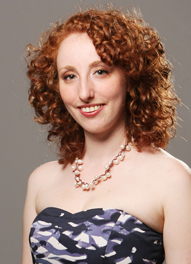
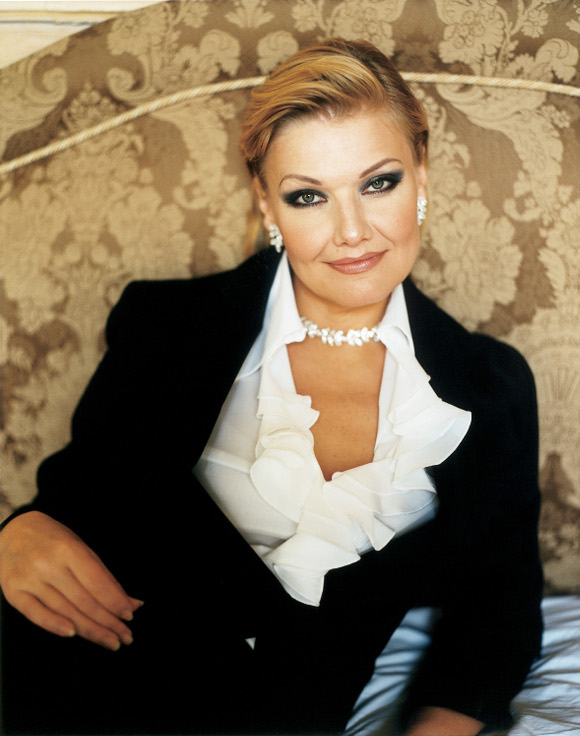
There were a few extra numbers.  Danika Lorèn sang the Poison Aria from Gounod’s Roméo et Juliette.  It’s an interesting voice.  There’s lots of power but maybe isn’t quite fully under control yet.  Still, easier to refine a powerful basic instrument than get anywhere with a small one.  One to watch.  William Ford sang Macduff’s O figli mie! from Verdi’s Macbeth.  That’s a pretty bold call for a student and he wasn’t bad at all.  This time we also got a sort of catalogue raisonnée of the program from director Michael Patrick Albano with contextual information on each number.

Continue reading

Adieu to Charlotte and Clarence

Each year, round about now, the COC stages a lunchtime concert or two featuring departing members of the Ensemble Studio singing music that has special meaning for them.  Yesterday we heard Clarence Frazer and Charlotte Burrage with Jennifer Szeto at the piano.

2015-03-26-COC-NightsDreams-070

Continue reading

Dido and Aeneas in Trinity College Chapel

Last night the UoT’s early Music program presented Purcell’s Dido and Aeneas in the chapel at Trinity College.  It was a bit of a strange experience.  The work was semi-staged with dancers doubling Dido and Aeneas and a few extra as “chorus dancers”.  With a twelve person chorus and all the soloists plus the small band this made for a lot of people in the space.  Trinity College Chapel is long, narrow and high with traditional pew seating and a minimally raised platform for the altar.  All of which meant that only the first few rows and , maybe, people on the aisle had much of a view of anything.

tcc Continue reading