AtG’s La Bohème six years on

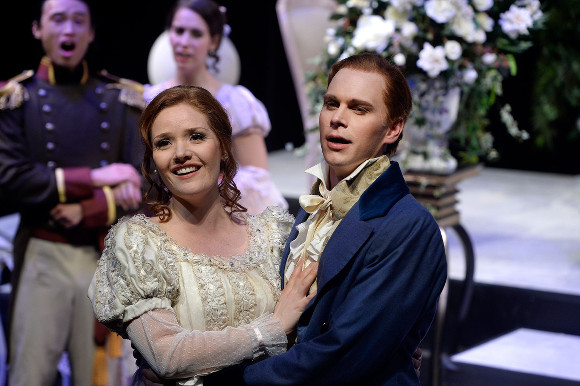
Six years ago a bunch of unknowns calling themselves “Against the Grain Theatre” put on Joel Ivany’s English language, updated version of Puccini’s La Bohème in the back room of the Tranzac club.  I was there.  I reviewed it on my LiveJournal because it would be another six months before I started this blog.  There’s been a lot of water under the bridge since then.  The Tranzac has been tarted up quite a bit since La Bohème 1.0, though even by 2011 it had become a lot smarter than when the Nomads hung out there and the wall featured a photo of Sorbie with the McCormick cup.  Lets face it anywhere would be more sedate without Neil (RIP mate).  Oh yeah, and the original AtG crowd have become quite respectable, even famous perhaps.  The singers are all Equity members and get paid properly.  There are sets and props that weren’t borrowed from Topher’s mum.  Topher and Joel have done the conducting and directing thing for major companies in real opera houses.  And I’ve been writing this stuff most every day for six years.

act1

Continue reading

The Chocolate Soldier

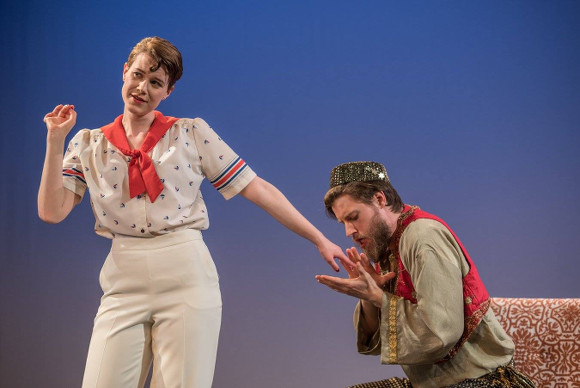
Toronto Operetta Theatre’s current production is Oscar Straus’ The Chocolate Soldier in the English version.  It’s based on Shaw’s Arms and the Man but, as is usually the case with musical adaptations of Shaw, it’s rather less acerbic than the original.  In fact, it comes over as a somewhat farcical love story with a few gentle pot shots at the military and militarism.  There are some good comic lines and the music is tuneful and well crafted.

tcs1

Continue reading

Rompin’ with Rossini

Even by the standards of Rossini comedies The Italian Girl in Algiers is a bit daft.  Mustafà, bey of Algiers, is tired of his wife and plans to get rid of her by marrying her off to his Italian servant Lindoro.  He wants an Italian girl because well squire, nudge nudge.  He instructs his sidekick and commander of the galleys Haly to procure one or be impaled (a somewhat pointed joke that runs through the piece).  He shows up with Isabella and her sidekick Taddeo.  Isabella just happens to be Lindoro’s squeeze.  She immediately starts to plot their escape and persuades Mustafà that to succeed with Italian girls he must become a Pappatacci which involves eating enormous amounts of food and not getting upset when his beloved gets off with other men.  With Mustafà in a pasta induced near coma the lovers escape and Mustafà reconciles with his wife.  Got that?

algiers1

Continue reading

Hausmusik

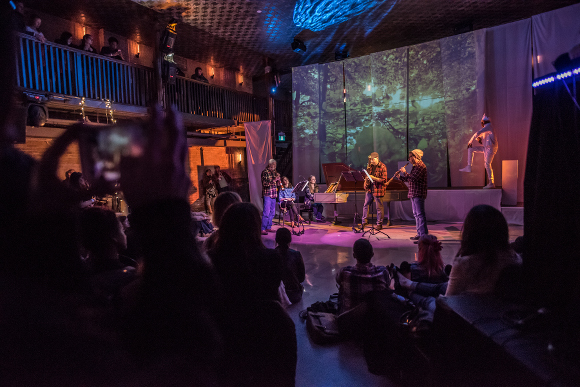
Hausmusik is Tafelmusik’s less formal concert series.  It’s not exactly a concert; more an “event”.  Last night director Alaina Viau mixed music (woodwind trio, harpsichord, soprano (Ellen McAteer) and electronics from SlowPitchSound) with film projections by Darren Bryant and dance by Libydo to create quite a varied series of effects but all, musically, (just about) within the range one would expect from Tafelmusik.

HausMusik-photobyDahliaKatz-5011 Continue reading

Intersections

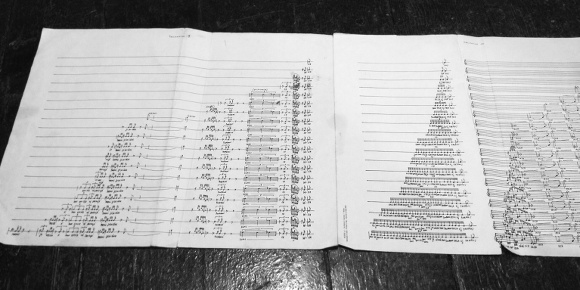
The third concert in the Heliconian Hall series from Adanya Dunn, Brad Cherwin and Alice Hwang was titled Intersections and was designed to explore “the sphinx like mind of Robert Schumann” through his own music and music inspired by him.  First up was Kurtàg’s Hommage à Robert Schumann featuring Alice and Brad and guest violist Laila Zakzook.  This is a complex and difficult piece.  Some sections consist of short fragments of “conversation” between the instruments.  At other times there is a more obvious line and it varies in mood from extremely violent to almost lyrical.  It’s an interesting exploration of Schumann’s various musical personalities through a completely different sound world.

aphergisscore

Continue reading

Century Song

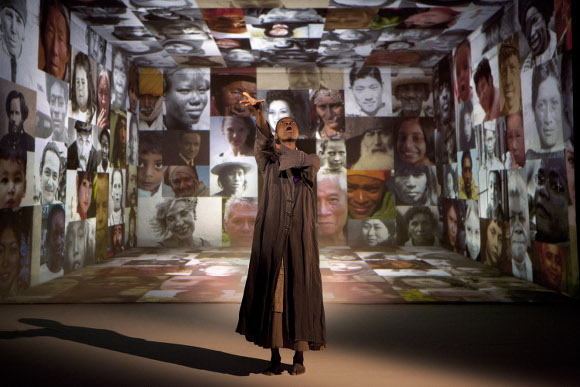
Century Song is a 50 minute show combining music, movement and video projections as it takes us on an aesthetic journey through the last hundred years.  At the heart of the show is soprano Neema Bickersteth who does the singing and dancing.  The singing consists of vocalises by Rachmaninoff, Messiaen, Cage, Aperghis and finally, a piece composed for the show by Reza Jacobs.  The songs are accompanied Gregory Oh on piano and Ben Grossman on percussion and computer.  The musical interludes are structured improvisations originally devised by Reza Jacobs, Gregory Oh and Debashis Sinha.  The dance elements are choreographed by Kate Alton and use a very wide kinetic vocabulary.  Bickersteth’s constantly changing costumes further illustrate the time travel element of the narrative.

Century_Song_7

Continue reading

Opera Atelier’s Médée

There are umpteen operas based more or less closely on the legends surrounding Medea, Jason, the Golden Fleece and the events afterwards in Corinth.  Marc-Antoine Charpentier’s 1693 version to a libretto by Corneille deals with the events in Corinth subsequent to Jason and Medea’s return with the fleece.  The plot, in essentials, is simplicity itself.  Jason is scheming to secure his future, and that of his children, by ditching Médée and marrying the king’s daughter Créuse.  Médée is not having this and wreaks revenge on just about everybody else in the piece.  Somehow Charpentier and Corneille string this out over five acts and the obligatory prologue glorifying Louis XIV, wisely omitted by director Marshall Pynkoski.

medee1

Continue reading

Collectìf

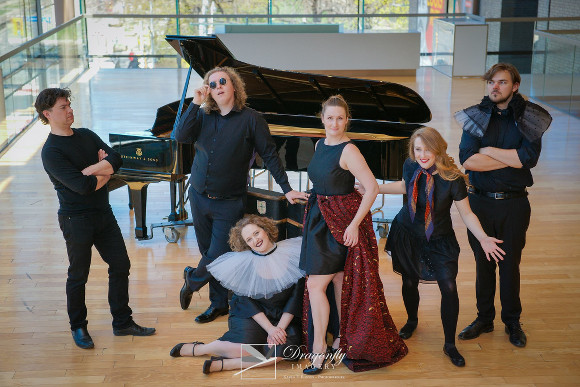
Danika Lorèn and co. aka Collectìf were back today with a lunctime show in the RBA.  Like their previous shows this was a themed, more or less staged, series of art songs.  This program was inspired by Verlaine’s Fêtes galantes and featured all French texts set by a range of composers.  Most of it was pretty typical chansons of the fin de siècle; material I find pleasant enough but not especially compelling.  The surprise, and a very welcome one, was four pieces by Reynaldo Hahn setting texts by Charles, duc d’Orléans and Faullin de Banville.  Here Hahn turned his flair for vocal and pianistic colour to great effect producing pieces strangely evocative of the Renaissance.  Fancifully perhaps, I could imagine these being sung at the court of Philip the Good (assuming of course that he had a piano…)

collectif_kr Continue reading

Philippe Jaroussky and Les Violons du Roy

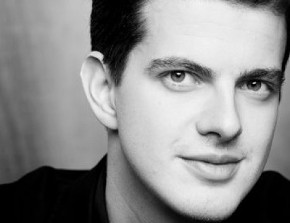
jarousskyLast night Philippe Jaroussky appeared with Les Violins du Roy and conductor Matthieu Lussier in a mostly Handel program at Koerner Hall.  It was a very good evening.  Les Violons du Roy is a pretty small band; less than twenty including continuo, but they manage to produce quite a big sound while remaining elegant and flexible in a thoroughly idiomatic baroque way.  The instrumental component consisted of a Handel overture, Fux’ Ouverture in D minor and Johann Gottlieb Graun’s (not the better known Carl Graun who was apparently his brother) Symphony in B Flat Major.  It was a pretty good sampling of what one might have heard in the courts of Germany in the early 1700s and rather enjoyable.
Continue reading

Porgi amor


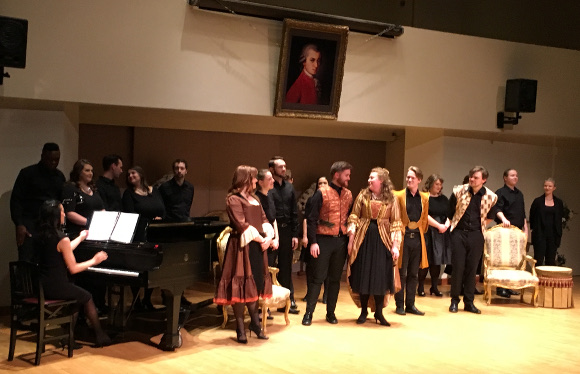
UoT’s show Porgi amor consisted of a series of staged and costumed scenes from Mozart operas with linking commentary, all designed by Michael Patrick Albano.  The operas ranged from La finta giardiniera to La clemenza di Tito with all the major bases in between covered off.  The emphasis was on ensemble numbers and providing opportunities for as many singers as possible so there was a cast of thousands.  It was well structured, quite slick and there was some very decent singing.  One expects a reasonably high standard from UoT Opera and we got it.  As I usually do with this kind of show I’ll refrain from a play-by-play and just talk about a few highlights and do some “talent spotting”.

porgiamor

Continue reading