
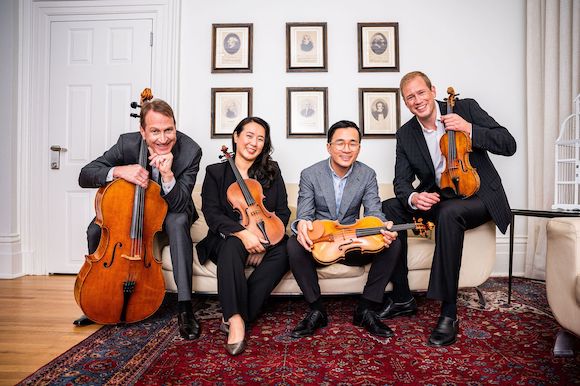
Last night’s Toronto Summer Music offering in Walter Hall was American themed in the broadest sense. The New Orford Quartet kicked things off with three pieces for string quartet. The first was Piazzolla’s Tango Ballet in Bragato’s arrangement for string quartet. It’s kind of tango/jazz fusion and great fun. Jessie Montgomery’s Strum is a sort of homage to the southern American tradition of a different kind of string instrument. Lots of complex pizzicato and other effects. Carmen Braden’s Raven Conspiracy is a three movement work for spoken voice and quartet dealing with both the mythical and biological raven. It’s playful and extremely virtuosic. I was struck by the fact that the New Orfords are not just a very fine ensemble but a very flexible one. Nothing seems to faze them!


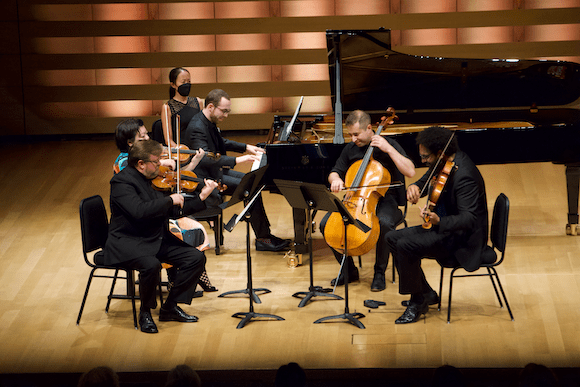
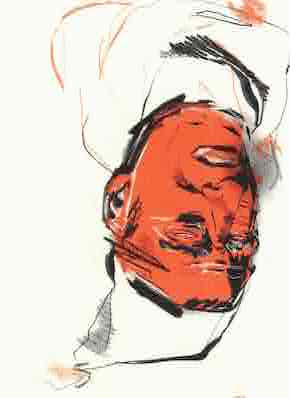 Last night the Happenstancers presented a short but extremely enjoyable Pierrot themed concert at 918 Bathurst. The major work, unsurprisingly, was Schoenberg’s melodrama Pierrot lunaire for voice and chamber ensemble. It was presented in two parts. The first fourteen poems formed the first half of the programme which closed out with the concluding seven. It was extremely well done. Danika Lorèn was an excellent choice as the voice. She has the technique for Schoenberg’s tricky sprechstimme as well as the innate musicality and sense of drama the piece needs. The standard “Pierrot ensemble” is perfectly suited for the Happenstancers typically eclectic mixing of instruments. Here we had Brad Cherwin on clarinets, Rebecca Maranis on flutes, Hee-See Yoon on violin and viola, Sarah Gans on cello and Alexander Malikov on piano. Simon Rivard conducted. Skilful playing and well timed interplay between instruments and voice made for a most satisfactory experience.
 Sunday, at Grace Church on the Hill, Soundstreams presented Celebrating R. Murray Schafer. It felt like a cross between a concert and a memorial service. There were no prayers but there were eulogies and Eleanor James drew the parallel between Schafer’s sources of inspiration and Pentecost; that feast of the Church having been chosen deliberately for the event.
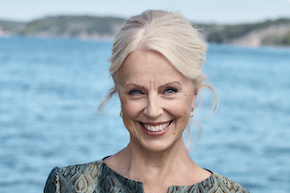 Veteran mezzo-soprano Anne Sofie von Otter appeared in recital at Koerner Hall yesterday afternoon with pianist Christopher Berner. The first part of the programme was some fairly gentle Mozart with some fairly light weight Weckerlin and one long Schubert piece; “Die Viola”. A short Mozart piano piece rounded out the programme. It was stylish, enjoyable singing but one felt that both choice of material and method of presentation were being chosen to conserve the voice. How would things go after the interval when three songs from Winterreise were promised?
