Quirky Idomeneo

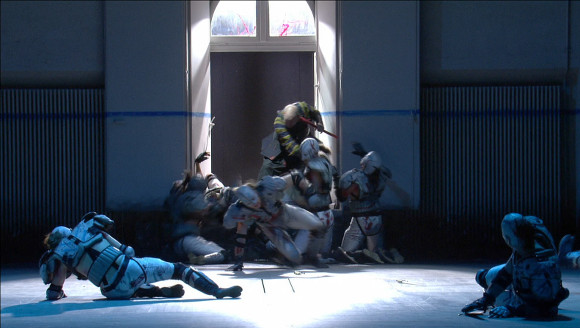
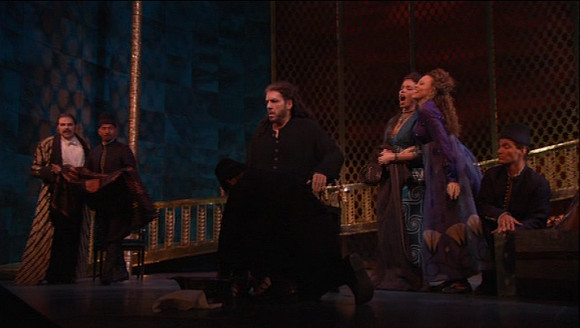
Dieter Dorn’s production of Idomeneo, filmed at the Bayerisches Staatsoper in 2008 has some interesting ideas and some arresting images but ultimately it’s hard to figure out where he is trying to go.  There’s a lot to like.  He clearly places Elettra as a member of the House of Atreus which makes her more believable.  He also creates credible personalities for Ilea, Idamante, idomeneo and Arbace.  No mean feat.  Some of the images are quite arresting too.  There is lots of blood and plenty of stage action.  The sets are chaotic piles of stuff.  Idamante gets a killer sea monster hunting rig.  Then there is the ending.  Instead of finishing on the “final chorus” the chorus drape the set with white sheets and for ten minutes the orchestra play what is listed in the booklet as a ballet but there is noone on stage and nothing is happening.  Going out on ten minutes of the most boring music in the opera is just bizarre.

1.spaceninjas Continue reading

Die tote Stadt

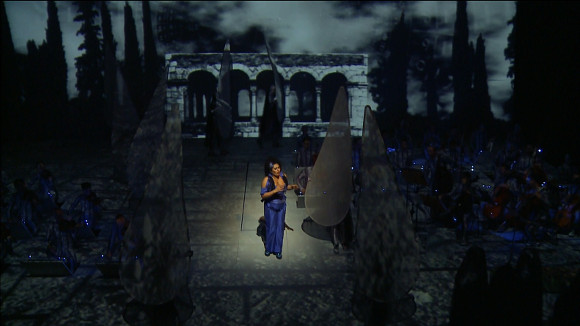
My acquaintance with Korngold’s Die tote Stadt has been pretty much limited to recital and competition performances of Glück, das mir verlieb, better known as Marietta’s Lied and, apparently, the last opera aria to become a hit single and Fritz’ act 2 piece Mein Sehnen, mein Wähnen.  So, I was quite glad to get my hands on a complete recording of this lushly lyrical and rather weird piece.  The “dead city” of the title is Brugge and the story concerns a wealthy man, Paul, who has turned his house, and his life, into a shrine to his dead wife Marie.  He encounters a dancer, Marietta, who very closely resembles his late wife.  What follows is wild and chaotic and is, ultimately, revealed to be a dream.  Paul realises that only in the next world can he be reunited with Marie.

1.room Continue reading

High tech Orfeo marred by artsy video direction

La Fura dels Baus mounted a spectacular production of Gluck’s Orfeo ed Euridice at the Festival Castell de Peralada in 2012.  The concept has the orchestra in costume, on stage and fully involved in the action.  There are lots of video projections and spectacular lighting effects.  In fact at times the whole thing resembles a son et lumière.  There’s also lots of aerial action.  It’s all rather exciting.  Great work from director Carlus Padrissa.

1.orfeo Continue reading

Let trumpets blow

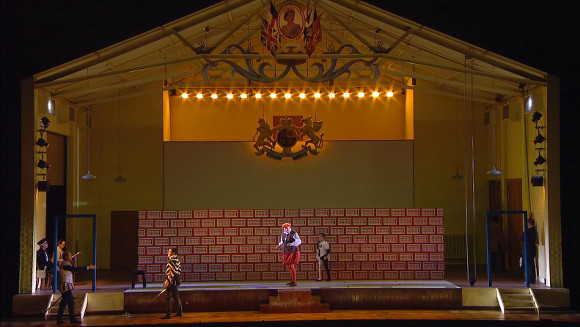
A new recording of Britten’s Gloriana is to be welcomed, even when it’s less than perfect.  It’s an unusual work for Britten.  It’s very grand.  The orchestra is large and the music doesn’t seem to be as transparent and detailed as much of his work.  This is especially true in Act 1 where I almost wondered whether Britten was sending up “grand opera”.  It’s also a grand opera sort of plot.  The libretto is based on Lytton Strachey’s Elizabeth and Essex and deals with the late life romance between the queen and the young Robert Devereux, earl of Essex and deputy in Ireland.  It has some fine moments; notably the lute songs in Act 2 and the choral dances in Act 2.  Act 3 is also dramatically quite effective; dealing with Essex’ abortive rebellion and execution.  Curiously, in the final scene, Britten resorts to a lot of spoken dialogue, as he does briefly with Balstrode’s admonition in Peter Grimes.  It’s almost as if he has no musical vocabulary for the highest emotional states; a sort of anti-Puccini.

1.duel Continue reading

The Rape of Lucretia

Britten’s Rape of Lucretia, which premiered at Glyndebourne in 1946, is an interesting work in a number of ways.  Musically it marks a distinct break from Peter Grimes and anticipates the later operas in a number of significant ways.  It’s written for much lighter forces than Grimes; string quintet, wind quintet plus harp, percussion and piano and there’s no chorus (in the conventional sense).  It’s also not a “numbers” piece.  There are no set pieces here.  The orchestral writing is spare and somewhat dissonant with that absolute clarity that is so characteristic of Britten.  Sometimes this almost distracts from the drama on stage.

1.chorus Continue reading

Renée and her frocks

John Cox’s production of Massenet’s Thaïs at the Metropolitan Opera is probably most remembered for the rather extraordinary collection of Christian Lacroix frocks that Met perennial Renée Fleming gets to wear.  It’s rather more than that.  In fact it’s a pretty good example of what the Met does best.  It’s sumptuous and spectacular and has a pretty much ideal cast which, together, go a long way toward making this curious piece rather enjoyable.

1.athaneal Continue reading

A static Tristan

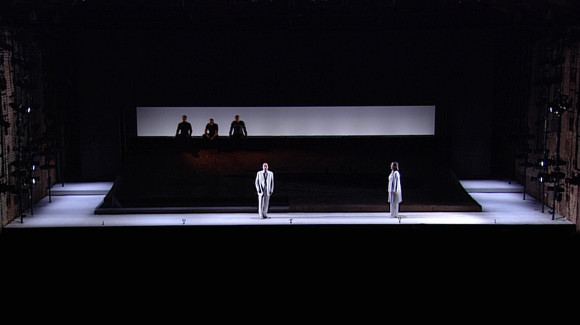
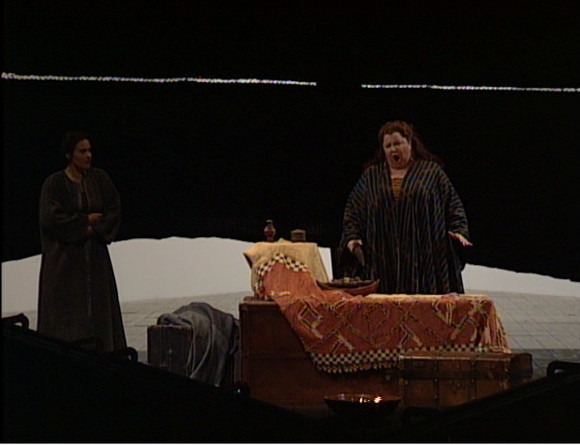
Dieter Dorn’s production of Tristan und Isolde for the Metropolitan Opera is one of the most interesting from a design point of view that I have seen from the Met.  If only the direction of and acting of the principals in this recording (made in either 1999 or 2001; sources differ) was up to the same standard!

1.isolde_brangane Continue reading

The ceremony of Innocence is drowned

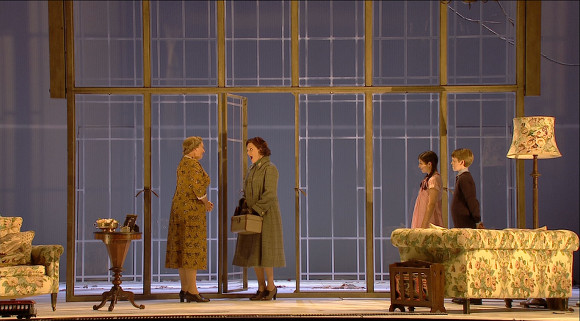
Jonathan Kent sets his 2011 Glyndebourne production of The Turn of the Screw in the 1950s.  It’s effective enough especially when combined with Paul Brown’s beautiful and ingenious set and Mark Henderson’s evocative lighting.  The set centres on a glass panel which appears in different places and different angles but always suggesting a semi-permeable membrane.  Between reality and imagination?  Knowledge and innocence?  Good and evil?  All are hinted at.  A rotating platform allows other set elements to be rapidly and effectively deployed.  There’s also a very clever treatment of the prologue involving 8mm home video.

1.arrival Continue reading

Moby Dick

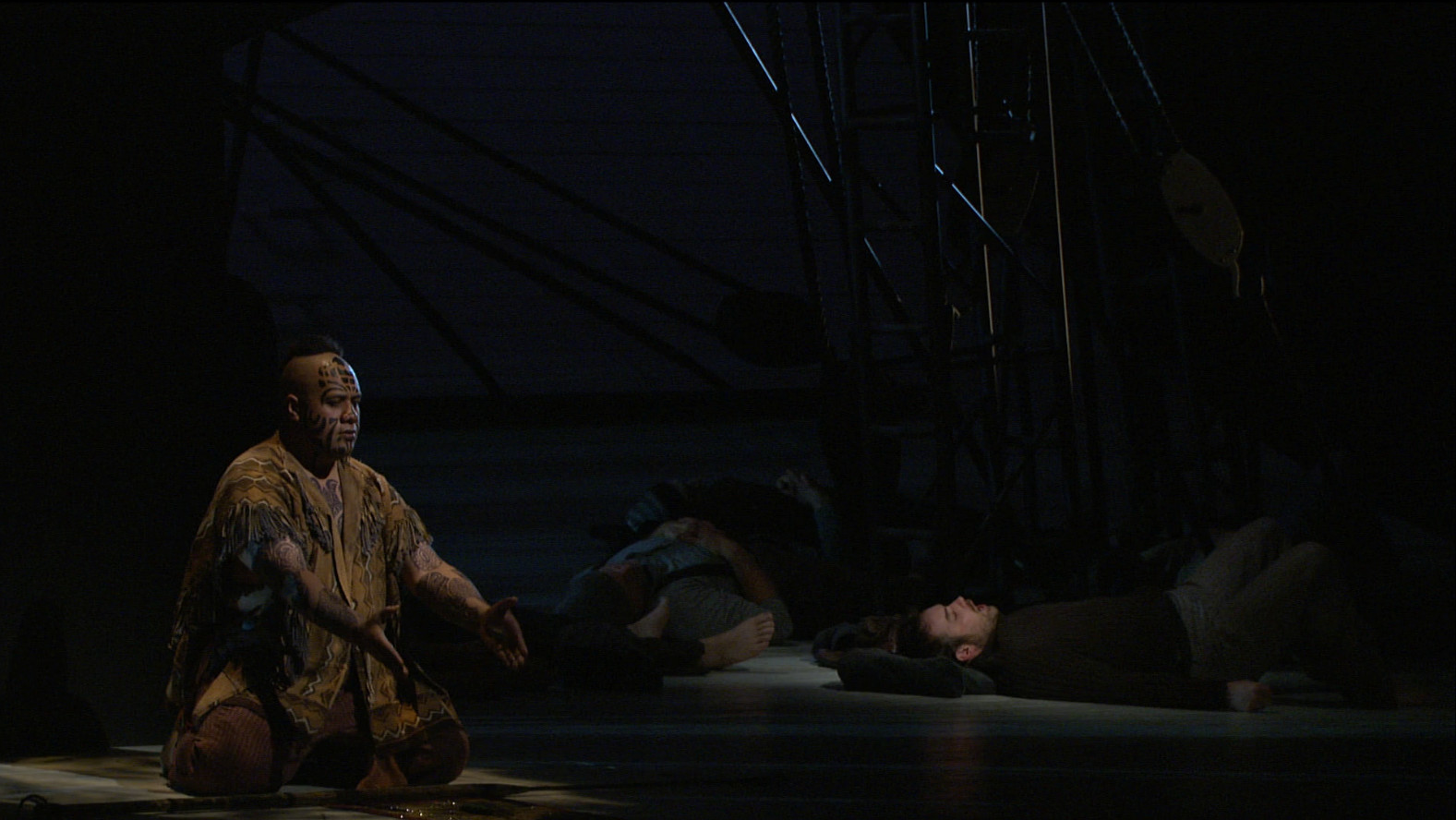
Jake Heggie’s Moby Dick has been successful in a way few contemporary operas are.  Since its Dallas premiere in 2010 it has been given in Adelaide, Calgary, San Diego and, most recently, San Francisco where it was recorded in 2012.  It’s not hard to see why it has been a success.  The subject is dramatic and has been skilfully compressed into a little over two hours by librettist Gene Scheer and the score steers the fine line between accessibility and triviality.  Add to that a visually appealing production and it’s a winning package.

1.queequeg Continue reading

Die Frau ohne Geisterwelt

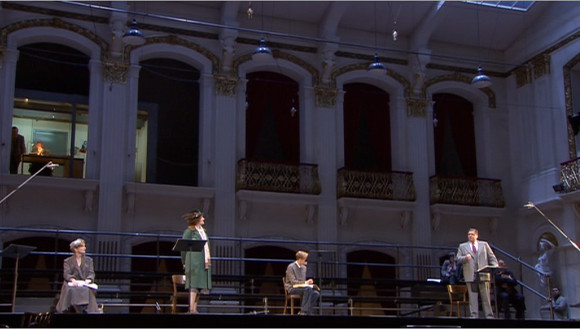
Christoph Loy, in his 2011 Salzburg production of Richard Strauss’ Die Frau ohne Schatten, avoids the problem of how to represent the Spirit World by essentially eliminating it.  Instead we get a Konzept based on Böhm’s first recording of the work in Vienna’s Sofiensalle in 1955.  Vienna is still recovering from the war and the hall is unheated and the singers unpaid.  The Empress is rising star Leonie Rysanek and the Nurse is long time favourite Elisabeth Höngen.  They represent the generations separated by the war.  The Emperor is an American singing in Europe for the first time and, crucially, Barak and his wife are a real life married couple.  Initially we see a lot of recording studio action as singers are moved about by actors in this experiment in early stereo.  Then the action, particularly the Barak/Wife interaction slips more and more off stage.  For the finale, we get a sort of celebratory concert in evening dress.  It’s not a bad concept and this cast handles it very well but I fancy it’s a tough introduction to this far from straightforward opera and it does lose the magic of the Spirit World. (In other words I’m glad I saw the Met production before this one.)

1.studio Continue reading