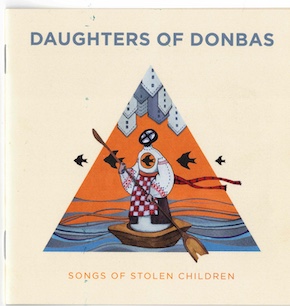
On Friday evening I attended the CD launch for Daughters of Donbas’ new album Songs of Stolen Children at the Tranzac. Let me try and provide some context. The Russian invasion of Ukraine has now been going on for four years and, of course, before that, in 2014, Russia seized the Crimea and territories in the Donbas. The Russians are determined, as they have been since the 18th century, to erase Ukraine as a separate polity and write Ukrainian culture out of the historical record (as they have done with others such as the Crimean Tartars). A relatively recent step in this campaign is the kidnapping of over 20,000 Ukrainian children who have been deported to “re-education” camps in Russia where, cut off from their families, they are trained to be good little Russians. Parallels with events closer to home are a bit obvious. Daughters of the Donbas is a band and a project dedicated to keeping this issue alive. Continue reading
Category Archives: CD Review
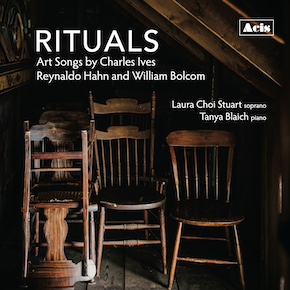
Intriguing recital album from Laura Choi Stuart
Rituals combines songs by Charles Ives, Reynaldo Hahn and William Bolcom around a theme of “living the good life”. The eight Ives songs set texts either by himself or by 19th century English poets in a characteristically Ivesian way. There are folksy bits and hymn tunes (a setting of Arnold’s “West London”) plus some crazy loud piano (“Paracelsus”). Laura Choi Stuart sings them idiomatically and clearly with excellent accompaniment by Tanya Blaich. It’s a vision of the good life rooted in community and collective memory. Continue reading
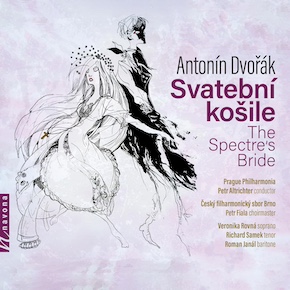
The Spectre’s Bride
Dvořák’s Svatební košile (The Spectre’s Bride) is a dramatic cantata for three soloists, chorus and orchestra. It tells the story of a pious young woman who is surprised while praying by her thought-to-be-lost fiancé. He takes her on a breakneck journey during which he progressively divests her of her prayer book, rosary and cross. She’s a bit slow to catch on but when he invites her to join him in a graveyard she decides to make her escape. Her place of refuge turns out to be a morgue with a fresh corpse in it. The inhabitants of the graveyard call on the corpse to open the door and give the girl up but just in time she remembers to pray to the Virgin and a chorus of cocks announce the dawn driving the dead back into their graves. It just needs Vincent Price or Christopher Lee! Musically it’s very Dvořák; skilful high Romanticism with some folky touches, especially in the vocal writing. It lasts about eighty minutes and it’s well worth hearing. Continue reading
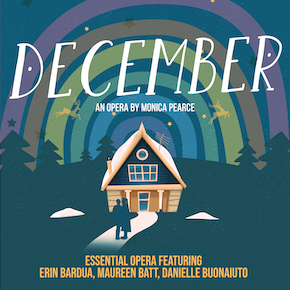
December
The sound track of Essential Opera’s on-line video of Monica Pearce’s COVID era opera December has now been issued as a CD. You can read my review at La Scena Musicale.
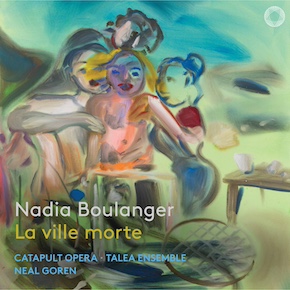
Boulanger’s La ville morte
My review of Catapult Opera’s recording of Nadia Boulanger’s La ville morte is now available at La Scena Musicale.
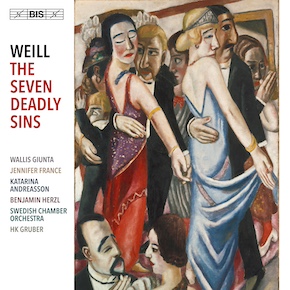
Wallis Giunta sings Weill’s Seven Deadly Sins
My review of the recent CD of Weill works including The Seven Deadly Sins with Wallis Giunta as Anna I and II is now published at La Scena Musicale.
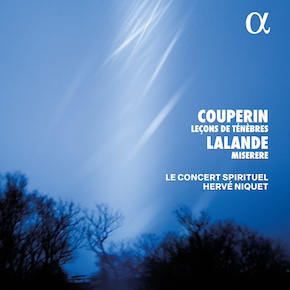
Couperin’s Leçons de Ténèbres
Leçons de Ténèbres is a genre that became popular in France in the 17th and 18th century. It’s a set of texts from the Vulgate version of the Book of Jeremiah to be sung on Wednesday, Thursday and Friday of Easter week. Over time setting these texts became something of a competitive exercise as they came to play a similar role to Handel’s oratorios in 18th century England. They were musical works that one could listen to during Lent when most other musical outlets were unavailable. The fashionable set would roam from church to church in search of the finest settings and the finest singers. Continue reading
Juno awards 2026
The nominations for the 2026 Juno awards have been announced and four of the nominees are recordings that I have reviewed here or elsewhere. Continue reading
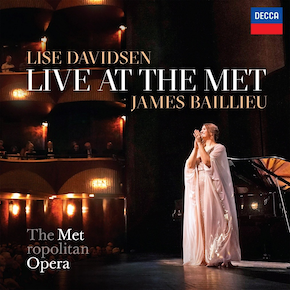
Lise Davidsen at the Met
Soprano Lise Davidsen recently gave a recital at the Metropolitan Opera with pianist James Baillieu. The live recording of that gig is now being released by Decca in various formats. My gut reaction was to think that a piano recital at the Met is not such a great idea but the recording turns out to be terrific.
It starts out with a couple of opera arias, There’s a powerful but very beautiful account of “Vissi d’arte” and a very stylish account of “Morrò, ma prima in grazia” from Verdi’s Un ballo in maschera. In this one she shows some interesting colours as well as terrific, clean, high notes. Continue reading
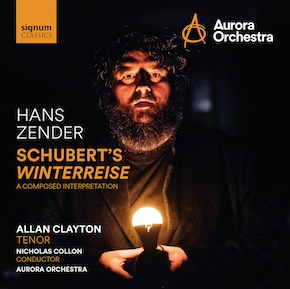
Allan Clayton performs Hans Zender’s version of Winterreise
Hans Zender’s 1993 “composed interpretation” of Schubert’s Winterreise is really interesting. It’s scored for tenor and a twenty-five piece ensemble including accordion, guitar, loads of percussion and a wind machine. It’s also over eighty minutes long with the additional material being mainly intros and outros. A new recording by Allan Clayton with the Aurora Orchestra conducted by Nicholas Conlon has just been released. It’s fascinating.
I’m just going to pick up on a few of the tracks to try and give a flavour of what’s going on. It all starts with “Gute Nacht”. Here the singing doesn’t start until almost the four minute mark after an intro including a lot of extended technique for the strings. To begin with, the singing is extremely beautiful and few singers do “beautiful” better than Clayton, then around the six minute mark it goes wild with accordion coming in and Clayton “uglifying” his voice for a minute or so before a more conventional ending. Continue reading