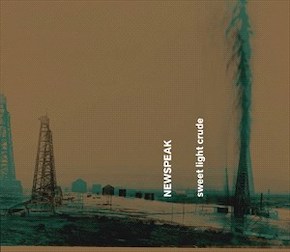
 sweet light crude is a 2010 album by the ensemble Newspeak. It contains six pieces by different composers in a style that has been called “punk classical”. To me, the six pieces are varied enough that I’d be reluctant to put a two word label on the “style” but it’s certainly reflective of a certain kind of New York music making that combines contemporary classical influences with a whole lot of other stuff.
Here are brief, and possibly useful (or not), descriptions of each piece.
- Oscar Bettison’s B&E (with aggravated assault) is a high energy number that sounds like a sort of squeaky minimalist jazz with a drum kit in the background.
- Stefan Weisman’s I Would Prefer Not To, by contrast uses an eyhereal high vocal line over lyrical instrumentals with a rhythm section in the background.
- David T. Little’s sweet light crude is another vocal piece that starts with more ethereal vocals ove a folky violin tune and drone before become something more like synth pop.
- Missy Mazzoli’s In Spite of All This plays off a sort of scooping violin rtiff against a minimalist piano line.
- Pat Muchmore’s Brennschluß goes full on apocalyptic with heavy metal influences. It’s quite chaotic and requires a range of vocal styles including speech.
- Finally, Caleb Burhans Requiem for a General Motors in Janesville is very low key. There’s a slow melody line plus drones before vocals kick in with a kind of post industrial dust bowl feel.
All in all it’s 42 minutes of really varied and intriguing music of a kind I only seem to come across from the New York indie classical scene. It’s well recorded and currently available for download in MP# and CD quality FLAC formats.
For the record Newspeak is Caleb Burhans – violin, Mellissa Hughes – voice, James Johnston – piano, synth, organ, Taylor Levine – guitar, David T. Little – director, drums, Eileen Mack – co-director, clarinets, Brian Snow – cello and Yuri Yamashita – percussion.
Catalogue number: New Amsterdam Records NWAM026

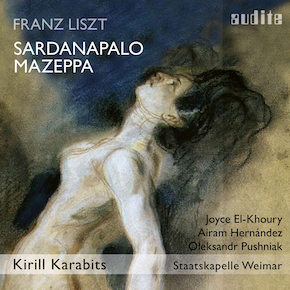 Have you ever asked yourself “What if Liszt had written an opera?”. I hadn’t either. But he did start one; Sardanapalo. It’s based on a Byron poem and tells the story of Sardanapalus, king of Assyria, who met a rather grisly end with his favourite concubine Myra after his subjects revolted, objecting to his decadent lifestyle. The libretto is by an unknown hand and it seems only Act 1 ever got written. Liszt made a start on setting that, leaving just about enough material for Cambridge scholar David Trippett to produce a performable version. This was duly performed and recorded in Weimar in 2018.
 I’ve been listening to an intriguing new album.
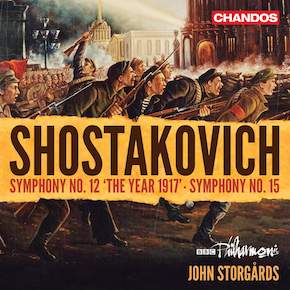 The latest release from the BBC Philharmonic and conductor John Storgårds is a generous coupling of two Shostakovich symphonies; Symphony No. 12 in D Minor (The Year 1917) and Symphony No.15 in A Major. That’s a total of 85 minutes of music. It’s also an SACD release from Chandos so technically it’s exemplary.
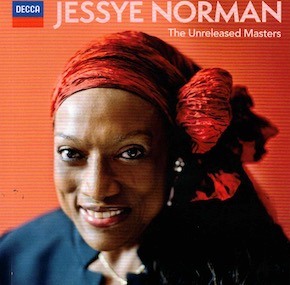 Decca have just released a 3CD set of previously unreleased recordings made by the late Jessye Norman between 1989 and 1998 with various orchestras and conductors.
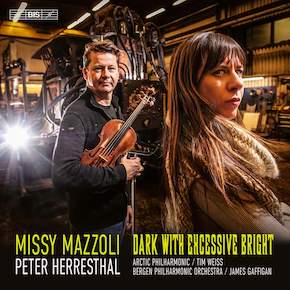 I’ve listened to and liked a lot of Missy Mazzoli’s operatic and vocal music but hadn’t had much exposure to her purely instrumental writing so was interested to get hold of a copy of her new SACD release Dark with Excessive Bright.
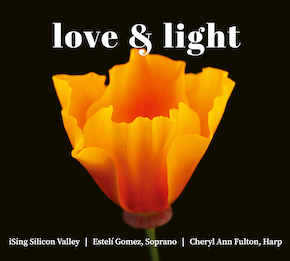 From the good people of Silicon Valley, who brought us the iPod and the iPad and the iDontknowwhatelse, we now have iSing Silicon Valley; a choir of young women. Their new album is titled love and light and features the choir with, on some tracks, harpist Cheryl Fulton and soprano Estelelí Gomez in settings of Latin texts ranging from Hildegard of Bingen to contemporary composers. It’s all sort of in the range of plainchant to polyphony with young bright vibrato-less voices with maybe a New Agey touch (though that may be guilt by association),
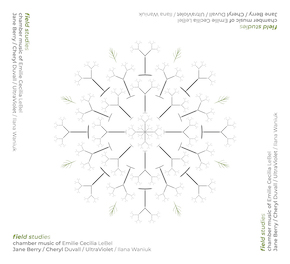 field studies is a CD of chamber music by Canadian composer Emilie Cecilie Lebel. There are five tracks on the record; each around twelve minutes long, scored for various small forces and recorded in different locations.
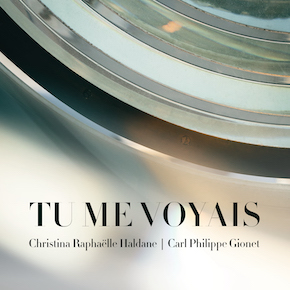 Tu me voyais is a new CD from soprano Christina Raphaëlle Haldane and pianist Carl Philippe Gionet. It contains Gionet’s arrangements of Twelve Acadian Folk Songs plus a piece by Adam Sherkin setting poetry by Gionet and two pieces by Jérome Blais setting texts by Léonard Forest and Herménégilde Chiasson.
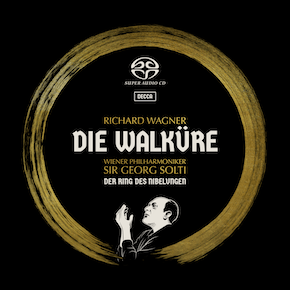 I have now had a chance to listen to the new SACD release of the 1965 Solti recording of Wagner’s Die Walküre. (For some reason Das Rheingold hasn’t arrived yet). I’m not going to do a detailed review of the performance since pretty much everything that could be said about it has been, and by people better qualified than me. As you might expect for a recording twice voted “recording of the century”. I’ve also already written about the technical details of the new transfer in
