

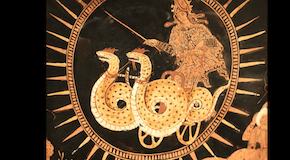
 Cherubini’s Médée is a French opéra comique (i.e. with spoken dialogue) which premiered in March 1797. It’s based on Euripides by way of Corneille whose Médée of 1635 was written, as one might expect, in alexandrines. So its roots, and the work itself, are very much in the French classical tradition. The complication is that the work is much better known in its Italian version with sung recitatives (not authorised by Cherubini) and has developed as a “show off” vehicle for star sopranos; notably Maria Callas and, more recently, Sondra Radvanovsky. Along the way it’s lost a lot of its classicism and become almost verismo like. So I was intrigued to see how much Guillermo Silva-Marin, in presenting the work “in concert” at the St. Lawrence Centre, would try, and how much he would succeed, in reclaiming the Cherubini of a Paris tipping from revolution to Bonaparte.
Médée
Reply
 To 918 Bathurst last night to hear the Happenstancers’ latest offering Hypersuite. The concept was to take movements from Bach suites and partitas for solo instrument and combine them into sets with (mostly) contemporary music of like form. The one exception was some Telemann but we’ll come to that.
 The second set had a lot in common with it. Brad Cherwin on clarinet played Augusta R. Thomas’ d(i)agon(als) followed by the sarabande from Bach’s Partita BWV 1013 (usually played on flute). This segued into Telemann’s fantasie 8 played on English horn by Aleh Remezau. Completely different from the first set; more melodic and dance like, these three pieces also had much in common.
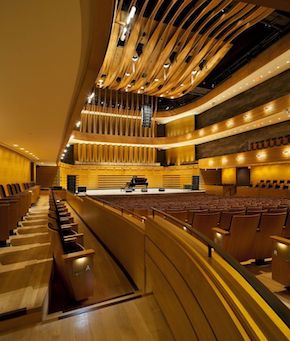 It’s the time of year when people start to make season announcements. First out of the blocks is the Royal Conservatory of Music with the Koerner hall line up. It’s more a teaser than a comprehensive announcement but there’s some interesting dope in it. On the vocal front Peter Sellars is back with the LA Master Chorale; this time with music by Heinrich Schütz. That’s on February 7th 2024. There’s also a recital by Ema Nikolovska with Charles Richard-Hamelin on March 24th 2024. If you haven’t erased all memories of the pandemic you will probably remember that Ema’s streamed recital with Steven Philcox was the highlight of the grim summer of 2020. The Glenn Gould spring opera will be on 2oth and 22nd March 2024. There are also some pretty classy orchestral visits with Daniel Barenboim conducting the Staatskapelle Berlin and Yannick Nézet-Seguin bringing the Philadelphia Orchestra. Full details of the season will be released in June but tickets go on sale next Tuesday. There’s more information on programming and ticket options
 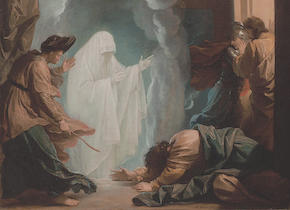 So the COC will announce the upcoming season on the 23rd. I’m really hesitant to try and predict what might be in it because with the change of management and the COVID hangover old patterns don’t seem to mean much anymore. But here goes anyway.
 Here are a few more gigs that I didn’t check in my earlier February post.
 operaramblings