Unknown's avatar

About operaramblings

Toronto based lover of opera, art song, related music and all forms of theatre.

Giulio Cesare at Grauman’s

The 2021 production, by Keith Warner, of Handel’s Giulio Cesare in Egitto at the Theater an der Wien uses Grauman’s Egyptian Theatre as a framing device.  Sometimes the action is clearly the actors, producers, cigarette girls etc involved in the screening of a silent German movie version of “Caesar and Cleopatra”.  Other times they are performing the action of the film/opera.  Sometimes the cinema screen shows clips from the movie.   Other times it shows pictures of the characters on stage.  For example, at the beginning of Act 2 Tolomeo, whose other persona is some kind of sleazy mafioso movie exec, is shooting up.  There’s a B&W picture of him on the screen that slowly changes to bright colours and then becomes more and more a depiction of a pretty heavy trip.
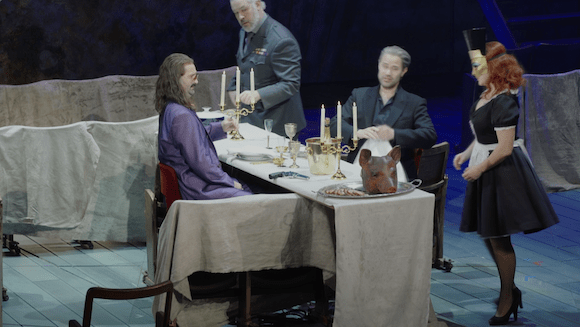
1.dinner

Continue reading

The Dutchman returns

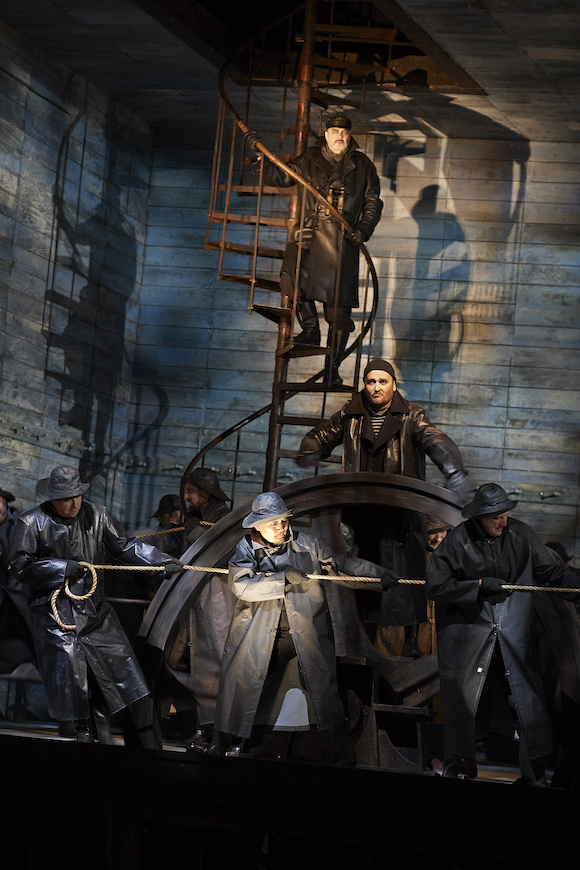
The COC’s 2022/23 season opened last night with a revival of David Alden’s production of Wagner’s Der fliegender Holländer with Marilyn Gronsdal directing.  It’s been eleven years since this production was last seen and, if memory serves, it created some controversy back then, chiefly on account of the Dutchman’s “zombie” crew.  Seeing it again it’s hard to see what the fuss was about.  It’s actually a very straightforward production where sailing ships are sailing ships and spinning sheds feature textile workers.  The only deviation from the libretto that I noticed was Senta’s death.  Here she’s shot by Erik while holding up a picture of the Dutchman.

22-23-01-MC-D-0052-55

Continue reading

Sehnsucht

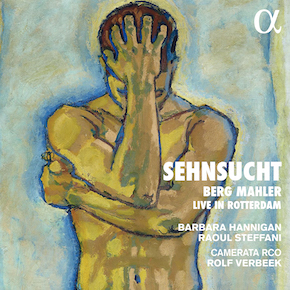
sehnsuchtSehnsucht is the title of a new CD from Barbara Hannigan and friends.  It features three works in new arrangements for voice and chamber ensemble.  Hannigan sings Berg’s Sieben frühe Lieder in an arrangement by Reinbert de Leeuw.  Baritone Raoul Steffani sings the Vier Gesänge Op.2 in an arrangement by Henk de Vlieger. There’s also a performance of Mahler’s Symphony No.4 in an arrangement by Erwin Stein.  The eleven member Camerata RCO is conducted by Rolf Verbeek.
Continue reading

UoT Opera in the RBA

It’s been three long years since the UoT Opera Program students performed in the RBA.  Unsurprisingly none of the current crop are familiar to me at all.  They are a strong group though and I look forward to seeing them again over the course of the academic year.

Yesterday’s programme was a curated and directed selection of duets and larger ensembles from 19th century repertory.  Introductions were provided by Sandra Horst who conducted and Michael Albano and Mabel Wonnacott who directed.  With fifteen singers involved in a show lasting well under an hour including the intros there wasn’t really enough time to get more than a very superficial idea of what each singer is capable and so I think it would be inappropriate to write a conventional review.  Let’s just say that it was wonderful to see them back, a great way to spend a lunchtime and that there was some very classy singing.

UofT4

Watch this space…

Chicago Symphony

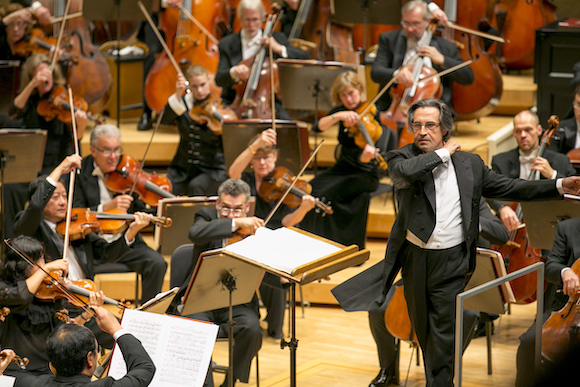
As part of music director Riccardo Muti’s final tour with the orchestra, the Chicago Symphony is coming to Toronto in February for the first time since 1914.  It’s at Koerner too, so it’s a chance to see one of the world’s great orchestras in a really good acoustic.  The dates are February 1st and 2nd 2023 and the programmes are:

  • February 1st:  Beethoven Symphony No. 7 and Prokofiev Symphony No. 5
  • February 2nd: Beethoven Coriolan Overture and Symphony No. 8, Liadov The Enhanted Lake and Mussorgsky Pictures at an Exhibition.

CSOmuti

Photo credit: Todd Rosenberg Photography

The Pilgrim’s Way

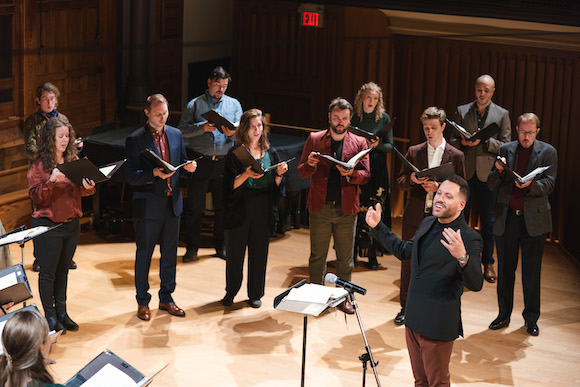
Saturday night saw the inaugural concert of the Toronto Mendelssohn Singers; the professional core of the much larger Toronto Mendelssohn Choir, at Trinity St. Paul’s with Jean-Sébastien Vallée conducting.  There were four pieces on the programme; one very substantial and three shorter works.  Things kicked off with a pleasant but essentially conventional arrangement by Dierdre Robinson of Steal Away. This was followed by an Arabic piece by composer-in-residence Shireen Abu-Khader called I Forgive where the choir was joined by soloist Raneem Barakat.  This dealt with the short life and death of Egyptian LGBTQ activist Sarah Hegazi and was rather beautiful with intriguing Arab influences especially in the solo part.  Then came Elgar’s Lux Aeterna arranged for choir by John Cameron.

DSC03706

Continue reading

Lionel Daunais – mélodies.songs

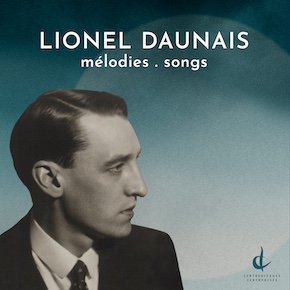
Daunais - Mélodies - SongsThis recent Centrediscs release contains 27 songs (a generous 76 minutes of music) written by Québecois singer and composer Lionel Daunais in the mid 20th century. The songs really fall into two distinct groups. Some are art songs written for concert hall performance while others are works in a more popular style written for a wider audience. The art songs are very French; the others distinctly of Quebec.
The art songs set quite a wide range of texts but there’s a definite leaning towards the symbolist poets of the early 20th century. There’s some Tristan Klingsor and more Paul Fort; a poet rather under-represented in song given his stature and huge output. There’s even one text in similar style written by Daunais himself. Besides the symbolists there’s some Ronsard and Boileau and even a translation of a 13th century Arabic text. There’s some variation in these songs but a strong tendency to languorous settings of poems about unrequited love though sometimes the subject matter becomes more surreal as in Fort’s “Le diable dans le nuit” or the setting more up tempo as in the anonymous “L’innocente”. In many ways these Daunaissongs are not very different from much of the output of composers like Poulenc or Duparc. Fans of that style of chanson will likely enjoy these songs too. Continue reading

The Gods look down

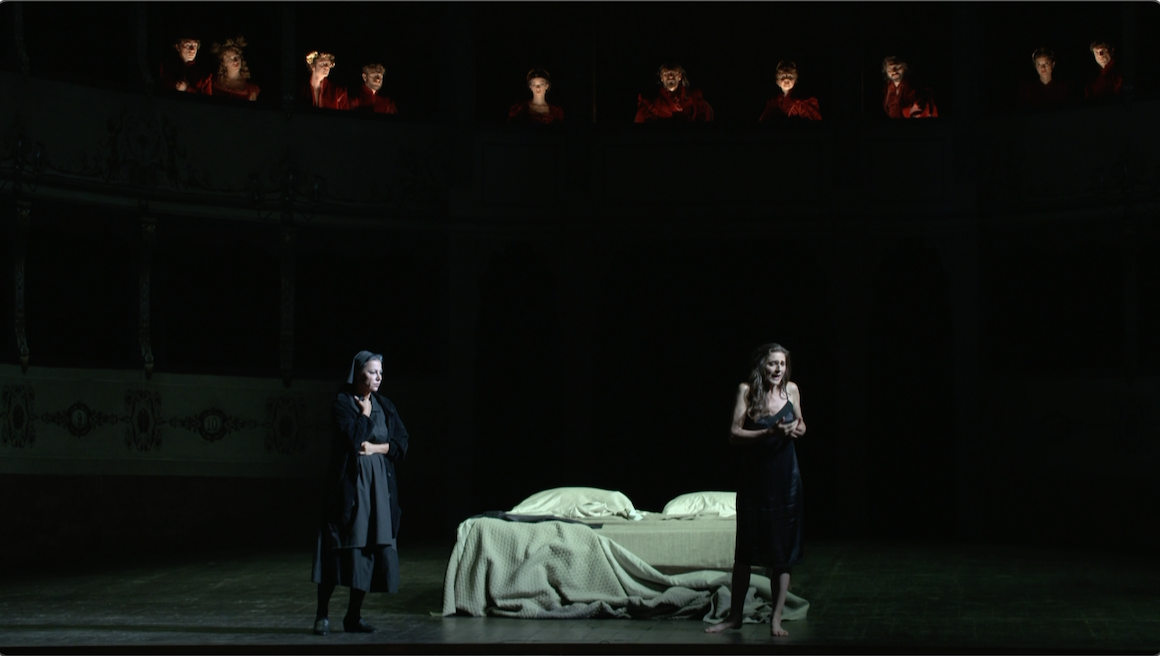
Robert Carsen’s 2021 production of Monteverdi’s Il ritorno di Ulisse in patria was recorded at the Teatro della Pergola during the Maggio Musicale Fiorentino. The theatre, opened in the 1660s and very much a “renaissance theatre”, is very much part of the production; the loge boxes are used during the prologue, entrances are made through the unusual parterre (individual chairs not rows of seats) and the gallery behind the stage is used by the gods to observe the action below. Monteverdi used three distinct styles of music for gods, royals and lesser folk, Carsen mimics this by giving the three orders distinct costume and acting styles. The gods (and there is the full pantheon, not just the ones who appear in the opera, each with his or her distinctive emblem), costumed in opulent crimson 16th century style costumes, act in a stylised manner. The royals get smart modern dress and naturalistic acting while the others are scruffier and act more broadly.

1.penelope

Continue reading

Truth and Reconciliation at Koerner Hall

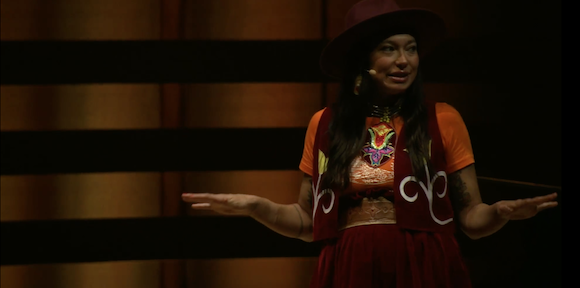
Yesterday was the second National Day for Truth and Reconciliation.  The Royal Conservatory and Koerner Hall marked it with a free concert curated by Denise Bolduc, Mervon Mehta and Sarain Fox who doubled up as an extremely engaging host for the evening.

2.sarain

Continue reading