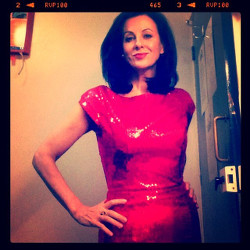
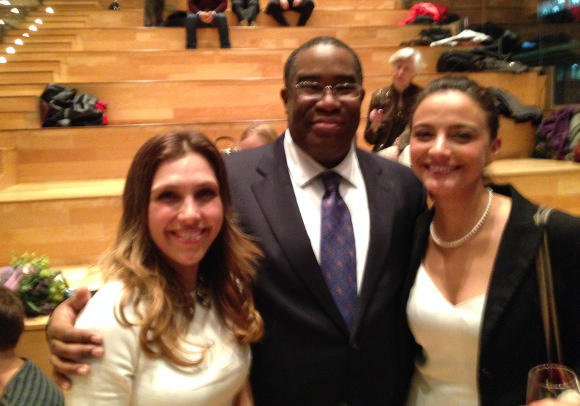
The Canadian Opera Company has announced the addition of three singers and a pianist to the Ensemble Studio for next season. The singers, unsurprisingly, are the three prize winners from November’s Centre Stage; Soprano Karine Boucher, tenor Jean-Philippe Fortier-Lazure and bass-baritone Iain MacNeil, The pianist is Jennifer Szeto. The COC also announced the setting up of an orchestral equivalent of the Ensemble Studio in which a number of young musicians will work with Johannes Debus and the COC Orchestra. Names were announced on Wedneday night but I can’t find them in any of the press releases. Continue reading
Author Archives: operaramblings
The COC’s 2014/15 season announced
Yesterday evening saw the announcement of the line up for the COC’s 2014/15 season. The usual rather prosaic press conference was replaced with a glitzy reception and main stage show featuring Brent Bambury of the COC interviewing Alexander Neef, Johannes Debus and others plus piano accompanied performances by Simone Osborne, Russel Braun, Robert Gleadow, Charlotte Burrage and Aviva Fortunata.
There were few surprises, in itself no surprise given the number of official and unofficial “leaks” this time around. There are three productions new to Toronto, all COC copros, and three revivals so it’s an “all COC” season with no rentals or other imports. Here’s what’s coming up:
Le Roi d’Ys
It’s perhaps surprising that Lalo’s Le Roi d’Ys isn’t performed much more often than it is. Most people probably only know it for the tenor aria Vainement, ma bien-aimée which crops up from time to time in recitals and competitions. Sure, it’s not strikingly original. The plot is a love triangle with overlays of revenge and divine retribution and the music is, with the exception of the rather fine overture, a bit on the rumpty tumpty side. But, let’s face it, there are plenty of standard repertoire works with implausible romantic plots and banal, if tuneful, music. I think there’s a large section of the opera audience that would very much enjoy this piece.
Kupfer/Barenboim Ring – 2. Die Walküre
The Kupfer/Barenboim Ring continues very strongly with the second instalment, Die Walküre. It opens in quite a straightforward, more or less realistic way. Hunding’s hall is slightly abstracted with a recognizable tree. It’s quite spare though which creates space for the strong interpersonal dynamics between Siegmund and Sieglinde. Poul Elming is a very physical, almost manic Siegmund and Nadine Secunde’s Sieglinde is almost as physical. It’s all very intense and beautifully sung. Matthias Hölle as Hunding is no slouch either.
The COC’s 2014/15 season
An interview with Sir Thomas Allen
Sir Thomas Allen, noted baritone and Chancellor of Durham University, is in town rehearsing Don Alfonso in the COC’s new production of CosÌ fan tutte. Yesterday evening, between rehearsals, he was kind enough to spend half an hour answering some questions. We talked about his career, about his role as Chancellor of Durham University and about the new production of Così. I’ve detailed some of the highlights below as well as embedding the full interview as a four part audio file at the end.
Rare Rameau
On February 2nd Voicebox: Opera in Concert will be performing Rameau’s rarely performed Hippolyte et Aricie at the St. Lawrence Centre for the Arts. The cast will be led by mezzo Alyson McHardy as Phèdre with tenor Colin Ainsworth as Hippolyte, soprano Meredith Hall as Aricie and veteran bass Alain Coulombe as Thesée. Accompaniment will be by the Aradia Ensemble conducted by Kevin Mallon. Tickets are available from www.stlc.com
It seems like some of the most interesting repertoire choices this year are being presented in concert rather than fully staged. At least this one has more than piano accompaniment.
Kupfer/Barenboim Ring – 1. Das Rheingold
The 1991 Bayreuth Ring cycle is one of those productions that has become a historical landmark, as much as Chereau and Boulez’ 1976 effort, or maybe even more so. For many people it is the Ring. So what is it like? The staging is very bare and much reliance is placed on effects like lasers and smoke. It also makes considerable acting and athletic demands on the singers. It is, in many ways, a very modern production for 1991.
Il Trittico
Puccini’s Il Trittico is a collection of three one act operas designed to be performed on a single evening. They rarely are. Perhaps this is because performing all three makes for a rather long evening (and for a huge cast) or maybe it’s because two of the three aren’t all that great. In any event, while most opera goers will likely have seen the comedy Gianni Schicchi, most will likely not have seen the two tragedies that precede it; Il Tabarro and Suor Angelica. However, all three works were performed as a triple bill at the Royal Opera House in 2011. The show was broadcast by the BBC and is available on Blu-ray and DVD. All three pieces were directed by Richard Jones and Anthony Pappano conducted.
Static Elektra
For the performances of Elektra at the 2010 Baden-Baden festival the Powers that Be chose to revive Herbert Wernicke’s 1997 Munich production with Bettina Göschl directing. The production concept seems to have been inspired by classical Greek drama. Sets and costumes are very simple, even austere, and the singers often address the audience directly. On stage this probably worked quite well as the overall effects are visually striking and the relative lack of interaction between the characters is perhaps appropriate for a work that is so much about alienation.