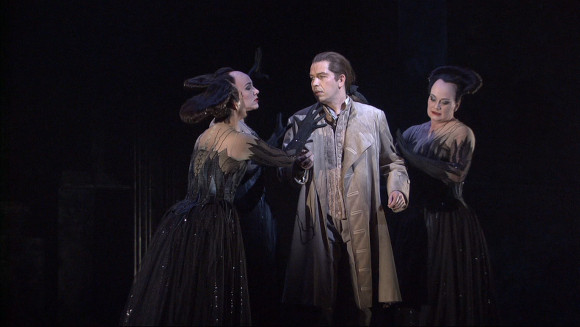
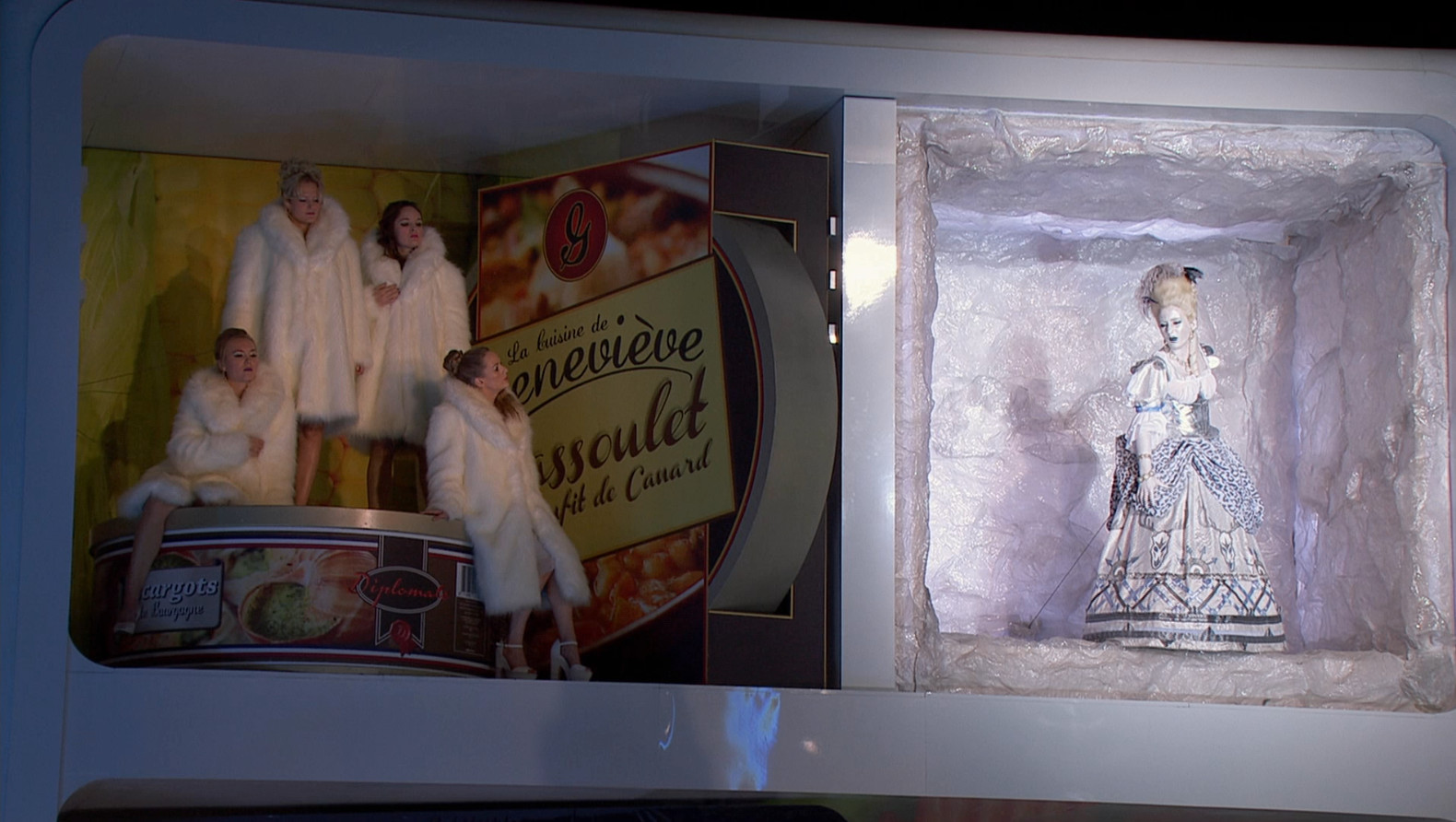
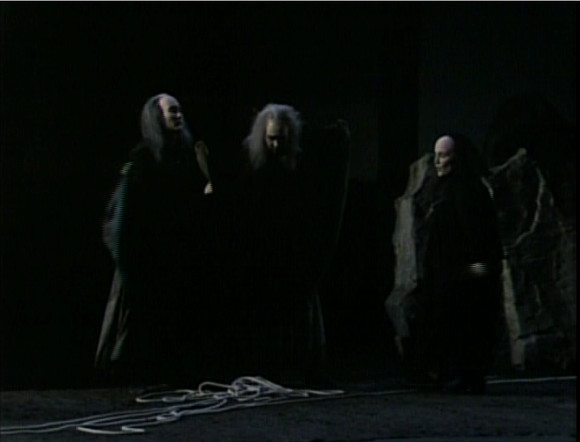
I had planned on giving Opera Atelier’s production of Lully’s Persée a miss but early reviews were positive and, more importantly for me, suggested there was something new and a bit different about the piece this time around. This production has been around since 2000 and was recorded for DVD four years later so I knew pretty much what to expect and to be honest that’s what we got last night. If there were changes, they were very minor. If anything it’s got even camper and I do wonder whether OA is in danger of becoming a sort of parody of itself. And it’s still three hours of OA doing Lully and if that’s your thing you will not be disappointed. If you are expecting anything else you won’t get it.
Author Archives: operaramblings
Toronto opera news – lose one, win one
Opera 5’s planned Offenbach and Hahn show this week has been postponed to the fall owing to construction delays at the Alliance Française (probably caused by striking air traffic controllers). By way of consolation there’s a pop up party on Saturday at 8pm, also at the Alliance Française (24 Spadina Road). Tickets are $15 on the door. It should be fun as these guys know how to party. Unfortunately I am otherwise engaged which may not be a bad thing. Last time I was at the Alliance Française the Americans started bombing Baghdad.
In a curiously symmetrical move, Tapestry have announced dates for the long delayed Toronto run of Shelter by Julie Salverson and Juliet Palmer. Described as “a darkly comic chamber opera which maps the journey of a family struggling to be ordinary in the atomic age.” The cast includes Christine Duncan, Teiya Kasahara, Keith Klassen, Andrea Ludwig and Peter McGillivray. Leslie Dala conducts and Keith Turnbull directs. It will play from June 12th to 15th at the Berkeley Street Theatre. Ticket prices range from $55-$75 + HST and can be purchased in person at the Canadian Stage Box Office at 26 Berkeley Street, by calling 416.368.3110 or online at CanadianStage. For more information visit TapestryOpera.
Inspired by Love
Once in a while it’s fun to go to something almost entirely undemanding (for the audience at least!). So, yesterday afternoon I attended a concert of classical “lollipops” given by the TSO under the baton of young Portugese conductor Joana Carneiro. The chief attraction for me was that recent Ensemble Studio graduates Simone Osborne and Wallis Giunta were also performing. Things got going with the overture from Il Nozze di Figaro. It was a brisk and stylish performance with Ms. Carneiros displaying a very physical conducting style.
Audiences
Maybe this should be titled “The bear and lemur freak show”. Anyway, no surprise to anyone who knows us or reads this blog, the classic 19th century Italian rep is not our sweet spot. Give us Handel or Berg or Britten over Rossini or Verdi (let alone Donizetti) most days. (We’ll make an exception for Don Carlos!). So, last night as the Four Seasons Centre erupted in frenzied applause I couldn’t really share the wild enthusiasm, fine as the performance was, but what startled me was when I heard a smug, female voice to my left say “Well that makes up for Hercules”. I restrained an urge to remonstrate violently (I’ve been taking lessons from Peter Sellars) but I did leave the theatre puzzled and a bit upset; a feeling shared by the lemur and subject of much conversation on the subway home.
Shakespeare vs. Donizetti
Stephen Lawless’ production of Donizetti’s Roberto Devereux opened last night at the Four Seasons Centre. It’s the last of the so called “Tudor Trilogy” and deals, ostensibly, with the last days of the reign of Elizabeth I. Events are loosely based on history. In this case the queen’s relationship with Robert Devereux, earl of Essex; his failure in Ireland, fall from grace, rebellion and execution for treason(1). Here the drama is turned into a simple story of royal jealousy featuring two fictional characters; The duke of Nottingham, Devereux’ bestie, and his wife Sara, confidante of the queen and in love with Devereux. It’s probably best seen as a logical continuation of the anti Tudor theme of the previous operas. There’s a bombastic, lustful monarch more concerned with his/her love life than affairs of state and there’s a scheming arch-Protestant minister responsible for the death of someone who doesn’t deserve for it for reasons of state (here the younger Cecil). The trouble here is that there is no obvious martyr. However one looks at it Devereux, brings about his own downfall.
Farewell Ben
Famed Canadian tenor Ben Heppner has announced his retirement from singing. It’s entirely understandable as he has been struggling with vocal problems for some considerable time. On form, he was magnificent and I was privileged to hear his Tristan when he returned to COC after a long absence in 2013. Unfortunately a run of Peter Grimes later in the year showed the other side of the coin with a cancellation and some pretty rough moments. Ben is a gentleman and a professional and I think he’s doing the right thing by the opera world, for which he’s been such a distinguished servant for so long. He’s already got a radio gig hosting CBC Radio’s Saturday Afternoon at the Opera and I’m sure other interesting opportunities will open up. On to pastures new…
Ok, so how did I miss this?
Saturday (7.30pm) and Sunday (3pm), at Roy Thomson Hall, the TSO has a programme that includes operatic lollipops from Simone Osborne and Wallis Giunta. Joana Carneiro conducts. I had to go all the way to Sudbury to find a picture with wallis and Simone. Anyway, here’s the programme for the concert:
| Mozart: Overture to The Marriage of Figaro | |||
| Mozart: “Letter Duet” from The Marriage of Figaro | |||
| Offenbach: Intermezzo and Barcarolle from The Tales of Hoffmann | |||
| Delibes: “Flower Duet” from Lakmé | |||
| Beethoven: Symphony No. 6 “Pastoral” – Mvt. I | |||
| Glinka: Overture to Ruslan and Lyudmila | |||
| Villa-Lobos: Bachianas brasileiras No. 5 | |||
| Tchaikovsky: Romeo and Juliet Fantasy-Overture |
So three lovely ladies (plus the TSO) at one low (not especially actually) price.
First, the sound quality
The MetHD broadcast of Strauss’ Capriccio has been issued on Blu-ray. I enjoyed the original broadcast but found watching it again on disk rather unsatisfying. The main problem is the production. It’s a John Cox effort from 1998. The period is updated from ancien régime France to just after WW1, apparently to make the people more contemporary while allowing an opulent, old style Met “all the things” production. Peter McClintock’s direction of the revival emphasizes the most obvious comedy (the ballerina falling over with her legs in the air, for example) while doing little or nothing to bring out the sheer cleverness of this opera, about an opera, within an opera. It all seems very heavy handed, in fact the word that popped into my head several times was “vulgar”.
How can peace come from so much pain?
Making a film of an opera rather than filming an opera involves interesting choices and one of the strengths of the DVD of Penny Woolcock’s film of John Adams’ and Alice Goodman’s The Death of Klinghoffer is that includes 47 minutes of Woolcock, Adams and others discussing just how one takes a rather abstractly staged opera (the original staging was, inevitably, by Peter Sellars) and turn it into an essentially naturalistic film. Of course, naturalism will only go so far with opera but this goes a long way in that direction. The soloists are filmed mainly on location and they sing to the camera. The choruses, mainly backed by documentary footage, and the orchestra were recorded in the studio but the actors sing ‘live’. The one concession to “being operatic” is having a mezzo voice one of the Palestinians though he is played by a male actor.
A Parsifal in three acts
Yesterday, Easter Saturday, I got to see the Royal Opera House production of Wagner’s Parsifal. It was broadcast live to many locations of December 18th last year but hasn’t been seen in Toronto until now. It was very much a three act experience. At the end of the first and longest act I thought we were perhaps seeing greatness in the making. Stephen Langridge’s production concept supported by Alison Chitty’s fairly abstract modern designs were making all kinds of sense to me. At centre stage is a white, semi transparent cube serving as both grail shrine and Amfortas’ hospital room. Within it, various aspects of the back story are shown to us and it comes off as a place of knowledge; perhaps of a much deeper kind than has yet been revealed. This impression is reinforced with the unveiling of the Grail late in the act. It is a young, Christ like boy. The grail ceremony involves Amfortas cutting him to release the blood for the ceremony. There’s a lot of blood letting but it makes sense. We are seeing a very wounded and dysfunctional polity.