Unknown's avatar

About operaramblings

Toronto based lover of opera, art song, related music and all forms of theatre.

Dark but straightforward Zauberflöte

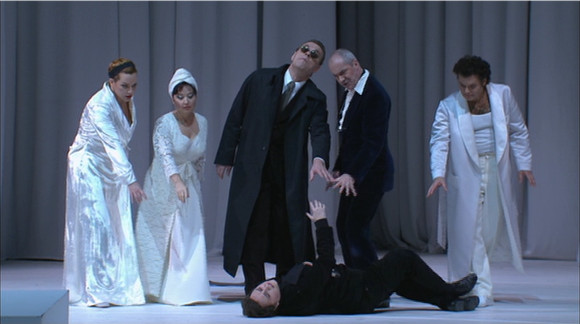
The 2003 Royal Opera House recording of Die Zauberflöte has a terrific cast and it has Sir Colin Davis conducting.  The production is by David McVicar and it’s one of those that make one wonder how he ever got a “bad boy” reputation.  It’s perfectly straightforward though rather dark (emotionally and physically) and has a vaguely 18th century vibe.  In places it seems a bit minimalist, as if the director couldn’t really be bothered with things like the Trials.  The interview material rather suggests that McVicar was a bit overawed by doing Mozart with the great Sir Colin and tried very hard to match his rather old fashioned theatrical sensibilities.

1.tamino Continue reading

Kitchen sink duly chucked

There’s a pretty good “making of” extra with the 2013 Glyndebourne recording of Rameau’s rarely performed Hippolyte et Aricie.  In it, director Jonathan Kent argues that there are essentially two ways of dealing with the French baroque; elegance or “throwing the kitchen sink at it”.  To this one might add a weird pastiche of bare chests, stylized gesture and high camp but that’s another story.  My best experiences with Rameau have definitely been of the kitchen sink variety.  I’m thinking of productions like José Montalvo’s Les Paladins.  Kent is a bit more restrained but still pretty inventive which I think is necessary as Hippolyte et Aricie is rather episodic and fragmented and could use some livening up.

1.fridge Continue reading

Third blogiversary

Fafner cat guards the magic Bikehelm

Fafner cat guards the magic Bikehelm

So, today marks the third anniversary of this blog.  This will be the 824th post.  There are over 300 DVD/Blu-ray reviews in the database.  As I write there have been 1,981 comments and 182,996 views.

As I have said to many people I started this project with no ambitions.  I certainly didn’t expect it to change my life but that’s what it has done.  I have had the chance to experience music that I would likely never of heard of and tp learn about it from the people who create and perform it.  More importantly I have met some really amazing people, some of whom have become firm friends.  It’s been especially welcome as coincidentally my previously heavy involvement in rugby came to an end because of advancing age and eye problems almost exactly a year after starting this new venture.

so, to those of you who have made this journey so rewarding, my sincerest thanks and to those who will make it fun for the next few years, I look forward to meeting you!

Opera on wheels

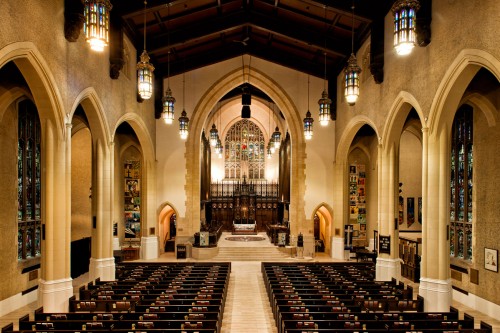
curtainYesterday saw the 21st and final performance for this season for the Bicycle Opera Project; the conclusion of a five week, fourteen city trip around Ontario.  Fittingly for an eco-opera venture it took place at the Evergreen Brickworks in a bare brick and sheet metal industrial setting.The programme consisted of seven pieces; short works or excerpts from longer ones, all by contemporary Canadian composers and scored or rescored by them for the unusual ensemble of keyboards, flute and clarinet that accompanied the singers.

First up was an excerpt from Brian Current’s Airline Icarus. They played the scene where the passengers and stewardess are expressing their hopes and, more vehemently, fears.  It’s an uncomfortably funny scene and it was played here in a more broadly comedic manner than in Tim Albery’s original staging.  That proved very effective as a stand alone especially with most of the audience up so close.  Fine performances from all four singers with Chris Enns as an extremely angsty academic, Stephanie Tritchew flirtatiously displaying her considerable charms and some neat eye rolling from Larissa Koniuk and all anchored by Geoffrey Sirett reprising the role of the Businessman.  I was reminded too what a fine score this is, even in the reduced arrangement used here. Continue reading

From Severn to Somme

maltmanLast night at Walter Hall, as part of the Toronto Summer Music Festival,  Chris Maltman and Graham Johnson gave a recital that explored the experience of war through song.  It was a long and varied programme with twenty two songs in four languages commemorating most of the great empires that went to war in 1914 though many of the songs were from earlier periods.  At the core of the programme were early 20th century settings of English pastoral poems.  Butterworth’s settings of Houseman were there but, sneakily, we got Somervell’s much less well known setting of Think no more lad.  In a similar vein there were Gurney and Finzi.  The Americas were represented in a characteristically rambunctious Ives setting of a horribly jingoistic McCrae poem; He is there. McCrae may be the only well known war poet who managed to survive until 1918 without developing any sense of irony.  Beyond the English speaking world there were songs by Mussorgsky, Mahler, Fauré, Schumann, Wolf and Poulenc.

Continue reading

Chéreau Ring – Götterdämmerung

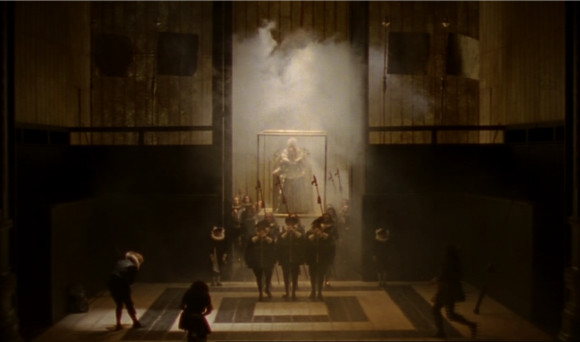
And so, at last to Götterdämmerung.  The scene with the Norns is dark, very dark.  There’s a rope and not much goes on (at least that is visible) but the singing is good.  The “dawn” scene comes off more effectively here than the final scene of Siegfried but it’s still not great.  I think the problem is a combination of Manfred Jung’s dry, rather nasal tone and Boulez rather fast tempu.  It seems rushed rather than ecstatic and the Rhine Journey doesn’t thrill.  I was concerned at this point that I was being unfair to a renowned production so I put on the same scene from Kupfer/Barenboim.  It’s much better.  Siegfried Jerusalem sounds truly heroic, Anne Evans richer tone blends better than Gwyneth Jones’ (though this could be an artefact of the recording) and, crucially, Barenboim gives the singers room to sing before markedly speeding up for the orchestral music.  At least there is no naff attempt to depict a literal Grane in Chéreau’s version.  At the conclusion of this scene Brian Large pulls off the first of his artsy effects.  During the Rhine music he holds a close up of Brünnhilde for a rather long time before pulling out to a full stage shot which he then shrinks until there is just a tiny square of picture  in the middle of a black screen which, when he slowly expands it, has transformed to the Gibichung hall.  He does the same thing a couple more times.  It seems odd to introduce that kind of thing at such a late stage in the cycle.

1.norns Continue reading

Chéreau Ring – Siegfried

Chéreau’s Siegfried is even less obviously “industrial” than his Die Walküre.  There’s a forge of course but there rather has to be.  Other than that we get workshop, forest and lair pretty much as one might imagine until, of course, we end up back at the ruin where Brünnhilde waits.  Brian Large injects lots of smoke at every opportunity.

1.forge Continue reading

Finally, some common sense at the Met

pawSome of that not so common quantity; common sense, seems to have emerged in the negotiating process at the Metropolitan Opera.  Following mediation, management and local 802 have agreed to retain an independent financial analyst and have agreed that work will continue while that person does his work and during the negotiations that will follow.  So, no lockout for now.  Full text of local 802’s press release under the cut.

Continue reading