

Today we said goodbye to Charles Sy and Hyejin Kwon as members of the Ensemble Studio. They went out on a high note (indeed quite a few high notes….) with a very fine performance of Schubert’s epic cycle Die schöne Müllerin. Charles was in fine voice for the whole 65 minutes or so. He was delicate and floaty where he needed to be and fierce when warranted. It was lovely and text sensitive and proof, if anyone still needed it, of what a fine singer he has become in the last couple of years. Hyejin was equally accomplished. The limpid delicacy of the intro to Wohin was just gorgeous but she also summoned up real power and volume when needed. She was, as always, tremendous fun to watch. We writers tend to focus on the singer and not give due weight to the pianist’s contribution. Today we were reminded of how wrong that is.

I hope both of them stick around the Toronto scene and I look forward to seeing them in future endeavours. Thanks guys!
Photo credit: Tanner Davies
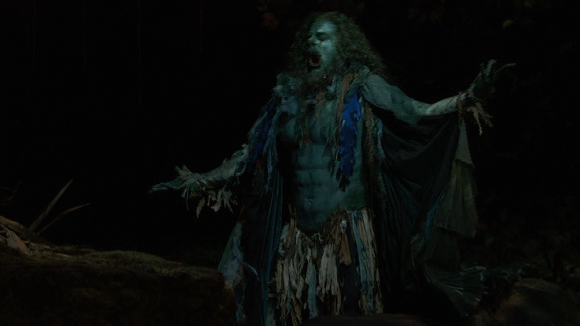
 When François Girard’s production of Wagner’s Parsifal opened at the Met in 2013 the COC was listed as a co-producer. A year passed: winter changed into spring, spring changed into summer, summer changed back into winter, and winter gave spring and summer a miss and went straight on into autumn… until one day… at a Wagner Society meeting COC boss Alexander Neef came up with something more definite. One day was last night. The plan, apparently, is to stage the piece in 2021, hors saison. It will form an epilogue to the 2020/21 (presumably in late May) season or a prologue to the 2021/22 season (late September). This would appear to have two advantages; firstly it means that the technical problems of running a show where the stage is flooded with thousands of gallons of blood in tandem with another production are avoided and it means that if financing falls through the regular seasons are safe. Naturally there is still the issue of the seven digit number so expect four years of rather intensive fund raising. Anyone fancying sponsoring a flower maiden should contact Mr. Neef.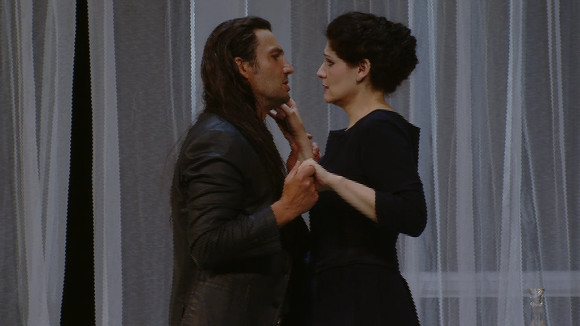
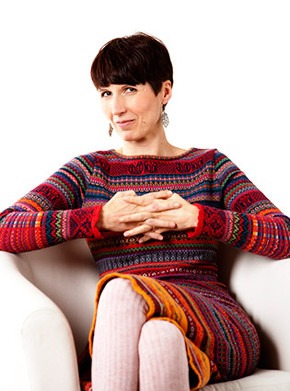 May continues to be a busy month. There are a couple of interesting concerts at noon in the RBA next week. On Wednesday 17th there is the unveiling of the annual Canadian Art Song project commission. This year it’s extremely ambitious. It’s a cycle of sixteen songs by Ana Sokolović setting texts drawn from right across Canada. It’s called dawn always begins in the bones and will be performed by Danika Lorèn, Emily D’Angelo, Bruno Roy and Aaron Sheppard with Liz Upchurch at the piano. (You can also hear this work in the Temerty Theatre at the Conservatory at 7.30pm on Thursday May 25th along with Andrew Staniland’s Peter Quince at the Clavier and Lloyd Burritt’s Moth Poem). On Thursday 18th tenor Charles Sy and pianist Hyejin Kwon bid farewell to the COC Ensemble Studio with a performance of Schubert’s Die schöne Müllerin. It should be a real treat.
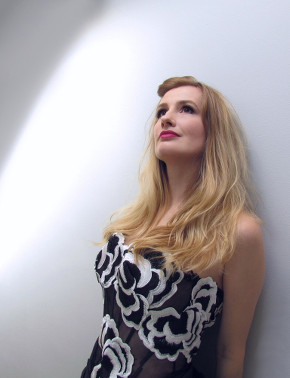 A couple of days ago I sat down to chat with Natalya Gennadi who will sing the title role in Tapestry’s upcoming premiere of Oksana G by Aaron Gervais and Colleen Murphy. It’s a story about a Ukrainian girl who gets caught up with a sex-trafficking ring; an all too real phenomenon in Eastern and Central Europe as the Soviet system disintegrated. For Natalya it’s a very personal piece. She is Ukrainian and much the same age as Oksana would be. It’s her era and Oksana is, she feels, a similar sort of person from a similar background and there but for…
 As is their wont the COC run of Tosca is double cast, at least as far as the principals go, and last night was the second performance for the alternate cast. Keri Alkema sang Tosca, Kamen Chakev was Cavaradossi and Craig Colclough played Scarpia. Sometimes the cast change makes a big difference, for better or worse, in the show. This time I really didn’t feel that was the case. This felt very much like the show I saw on
 operaramblings