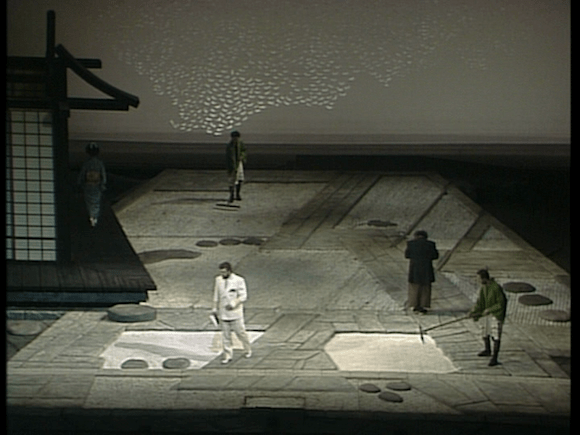
Looking at a (perhaps inadequate) sample of video recordings from La Scala I begin to come to the conclusion that there is a pretty strong pattern in what they do well, and not so well. 1800-1920 Italian classics with strong casts in visually attractive but not overly deep productions seems to be the sweet spot. Stray far from this and the wheels tend to come off. Fortunately this week I’ve seen two of the good ones recorded 30 years apart. A couple of days ago I posted a review of the recent I due Foscari and now I’ve jumped in the Tardis to watch a 1986 recording of Puccini’s Madama Butterfly. The similarities are striking.
Yearly Archives: 2018
Afarin Mansouri talks about Tap:Ex Forbidden

Afarin Mansouri
Tapestry’s upcoming show TapEx: Forbidden features music by Iranian-born composer Afarin Mansouri with a libretto by Afro-Caribbean hip hop artist Donna-Michelle St. Bernard. Four vocalists are featured; Neema Bickersteth, soprano; Shirin Eskandani, mezzo-soprano; Alexander Hajek, baritone; and Saye Sky, Farsi rapper and spoken-word artist. I have a long standing interest in blending western classical music with other cultures and genres, partly at least because I get to hear a lot of North Indian music, and I’ve been intrigued by other “fusion”projects such as Alice Ping Yee Ho’s The Lesson of Da Ji and some of the cross-cultural experimentations in dance such as Esmerelda Enrique and Joanna Das’ collaborations. All of this is a long intro to saying that before Christmas I got the chance to put some questions to Afarin Mansouri about the upcoming show. Her responses are enlightening and intriguing. So here’s the exchange:
Continue reading
I due Foscari
Verdi’s sixth opera, I due Foscari, is probably not well known to many readers so a brief description may be in order. It’s a rather grim tale of injustice and revenge. Francesco Foscari is the aged Doge of Venice. His son, Jacopo, has been stitched up by the family rival Jacopo Loredano and exiled to Crete. He returns to try and clear his name but is fitted up again. This time for the murder of one Donato. Despite torture he refuses to confess and is sentenced to return to exile in Crete. The first three quarters of the opera is mostly either father or son bemoaning their fate (Francesco has already lost three sons. Lady Bracknell would be unimpressed) or Lucrezia, Jacopo’s wife, pleading for mercy to anyone who will listen. Then there’s a final scene where Francesco receives proof of his son’s innocence, closely followed by news of his death, closely followed by news that the Council and Senate are sacking him. Loredano gloats. Foscari dies. Structurally it’s very much a “numbers” opera with a succession of short scenes mostly featuring various combinations of the three Foscaris and the chorus. There are a lot of quite sophisticated ensemble pieces as well as a couple of solo arias for each of the principals. It’s musically rather distinguished in fact. The three Foscari roles are big sings. Nobody else has much to do.

Secret cypher! Loch Ness Monster!
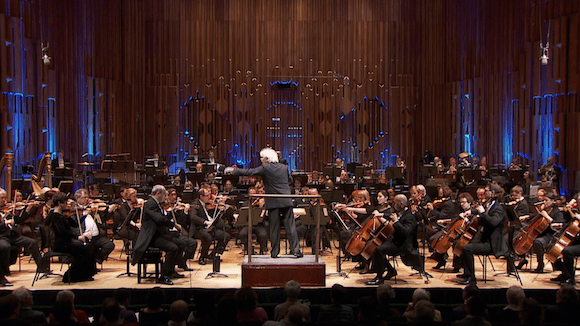
Stravinsky LSO is a video release on the LSO’s own label of a 2015 concert at the Barbican featuring music by Berg, Webern, Ligeti and Stravinsky conducted by Simon Rattle. It opens with Webern’s Six Pieces for Orchestra Op.6. Rattle produces a transparent, clearly articulated and structurally coherent account of this short work.

Puritans in Madrid
I keep trying with Bellini’s I Puritani. People I respect admire it a lot but I just cannot find a way to like it despite there being, undoubtedly, some very fine music in Acts 2 and 3. I think there are, essentially, two problems and I could maybe cope with either in isolation but taken together my brain just starts to turn off. The first is plot and there are two huge problems with this piece. It’s complete garbage historically. It makes Donizetti’s Tudor operas look like Geoffrey Elton. But worse, it makes no sense in it’s own terms. It’s just a string of improbable coincidences. The second problem is emotional dissonance. Too often the emotional tenor of the music is just way inappropriate to the stage action. This is common to all bel canto of course and on its own I can deal. I just can’t take the two things together.

Opera bunny
What’s On Stage is a UK on-line magazine covering the theatre scene in the UK. They have an annual reader poll for “best of” in various categories in opera. One such is “Breakthrough Artist in UK Opera” which this year was won by Ottawa native and COC Ensemble Studio graduate Wallis Giunta for a series of roles with Opera North (who picked up a bucketload of awards) including Dinah in Trouble in Tahiti and L’enfant in L’enfant et les sortilèges. She’s not just ridiculously photogenic! I’m slightly shocked to realise it’s almost two years since I interviewed Wally by Skype from her home base in Leipzig but so it is. The interview write up is here.

Winner for “Outstanding Achievement in an Operatic Role” deservedly went to Allan Clayton for his outstanding work creating the title role in Brett Dean’s Hamlet at Glyndebourne.
Photo credit: Tim Dunk
Sances – Complete Arias 1636
This review first appeared in the print edition of Opera Canada.
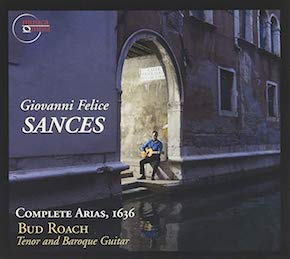
This recording contains the solo works from Sances’ fourth book of songs plus the slightly better known chaconne Accenti queruli. They are all sung by tenor Bud Roach accompanying himself on a replica baroque guitar. The songs are strophic settings of love poetry of unknown origin, perhaps the composer himself. They range quite widely in mood from the rather doleful O perduti dilettithrough the very colourful Che pietà sperar si puòto the ironic Dove n’andrò. The poetry is less directly bawdy than some contemporary English material but the sexual allusions come thick and fast in a piece such as Rapitemi, feritemi. These songs may lie in that ambiguous area between art song and popular song but there’s no lack of musical interest here.
Resurrection
This review first appeared in the print edition of Opera Canada.
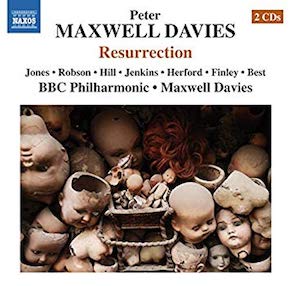
The 1994 recording of Peter Maxwell Davies’ opera Resurrection, previously released on Collins has now been re-released on the Naxos label. It’s a hugely ambitious and somewhat confusing work; even harder to get to grips with on CD than it might be with visuals. It’s an anarchic parody of establishment figures and attitudes executed via a pastiche of multiple musical styles.