 Saturday evening, at Redeemer Lutheran, the Happenstancers offered up a palindromic tribute to Pascal Dusapin. As it was a palindrome I shall review it from the middle outwards. Let us take the interval as t=0. Then at t=+/-1 we heard Two Walkings from singers Danika Lorèn and Hilary Jean Young. Two songs; “How Many Little Wings” and “Kiss My Lips She Did” came before the break and the rest; “May June”, “A Scene in Singing” and “It Seems To Be Turning Music” after. And, of course the singers swapped positions at the break! This is extremely interesting but fiendishly difficult music with the unaccompanied singers trading snatches of phrases and half thoughts in a complex atonal musical language. I’m actually in awe that anybody can actually perform a work like this but they did, and very well.
At t=+/-2 we got works for clarinet (Brad Cherwin of course), cello (Peter Eom) and singer. At t=-2 it was Danika with the evocative Canto and at t=+2 an equally effective account of Now the Fields from Hilary. It’s always interesting to hear art song with something other than piano especially when the works are as complex and challenging as these. Continue reading →

 Previous concerts from the Happenstancers have typically featured fairly conventional chamber music either arranged or combined in unusual ways; sometimes mixed with more modern/contemporary material. Saturday night’s concert at Redeemer Lutheran was a bit different. Titled Future Pastorale it was built around Claude Vivier’s 1968 work Ojikawa plus the text of Psalm 131 (also used, in French, by Vivier) and text from the “Introduction” to Blake’s Songs of Innocence; “Piping down the valleys wild. Piping songs of pleasant glee” etc with lambs, shepherds and clouds.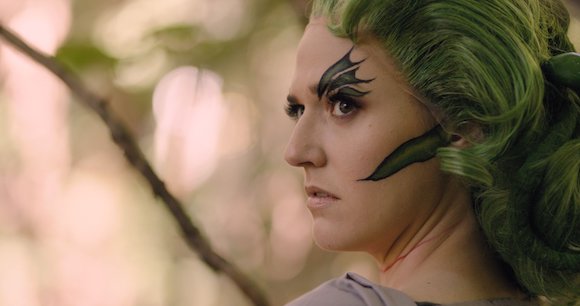
 operaramblings