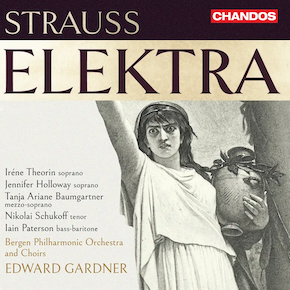
Searing Elektra from Ed Gardner

Ed Gardner and the Bergen Philharmonic have produced some stunning recordings for the Chandos label.  The new release of Richard Strauss’ Elektra is no exception.  Indeed this is likely now the first choice audio recoding of this work.

It’s a very strong cast.  Iréne Theorin has enough heft for the title role but she’s also surprisingly lyrical where appropriate,  Jennifer Holloway is a sweet toned and sympathetic Chrysothemis and Tanja Ariane Baumgartner sounds suitably unhinged as Chrysothemis without sounding like her voice is past its sell by date.  Iain Paterson is an interesting Orest.  He’s kind of eerily creepy especially in his first scene with Elektra.  I rather liked it.  All the other roles are perfectly adequate too and so is the chorus.

But isn’t the real glory of Elektra the orchestral writing?  Gardner gets the most out of it with a reading that’s both very dramatic and surprisingly lyrical.  It’s taut too.  The tension just goes on and on.  The Bergen players respond splendidly.

The recording was made in the Grieghallen in December 2023 from live concert performances.  It’s splendid and has been released as a hybrid SACD.  The high resolution tracks are as good as any recording I’ve heard but this does mean that the dynamic range is realistically extreme!  With the volume set to a realistic level for the voices, the orchestral climaxes are very loud indeed so unless you have no neighbours within miles you might prefer headphones.  The climaxes though are super clean and detailed so not particularly fatiguing to listen to.  There’s a booklet with useful info and full text and translation.  The SACD physical release can, of course, be played like a standard CD on most CD players and the album is also available digitally as MP3 and lossless in 44.1kHz/16 bit and 96kHz/24 bit versions.

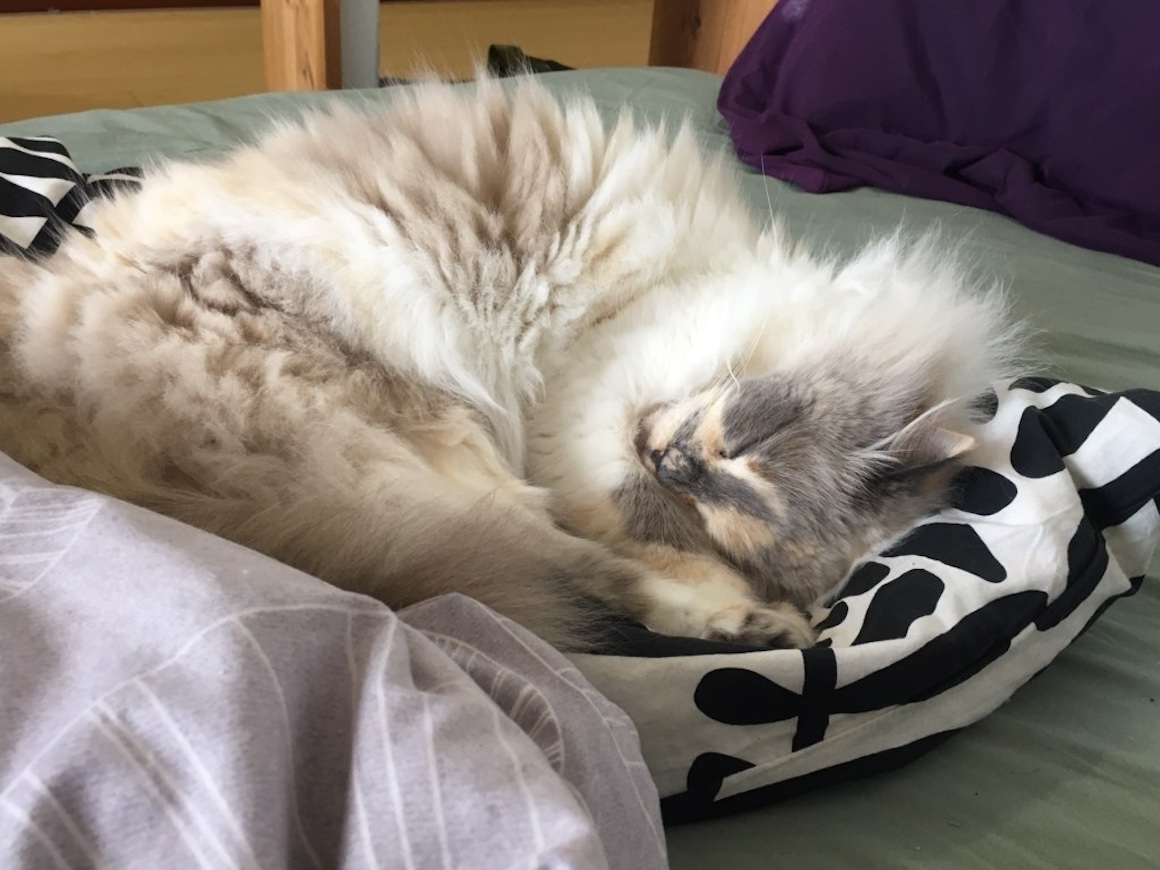
And what did my Elektra think?  She thought it was perfect music for an extended nap!
Catalogue information: Chandos CHSA 5375(2)
Fauré Requiem at Metropolitan United

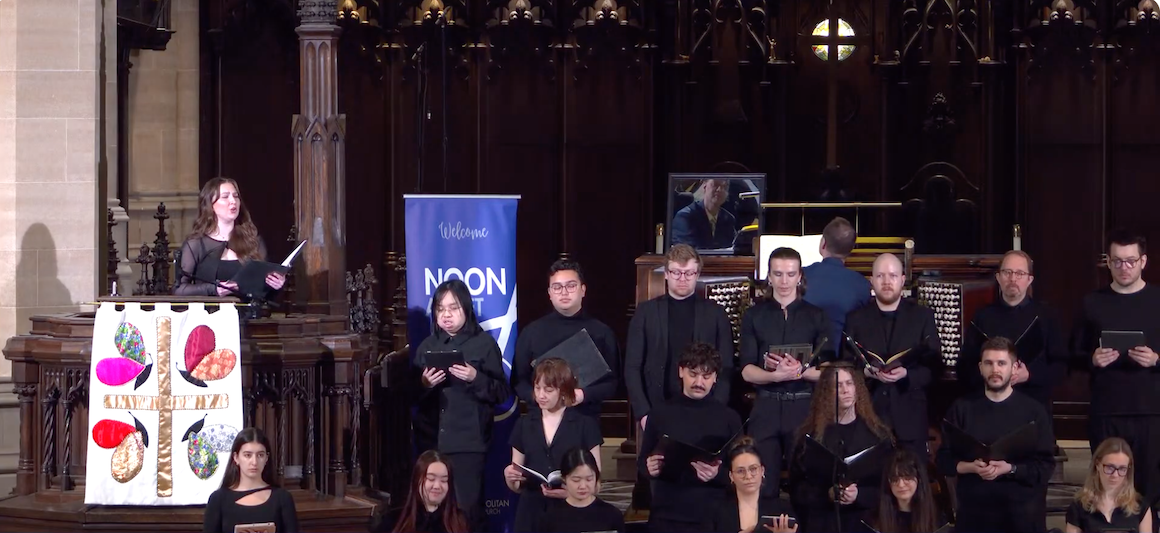
Last Thursday lunchtime’s Noon at Met concert was given by the UoT’s Schola Cantorum conducted by Daniel Taylor with Jonathan Oldengarm at Met’s very impressive organ. The music was Fauré’s rather unusual Requiem op.45.  I say unusual because it’s much more gentle and lyrical  than most, not least because there’s no Dies Irae.  That’s cut except for the Pie Jesu section.  Also it finishes with the hopeful In Paradisum from the Burial Service.  Apparently this is because Fauré was most definitely not an orthodox Catholic rather lying somewhere on a spectrum from theist to agnostic but obviously still aware that we all die and we all grieve.

Continue reading

DOB Ring – Siegfried

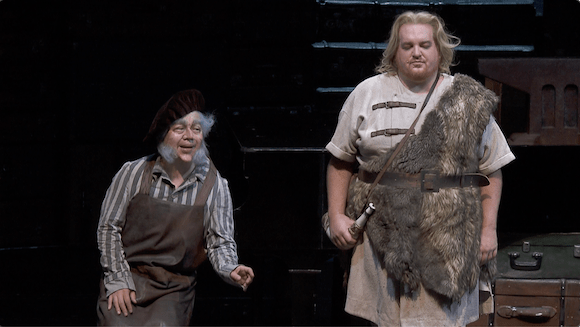
So continuing our look at Wagner’s Ring at the Deutsche Oper Berlin, directed by Stefan Herheim, we move on to Siegfried.  I think it’s fair to say that all the elements referred to in my introductory post are present in Siegfried with some more thrown in for good measure.  Let’s look at it act by act.

1.mimesiegfried

Continue reading

DOB Ring – Die Walküre

The second instalment of Deutsche Oper Berlin’s Ring directed by Stefan Herheim, Die Walküre, carries on with much the same iconography as Das Rheingold.  Once again the set is largely built up of suitcases, a crowd of refugees observes the action, there’s a piano at centre stage and a white sheet in various forms plays a key role in proceedings.  Also, much of the time the characters are working off a score of the piece.

1.twins

Continue reading

Mysteries plus

The Halloween concert by the UoT Contemporary Music Ensemble in Walter Hall was fun.  Unfortunately I was only able to catch the first half which featured Sofia Gubaidulina’s In Erwartung for saxophone quartet and percussion.  This was a cool piece making interesting use of the space.  It was followed by Robert Paterson’s Closet Full of Demons which is scored for small ensemble plus alarm clocks and jack-in-a-box.  Sometimes I feel I should listen to music like this more often (and sometimes I don’t!).  The main reason for being there though was to see Maeve Palmer and the Ensemble do Ligeti’s Mysteries of the Macabre.  I wasn’t disappointed.  Clearly tons of work had gone into this and it was much crisper than when I saw it in Barbara Hannigan’s master class a few weeks ago.  Maeve really got into character as Gepopo.  It was all there.  The notes of course but also the keen sense of timing and the ability to convey the paranoia of the character.  The Ensemble was well into it too.  The bassoon and trombones were ugly.  The shouting was convincing.

I wish I had photographs because everyone was in costume not just Maeve.  The firs conductor (lorenzo Guggenheim) appeared as a back to front neon lit Wolfman and the second; Wallace Halladay, as a reversed skeleton.  The Ensemble included Superwoman among others and Maeve was a sort of leather mini-skirted SS officer.  Much fun!

If anyone does have photos I could use please drop me a line.

Rationing the rapture

Katharina Wagner’s take on Tristan und Isolde recorded at Bayreuth in 2015 is hard to unpack.  There are some hints in a short essay in the booklet accompanying the disk and a few more in the interview with conductor Christian Thielemann included as an extra but it still leaves the viewer with a lot to do.  It’s essentially unromantic and quite abstract.  A lot of stuff that happens in a traditional interpretation just doesn’t happen but there’s not really anything much to replace it.  What’s left is the story of two people who fall in love in a situation where that is bound to end badly and where, despite the best efforts of pretty much everyone else, it does.  It’s actually quite nihilistic.  Tristan, and maybe Isolde, seek a kind of transcendence in love/death but there is none.  At the end Isolde doesn’t die but something in her does.  It had me thinking of Bergman’s The Seventh Seal (but then so much in life does).

1.gantry

Continue reading

Netrebko and Villazon in Manon

Massenet’s Manon is a glitzy 19th century set piece. It’s very French and very much a star vehicle.  In this 2007 production from the Staatsoper Unter den Linden, director Vincent Paterson’s decides to to stage it in the 1950s and make Manon somewhat cinema obsessed, in a narcissistic way, which works rather well.  It’s a self consciously glitzy affair with a bright gold curtain and technicians with Klieg lights following Manon much of the time.  Even the “squalid” bits are treated with glamour.  The only jarring element, deliberately I guess, is the use of giant reproductions of 19th century paintings as backdrops; notably Liberty Leading the People in Act 3.

Continue reading

They shoot horses don’t they?

Just back from the HD broadcast of the Met’s Götterdãmmerung.

Musically, I was really quite impressed. I thought Luisi’s take on the score was original, valid and enjoyable. His tempi were generally quite quick and there was a taut, sinewy quality to the strings that really brought out the shape of the music. No romantic wallowing here! I really liked the Gibichungs; Wendy Bryn Harmer as Gutrune, Iain Paterson’s Gunther and, especially, Hans-Peter König’s Hagen. All were well sung and characterful. Jay Hunter Morris as Siegfried and Deb Voigt as Brünnhilde were really exciting in the Act 1 love duet and Deb nailed the Immolation scene, almost managing to overcome the staging. So much for the music, what about the production?

Continue reading