Final thoughts on the Zürich Ring

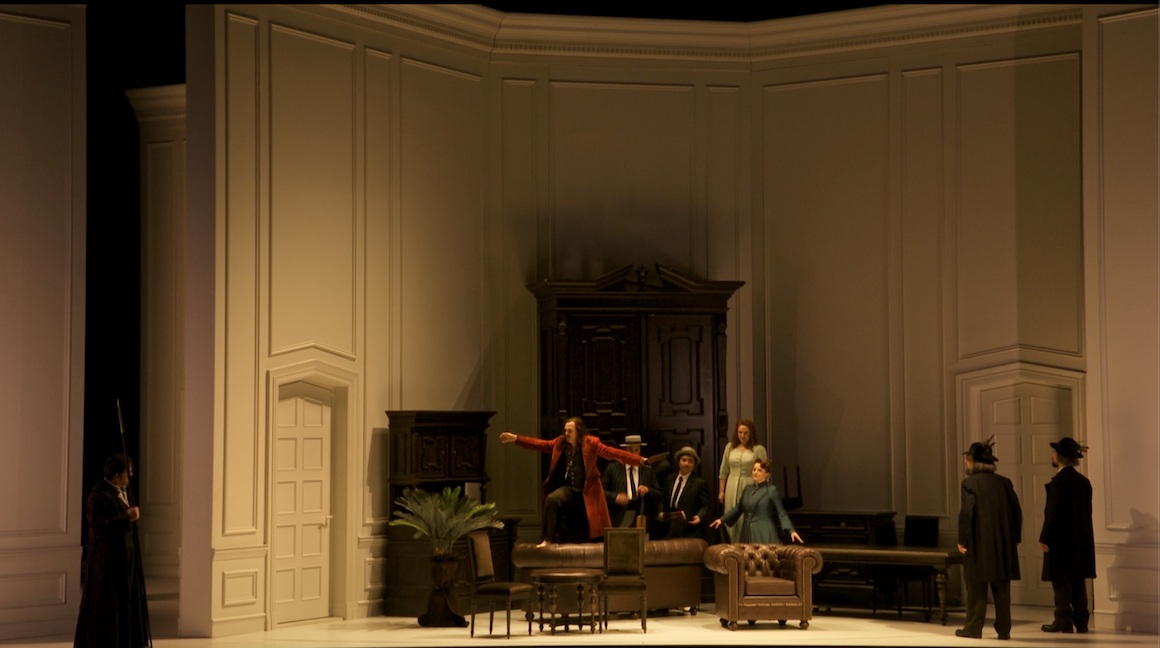
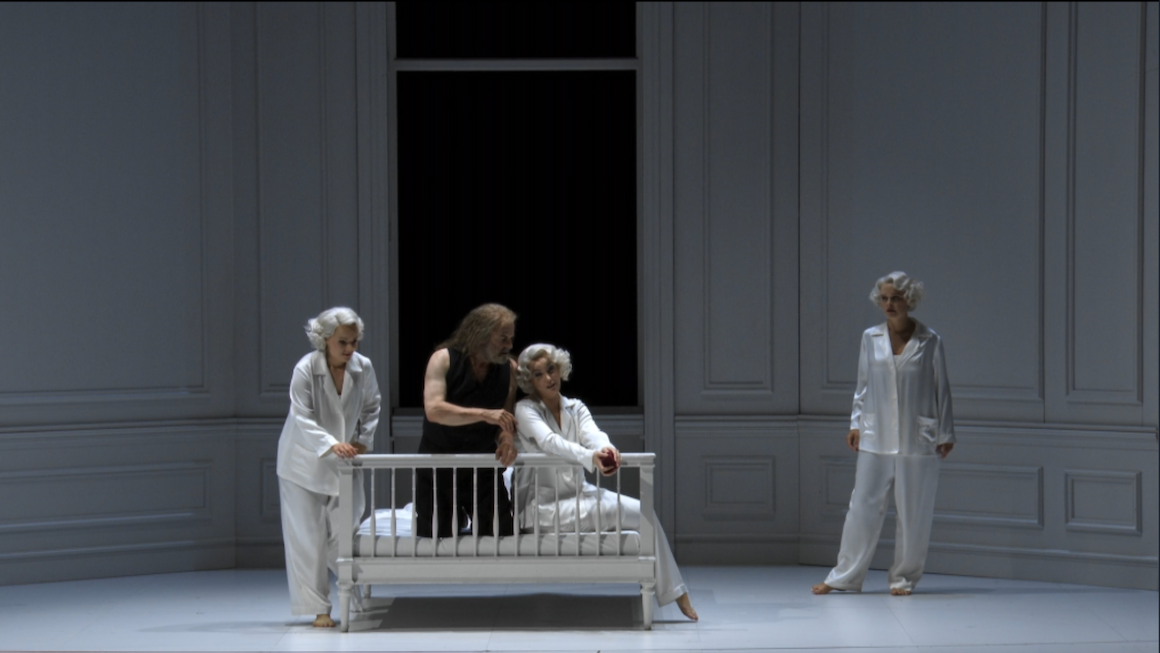
Overall I rate this cycle very highly.  Andreas Homoki’s production is unusual in that it’s really not conceptual and is often very literal.  That’s rare in Wagner productions in major European houses.  But it’s also not cluttered up with superfluous 19th century “stuff”.  When a thing is essential, it’s there as described.  If it’s not essential more often than not it’s omitted.

Continue reading

Zürich Ring – Götterdämmerung

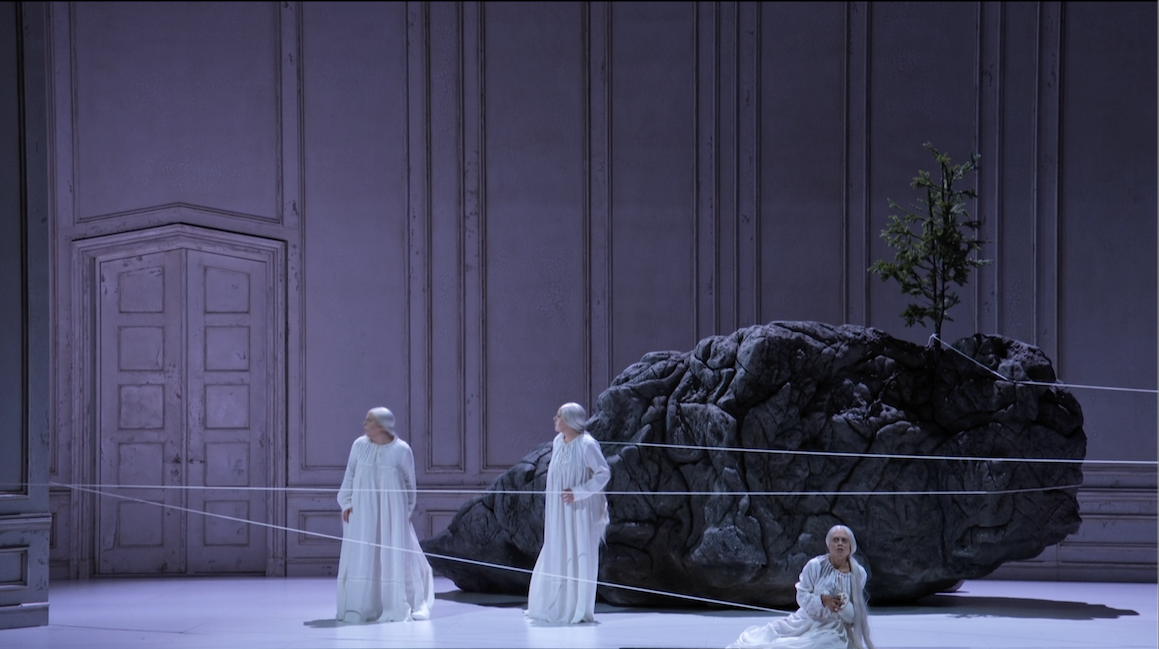
And so to the final instalment… We open with the Rock but now the background room; while still the same 18th/19th century mansion, looks a bit the worse for wear with peeling and cracked paint. The Norns, predictably, are all in white.  It’s all pretty conventional but done well.

Continue reading

Zürich Ring – Siegfried

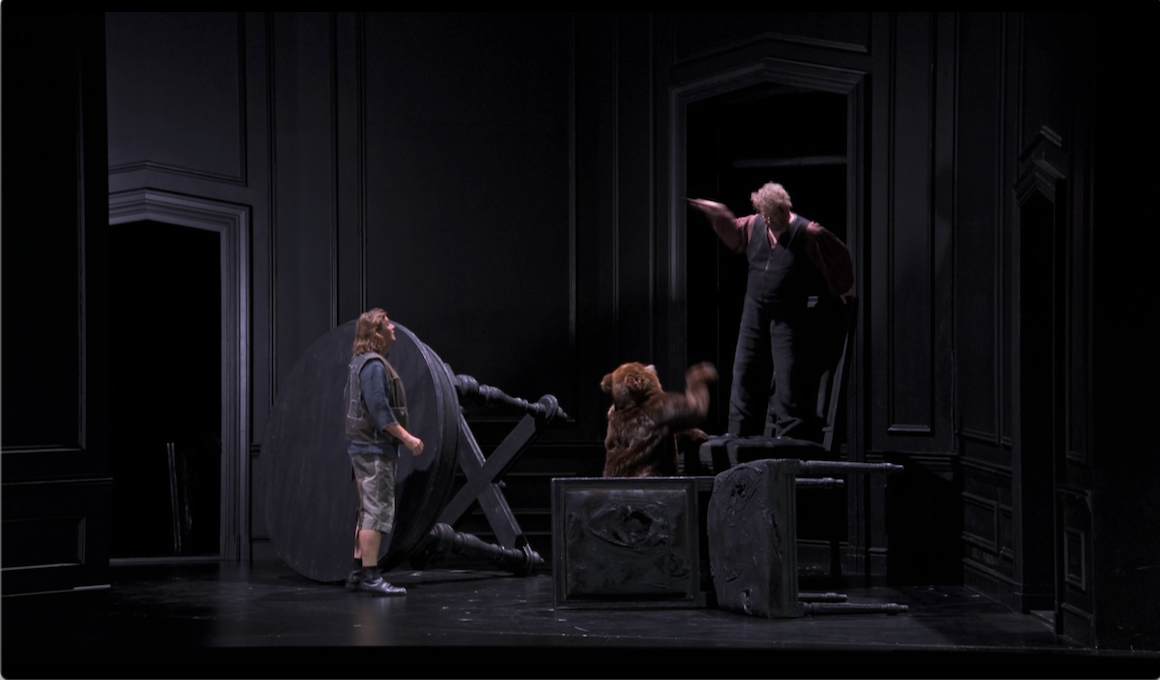
Siegfried has been described as the scherzo of the Ring cycle and Andreas Homoki seems to have at least partly run with that.  There are quite a few places, including some less obvious ones, where he seems to be going for laughs.  The obvious ones are obvious enough.  You can’t really have a bear in the first scene without it being comic but there were also times when Wanderer was camping it up a bit.  We’ll come back to that.

Continue reading

Zürich Ring – Die Walküre

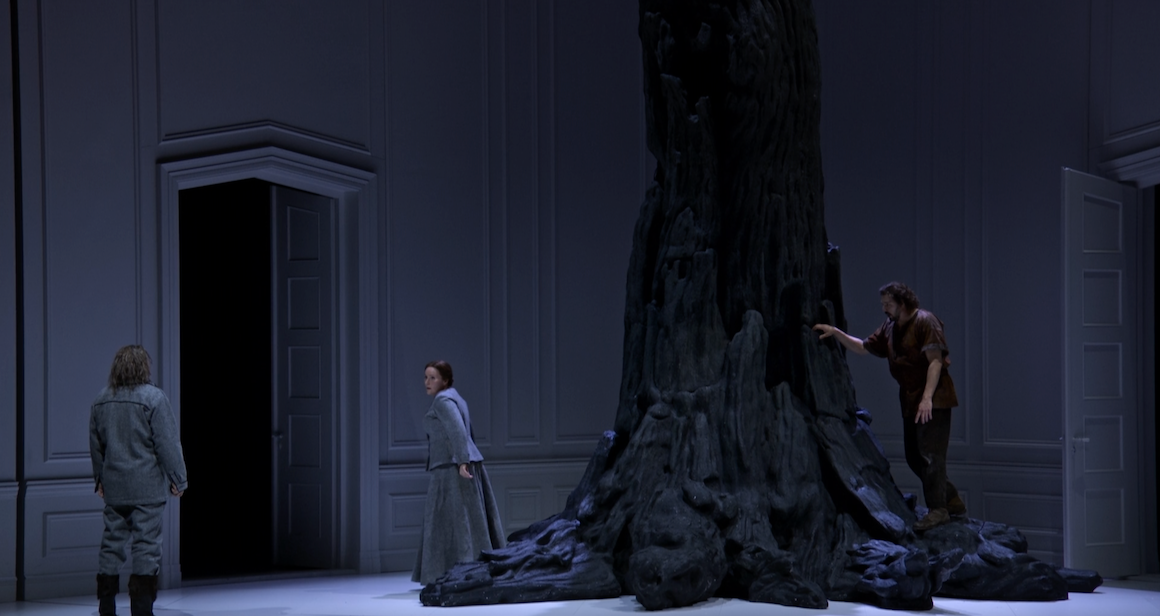
Continuing on from Das Rheingold we come to Die Walküre.  There’s a lot of continuity with the earlier work.  It’s basically the same rotating set though in some scenes one of the “rooms” becomes a forest.  Another thing we see is characters who aren’t canonically “there” appearing in scenes.  So right at the beginning, when Siegmund and Sieglinde meet, Wotan is lurking and doing things like handing drinks to Sieglinde.  We’ll see more of this with Hunding’s henchmen appearing in various places, Wotan and the henchmen appearing when Sieglinde is describing her wedding and the Valkyries showing up at the start of Act 2.

Continue reading

A new Ring from Zürich – Das Rheingold

A new production of Wagner’s Der Ring des Nibelungen is always a bit of an event and all the more so when it’s in the city where the work was composed.  Andreas Homoki’s production premiered and was recorded for video at Opernhaus Zürich in 2024.  I’ll be working my way through the whole cycle but here are my initial thoughts based on Das Rheingold.

Continue reading

Tcherniakov’s psychiatric take on Pelléas et Mélisande

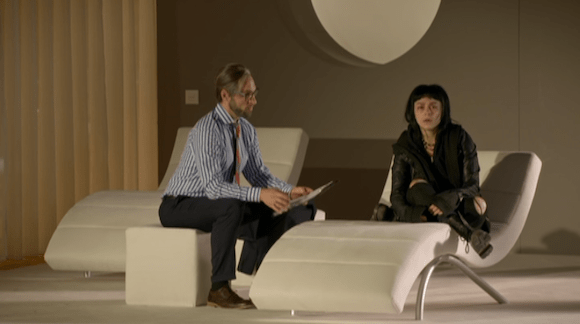
How much of Pelléas et Mélisande did Maeterlinck or Debussy intend to be taken literally?  Probably not much and that’s certainly where Dmitri Tcherniakov is coming from in his 2016 production for Opernhaus Zürich.  In this version Golaud is a psychiatrist who has brought his patient; the deeply disturbed Mélisande, to live in the Arkel family home.  It’s a typical Tcherniakov construct in some ways; a multi-generational haut bourgeois family living in some considerable style but where nothing is quite what it seems to be.

1.psysession

Continue reading

Not all smiles

I’m never quite sure what I really think about an operetta like Lehár’s Das Land des Lächelns.  I quite like the music, even if it can be a bit cheesey but I’m put off by the casual cultural appropriation (though it’s not nearly as bad as Puccini!).  I’m not sure what the best directorial approach is either.  Does one play it for froth?  Does one try and mine some deeper meaning?  Interestingly Andreas Homoki’s approach for his Zürich production filmed in 2017 is to play it straight and let whatever is there appear or not.  It works rather well.  It;s a typically lavish Zürich production with lots of colour and movement and he creates some spectacular visual effects.  But he also allows for a sinister element to appear in the Chinese scenes.  It may be over-interpreting but I think one can see shades of proto-Fascism here.  It’s reinforced by the score that really has some rather sinister elements that I hadn’t noticed before.  I think there’s even a nod to Siegfried’s Funeral March.  All in all, quite interesting without being wildly unconventional.

1.vienna

Continue reading

Wozzeck as puppet theatre

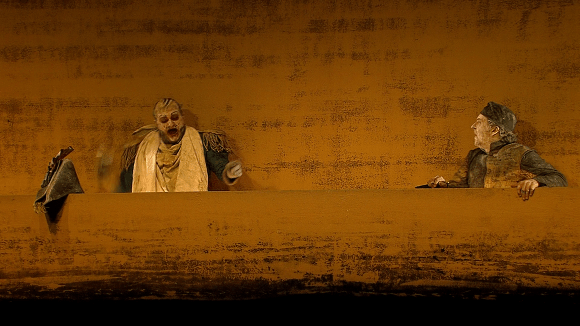
Wozzeck is a tricky piece for a director.  There seem to be two possible approaches.  One can find a character for Wozzeck himself that resonates with contemporary audiences and treat the piece more or less realistically.  That’s the approach taken by both Bieito and Tcherniakov.  Alternatively one can run with the overtly expressionist aspects of the piece and present it in a more abstract way as Peter Mussbach did.  Andreas Homoki’s 2015 Zürich production takes the second route.  The piece is presented as if the characters are puppets in a puppet theatre in a sort of ultra-grim version of Punch and Judy.  It’s visually quite arresting and there are some very well composed scenes.  To give just one example, immediately after Wozzeck has decapitated Marie the chorus appear as nightmarish Maries while Wozzeck sits nursing the severed head.  That said, the concept does pall and maybe hasn’t really got the legs, absent any other real directorial ideas, to carry the piece for two hours.

1-wozzcap

Continue reading

Puzzling Genoveva from Zürich

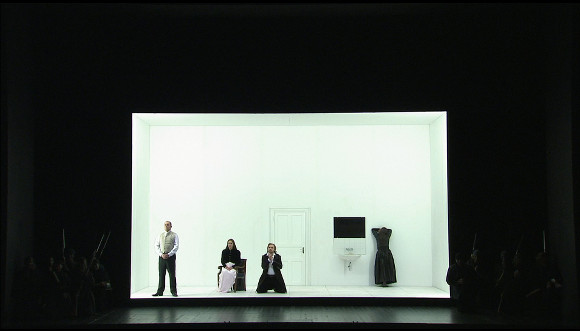
Schumann’s Genoveva is a rarity. It premiered in 1850 and quickly slipped into obscurity.  Recently it has been championed by Nikolaus Harnoncourt who has gone so far as to call it “the most significant opera of the second half of the 19th century”; a slightly eye popping claim.  So what’s it about?  On the face of it it’s a pretty typical German opera of the period, set during the wars against the Moors in Spain.  Siegfried (Graf in the libretto but mysteriously translated as Duke in the disk subtitles) is recently married but must lead his men off to the war leaving behind his young, beautiful, pious and virtuous bride Genoveva. He leaves Golo; a knight but a bastard so apparently not OK for active service, to guard his lands and wife.  Golo has the hots for Genoveva but when she rejects his advances he concocts, with the aid of a witch, a plot to make it appear that she’s having an affair with an elderly retainer.  She’s locked up by the servants and word is sent to Siegfried; returned from Spain but recovering from wounds in Strasbourg, of what has transpired.  He gives Golo his sword and ring and tells Golo to kill Genoveva.  Instead Golo tries to get her to run away with him but she refuses and he disappears.  The servants too are happy enough to humiliate Genoveva but pretty slow about killing her.  This gives time for Siegfried to arrive, having learnt of his wife’s innocence, and save the day.  All sing a hymn of praise to God.  Along the way there’s a magic mirror, a ghost, a magic potion and a whole lot of cloying sentimentality and piousness.
1.quartet Continue reading

Starkly beautiful Carmen

Matthias Hartmann’s staging of Carmen for the Opernhaus Zürich recorded in 2008 is starkly simple but very beautiful and provides a perfect vehicle for the considerable talents of Vesselina Kasarova and Jonas Kaufmann.  The set consists of a plain backdrop and a raised elliptical disk, reminiscent of a bull ring.  A few, very few, props are added as needed.  A dog lies asleep at the front of the set (replaced by a cattle skull in the final act).

1.set Continue reading