A Little Too Cozy

So the cat’s out of the bag.  The long awaited where, when and who of Against the Grain’s Toronto run of A Little Too Cozy have been revealed.  A Little Too Cozy is the third and final instalment in a trilogy of Mozart “transladaptations” developed by AtG, which place the works in appropriate, non traditional opera, venues and which use English language librettos by Joel Ivany bringing the stories into a contemporary context.  The first two instalments; Figaro’s Wedding and #UncleJohn, sold out their Toronto runs.

A-Little-to-Cozy-7

Continue reading

Ensemble Studio Marriage of Figaro

Once a season the young artists of the COC’s Ensemble Studio get to perform one of the company’s productions on the main stage of the Four Seasons Centre.  Last night it was the Claus Guth production of The Marriage of Figaro.  I’ve said enough about the production already here and here so let’s cut to the chase.

15-16-04-E-MC-D-4111

Continue reading

Barbara Hannigan – Concert Documentary

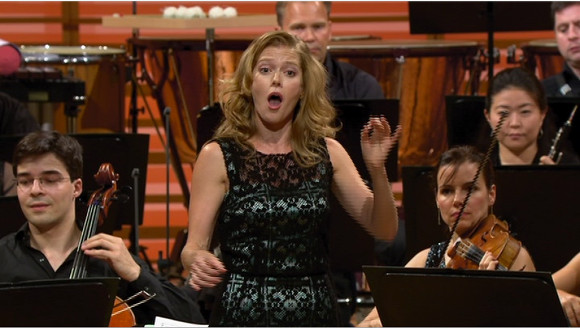
The Hannigan obsession continues.  This time I’ve been looking at a DVD, Barbara Hannigan – Concert Documentary.  It’s in two parts.  There’s a recording of Hannigan as soloist and conductor with the Mahler Chamber Orchestra at the 2014 Lucerne Festival and there’s a documentary, I’m a creative animal, looking at her life and work.

1.conducting

Continue reading

Another look at the Guth Figaro

Back at the Four Seasons Centre last night for another look at the current Claus Guth production of The Marriage of Figaro.  It was a somewhat different experience than opening night.  The timing and physical comedy seems to have crisped up and the audience seemed more relaxed.  There was a lot of laughter.  A lot.  I could see why too, although I have never thought of this as a “funny” production.  Indeed the 2006 Salzburg original earned its reputation as “the darkest Figaro ever”.  Interval conversation suggested that the production has been progressively “lightened up” in its various Salzburg revivals and maybe this was just the next step in that progression.  There seemed to be fewer dead birds too.  One effect of the shift was to bring the character of Figaro more to the fore.  I thought Joseph Wagner was a bit anonymous on opening night but he impressed me last night.

Figaro-MC-3164

Continue reading

Guth’s Figaro at the COC

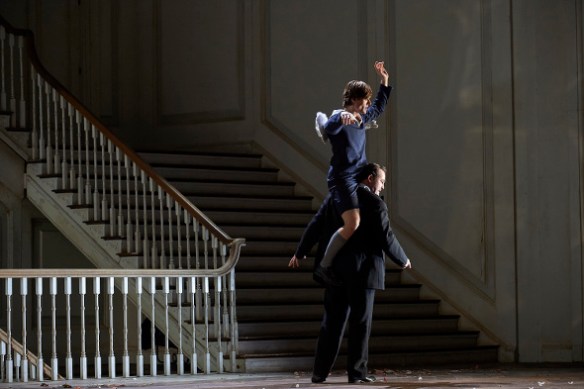
Claus Guth’s production of Mozart’s Le Nozze di Figaro, first seen at Salzburg in 2006, opened last night at the COC.  I was curious to see how it would be received because, while by no means an extreme production by European standards, it’s well beyond the 1970s aesthetic beloved by sections of the Toronto audience.  The aesthetic is Northern European; a Strindberg play or a Bergmann film perhaps.  It’s monochromatic, quite slow and focusses on the darker side of the characters’ psyches.  It’s the antithesis of Figaro as Feydeau farce.  There’s also a non-canonical character, Cherubim.  He’s a winged doppelganger of Cherubino and seems to be a cross between Cupid and Puck.  Pretty much omnipresent he manipulates scenes and characters though with a power that falls well short of absolute.  Perhaps the whole production is best summed up in the final ensemble.  Cherubim visits each couple in turn and is brusquely rejected.  Only Cherubino is still subject to his power and that seems to have become destructive.  Perhaps the message is “Now we are married forget this love nonsense and let us get back to our drab lives of quiet despair”.

Figaro-MC-1107

Continue reading

Classics Reimagined

I’ve seen Robert Pomakov and the Gryphon Trio perform together a few times now and it’s always interesting.  Today’s lunchtime concert in the RBA was no exception.  Four of Mozart’s concert arias for bass and orchestra, arranged for string trio by Bohdana Frolyak, were interspersed with movements of Heather Schmidt’s Lunar Reflections; a 2008 piece commissioned by the Gryphons inspired by the moon in different seasons of the year.  It was stimulating.  The concert arias (K.432, K.513, K.512 and K.612) all showcase the bass voice with tectonic low notes and plenty of opportunity for virtuosity.  I think they suited Robert pretty well.  He’s perhaps not the most subtle of singers but he’s exciting (and loud!) and the trio accompaniment provided so much more than piano alone could.

The Schmidt piece was also enjoyable.  It’s fairly approachable and the five movements are quite varied.  The first two; Blue Moon and Pink Moon, are quite lyrical, even lush in a slightly post romantic sort of way then comes Wolf Moon which is in an altogether darker place; slower, louder and more dissonant with lots of work for the low notes on the cello.  Snow Moon continues in a slower, somewhat dissonant vein but is much lighter textured and the piece concludes quite violently with the aggressive and abrasive Thunder Moon which puts serious demands on all three players but especially the piano.  Unsurprisingly, I feel I’ve probably not done this piece justice.  I find I need to hear work of this kind more than once to fully appreciate it.

Requiem come to life?

Joel Ivany’s much anticipated “semi-staged” version of Mozart’s Requiem K. 626 finally saw the light yesterday evening at Roy Thomson Hall.  There were some interesting ideas but, ultimately, I didn’t think I came away with any new insight into the piece or life or death or anything really(*).  I’ll go into the reasons but first I should describe how it was performed.  The mass is prefaced by the slow movement from the Clarinet Quintet.  The lights go down.  The five players enter via the aisles in the audience lower level and take their seats (sadly to applause which we had been asked to refrain from).  As the quintet is played (and it was very beautiful) the players are joined by the rest of the orchestra, the choirs, conductor and soloists enter through the audience and from the wings and deposited slips of paper (I think) on two benches at front of stage left and right.  Names of the dead?  Probably and that’s a nice touch though scarcely original.  The quintet concludes.  More unwanted applause.  At this point the orchestra are seated , more or less conventionally, around the conductor with the choirs around them.  There are lots of fancy chairs.  The soloists are more or less in conventional position in front of the audience.  Everyone, except the mezzo and the soprano, are in black.  The very crowded stage is quite dimly lit in bluish tones.  As the mass progresses, the soloists interact in various ways.  The choirs gesture in rather obvious ways; the text says “king” so we pump our fists, the text talks of “writing” so we make scribbly gestures.  At some point the soloists start to rearrange the pieces of paper with the names of the dead in a sort of game of Dearly Departed Patience.  The soloists exit through the orchestra.  The lights go down.  The End.

TSO Mozart Requiem (Malcolm Cook photo)

Continue reading

The Hannigan show

Last night at Roy Thomson Hall Barbara Hannigan made her North American conducting debut with the TSO.  And, of course, she sang too.  She kicked off with Luigi Nono’s Djamila Boupacha for solo voice.  It’s a short but haunting piece inspired by a woman activist from the Algerian War.  I don’t think I’ve ever heard a solo, unaccompanied, voice in that hall and the effect is eerie.  It’s also a hell of a sing and to navigate it with utter precision is quite some feat.  As the last note died away (precisely on pitch) the violins came in with the opening Haydn’s Symphony no. 49 “La Passione”.  It starts off with an Adagio that’s curiously similar in mood to the Nono piece and Hannigan was conducting without score or baton.  In fact it was more like an interpretive dance than conventional conducting.  She has amazing arms and hands; the arms and hands of a ballerina in fact and as she summoned the strings to a sort of shimmering sound I couldn’t help but reminded of Swan Lake.  Corny perhaps but very real and quite disturbing.  And the orchestra, quite a small subset of the TSO, responded.  This was four movements of really lovely, chamber music like playing.

hannigan1 Continue reading

A lunchtime of Mozart, Strauss and Dvořák

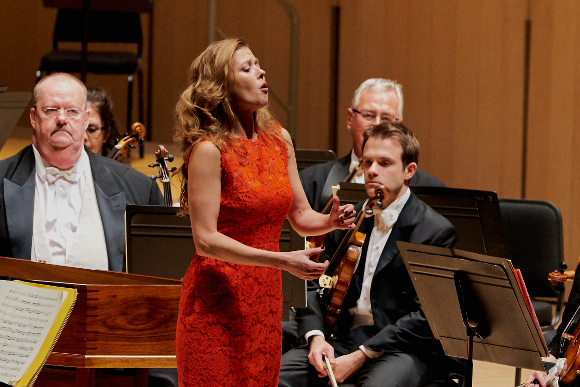
Rachel_KrehmSo there’s another free (well almost, $5 suggested donation) lunchtime concert series.  It’s Music Mondays at The Church of the Holy Trinity in Trinity Square (A most worthwhile institution which has long taken a leading role in the fight for social justice in Toronto and, on top of that, I used to play rugby with a former incumbent).  As it happens yesterday saw the last concert of the 2015 season featuring the Canzona Chamber Players, conductor Evan Mitchell, and soprano Rachel Krehm.  The Canzonas are a pretty big band, 53 players yesterday, for a chamber group (I guess they have big chambers in Canzona) and could be very loud in the rather resonant church acoustic.

Continue reading

September approaches

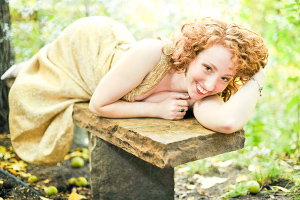
Rachel-66-pinwheel2It’s almost September which means there may even be stuff to write about soon.  Here’s what’s in my calendar so far.

August 31st at 12.15 pm there’s a concert in the Music on Mondays series featuring soprano Rachel Krehm and an orchestra conducted by Evan Mitchell performing Dove sono by Mozart, selections from Strauss Op 27 and Dvorak’s 8th Symphony.  It’s at Holy Trinity Church near the Eaton Centre. PWYC suggested $5.

Continue reading