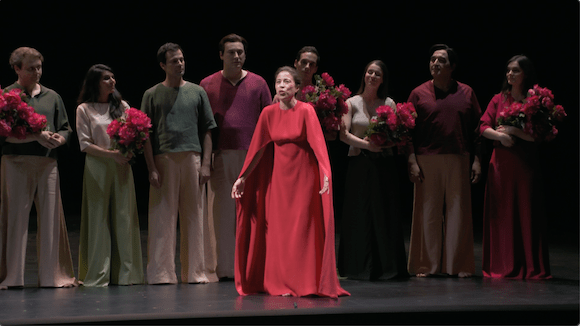
Does anybody do dance like Opéra de Paris?

The title of this review of a 2022 recording of Rameau’s Platée is prompted by the fact that I’ve rarely seen this much high quality dance included in an opera production.  It’s really spectacular.  But back to basics.  Platée is a comic opera of 1745.  The production filmed in 2022 is by Laurent Pelly and was making its fifth run at the Palais Garnier.  There’s an earlier video release of the 2002 run.

1.prologue

Continue reading

L’Orfeo in Paris

The last time I reviewed a recording of Monteverdi’s L’Orfeo was ten years ago and it included Jordi Savali with La Capella Real de Catalunya and Le Concert des Nations.  Oddly enough they also figure in a recording made last year at the Opéra Comique in Paris.  Pauline Bayle’s production though is very different from the very HIP Liceu version.

1.lamusica

Continue reading

Titon et l’Aurore

Jean-Joseph Cassanéa de Mondonville’s Titon et l’Aurore is another member of that rather long list of operas that were well received in their day and then totally disappeared from the rep.  It’s interesting as an example of what was happening on the French opera stage between the retirement of Rameau and the revolution (it premiered in 1753) and because it played an important role in the “querelle des bouffons”.

1.prologue

Continue reading

Platée in Fashion Week

Rameau’s Platée is a rather cruel satire on appearance and perception. Jupiter woos the unattractive swamp nymph Platée in order to prove to Juno how ridiculous her jealousy is. Platée is led to think that she is so beautiful that Jupiter will marry her only to be mocked and deflated when the crowd turns on her.

1.prologue

Continue reading

Forest of the imagination

Malmö might not seem the most obvious place to record Debussy’s Pelléas et Mélisande but in 2016 the opera there assembled a mostly French cast and two young French rising stars; Maxime Pascal as conductor and Benjamin Lazar as director.  The result is interesting, rather good and very French.

1.melisandegolaud

Continue reading

Dido as tragédie lyrique

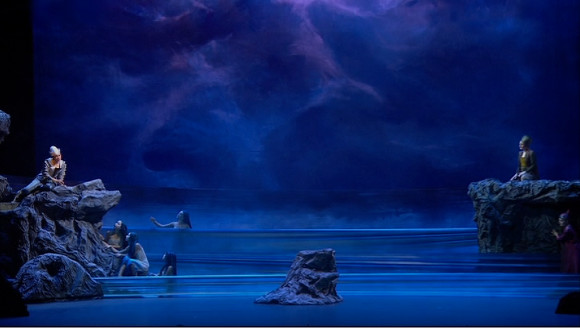
The influence of the myth that Purcell’s Dido and Aeneas was written for a girls’ school seems to have had a long lasting influence on performance practice resulting in presentations that are very short and uncomplicated.  In reexamining the work for the Opéra de Rouen Haute-Normandie, Vincent Dumestre of Le Poème Harmonique and stage directors Cécile Roussat and Julien Lubek come to different conclusions and, accordingly, present the work quite differently.  They argue that the work was written for the court of Charles II though quite possibly never performed there owing to the death of the king and the turmoil that followed.  They further argue that existing score fragments show numerous places where dance movements should be inserted and that this indicates something akin to Lully’s tragédies lyriques, especially as Lully was much in vogue in London at the time.
1.duet

Continue reading