
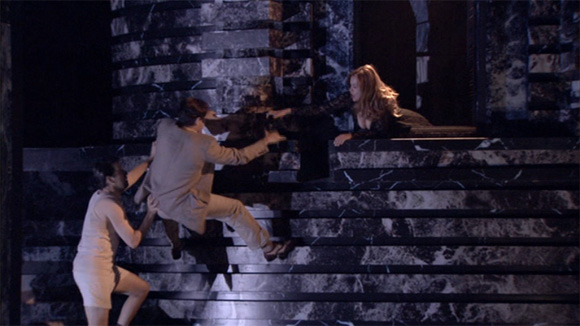
John Adams’ El Niño was conceived as an oratorio but thoughts turned to it being staged early in the creative process. The final result, as staged at Paris’ Châtelet in 2000, defies easy characterization. There are singers and dancers on stage but they don’t represent unique characters. So, for example, at one moment Willard White is Herod and at another Joseph. To further complicate matters video is constantly projected onto a screen above the stage space. It was specially created for the piece being shot on location in Super 8. There’s no clear narrative either. To some extent it tells the Christmas story but it’s at least as much about the feminine experience of giving birth as anything from Isiah or the Gospels. It also uses a very eclectic mix of texts; from the Bible, from the Apocrypha, from female Latin American poets, from Hildegard of Bingen and so on. There are lots off Sellars’ trademarks in the staging too; semaphore and so on. Does it work? I don’t really know as it’s really hard to tell from the video recording (see para 3).
El Niño
3

 operaramblings