
 This review first appeared in the print edition of Opera Canada.
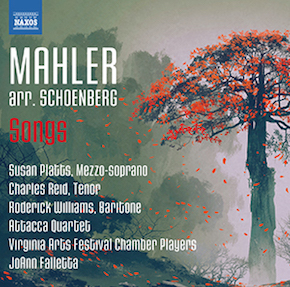
Schoenberg’s reductions of Mahler’s two great orchestral song cycles; Lieder eines fahrenden Gesellen and Das Lied von der Erde, were made for his “Society for Private Musical Performance” which flourished briefly in post WW1 Vienna. Essentially the orchestral score is reduced to one instrument per part with a few other minor changes. The results are intriguing. Unquestionably some of the grandeur of Mahler’s massive orchestration is lost. This is especially noticeable in Das Lied von der Erde. On the other hand the instrumental textures are greatly clarified and there is much less sense of the singers straining to make themselves heard against a large orchestra. There are still fifteen instrumentalists so the singers are pushed well beyond lieder singing but it does allow for a somewhat more nuanced approach to the text.
 This review first appeared in the print edition of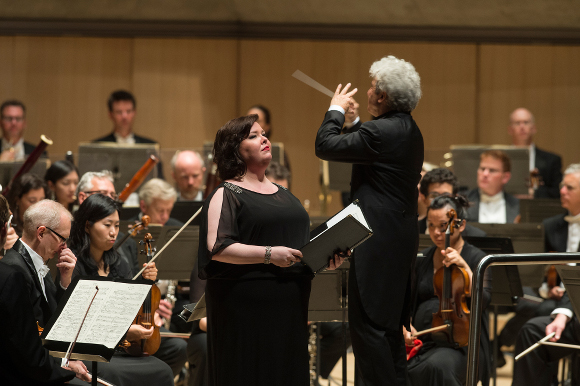
 The lunchtime concert series in the Richard Bradshaw Amphitheatre kicks off on Tuesday with the traditional opener; a concert by the members of the COC Ensemble Studio. It’s always a good opportunity to level set for the season ahead. Noon in the RBA. Then on Wednesday and Thursday at 8pm the TSO are doing Mahler 3 with Jamie Barton as soloist. I was tremendously impressed with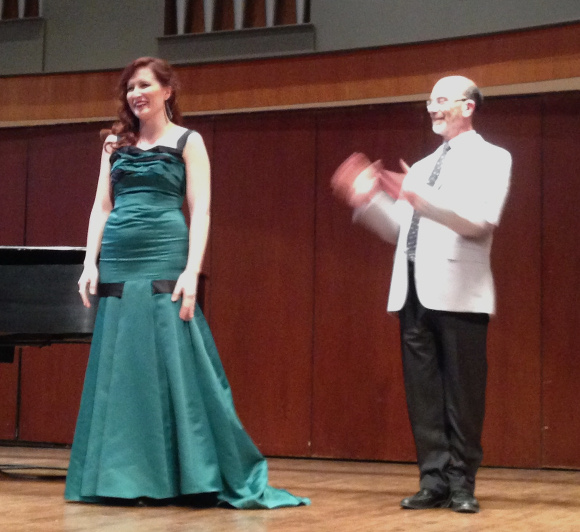
 At Walter Hall last night to see the Faculty Artists Ensemble with Megan Quick and Andrew Haji conducted by Uri Mayer perform the chamber versions of Das Lied der Waldtaube from Schoenberg’s Gurrelieder and Mahler’s Das Lied von der Erde in the Schoenberg arrangement. The main reason for going was to get as chance to hear Megan in something more substantial than the things I’ve seen her in with UoT Opera. Plus, a chance to hear Andrew is always very welcome.
 Last night was the third memorial concert for Elizabeth Krehm in support of the ICU at St. Mike’s. This year the piece was Mahler’s Symphony No.2 appropriately enough. It’s a piece I’ve lived with for a very long time and it never fails to move. It’s a curious contrast with the Fourth which we heard at the symphony last week. If 4 gives a naive and optimistic view of the afterlife, 2 is much darker, more troubled and less certain. Even the very beautiful Urlicht is not without its sense of angst and the final movement is majestic, powerful and has the deepest possible sense of yearning.
 operaramblings