Ambroise Thomas’ Hamlet is a very grand French opera based loosely on various (loose) French adaptations of the play by Shakespeare. If one discards any notion that one is going to see Shakespeare with music and takes the piece on its own terms it’s really pretty good. In recent years it’s been doing the international opera circuit in a production by Patrice Caurier and Moshe Leiser that originated in Geneva in 1996 and was, for example, seen in the Met HD series a year or two ago. Most productions have featured Simon Keenleyside as Hamlet and Natalie Dessay as Ophélie. The available DVD version, recorded at the Liceu in Barcelona in 2003 features both of them.
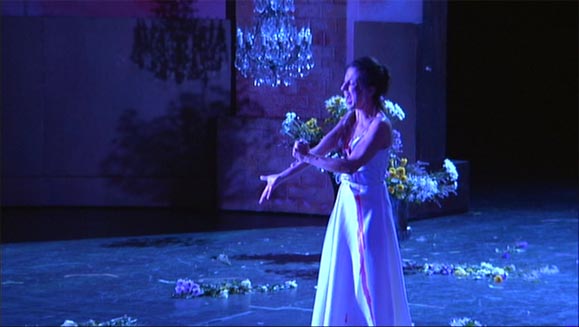
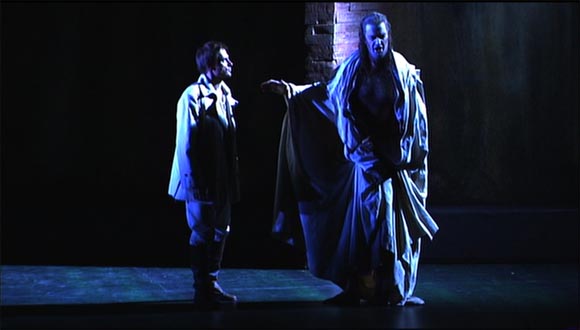 Really all this opera needs to work is a baritone with exemplary French who can sing with power and lyricism for three hours and really, really act. That, I guess, is why Keenleyside owns the role. He’s superb. He probably peaks in the really quite amazing second act where he does a sort of mad scene as the “play within a play” misfires but he’s superb throughout. The second requirement is someone who can do a compelling mad scene with lots of blood and coloratura. Natalie Dessay seems to have trouble cutting her wrists but is otherwise brilliant and is rewarded with what is probably the longest applause for a single aria ever committed to DVD.
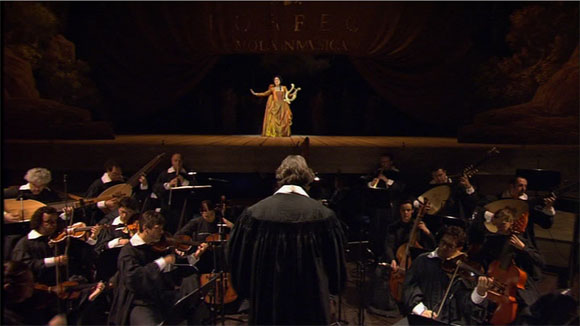
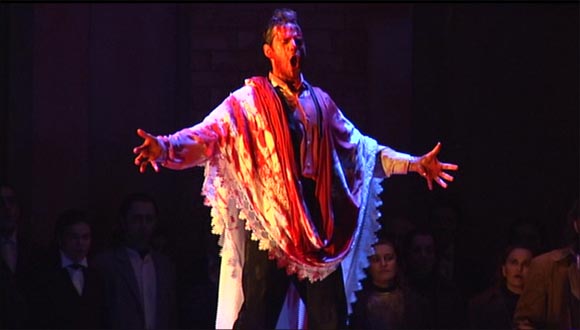 The rest of the cast is mostly very good. Alain Vernhes’ Claudius is very strong, vocally and dramatically; certainly much better than James Morris at the Met. Béatrice Uria-Monzon is occasionally a bit squally as Gertrude but acts really well, especially in the confrontation with Hamlet in Act 3. I didn’t care much for Daniil Shtoda’s Laërte. he sounded too “Italian” and not at all idiomatic. Overall though really great singing backed up by a very crisp performance from the orchestra under Bertrand de Billy. They sounded more lyrical and less bombastic than in the Met version.
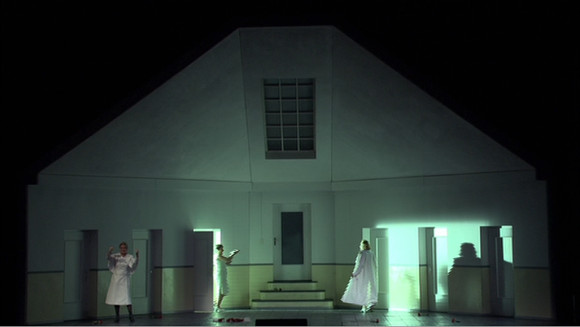
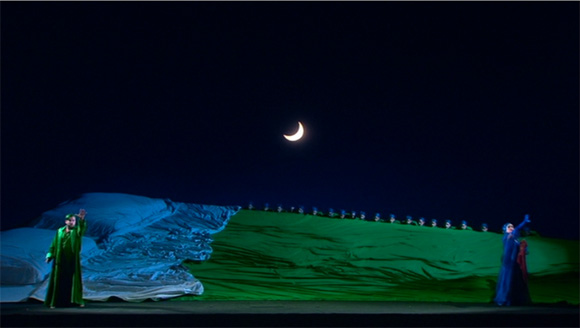
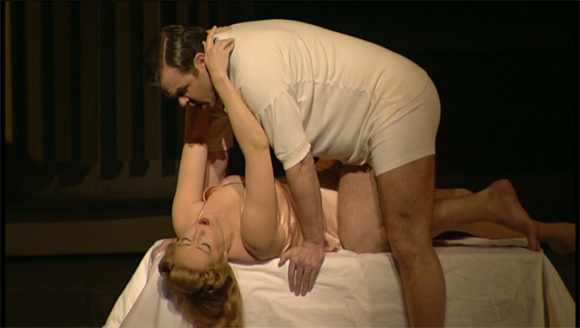
 The production is not especially exciting. It’s very plain with just a few moving “faux marble” walls. Most of the scenic effects are left to the lighting plot which is effective though hard to film (see below). Costumes are a sort of generic late 19th century with breastplates thrown in in odd places for some reason. It all provides an effective enough backdrop for some carefully directed and well executed acting. There’s no high concept here but the story gets told.
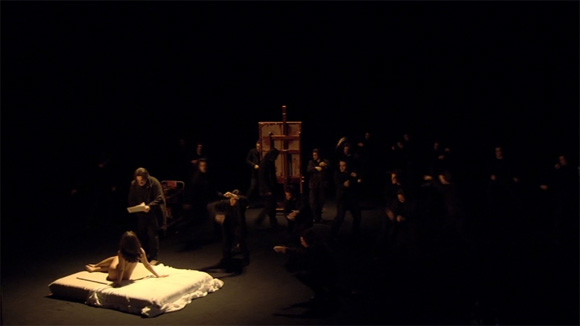
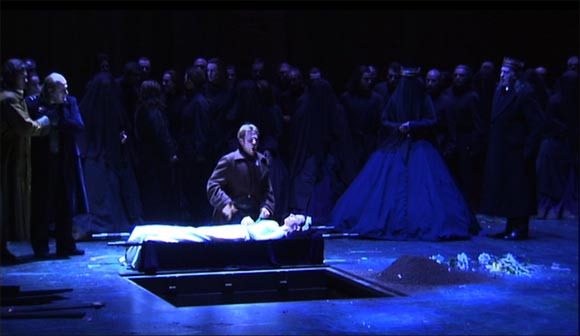 The video direction by Toni Bergallo is pretty good. It’s a tough ask. Often the light levels are low with a really brutal lighting focus on a single character. The Act 2 scene between Hamlet and the ghost is a great example. It’s very hard to make something like that look good on video. The cameras start to lose definition with the low light levels and then the high local contrast sort of blurs out. I found myself watching from quite close up even on a sixty inch screen! The DTS 5.1 sound track is OK but not demonstration quality. There’s not a lot of spatial depth and sometimes the singers sound as if they have been miked too close. The Dolby surround and LPCM stereo mixes aren’t any better. It’s not bad overall technically but it’s not up with the latest from a label like Opus Arte. There are subtitles in English, French, German, Italian, Castilian and Catalan. The only extra is EMI’s standard teaser reel.
Overall, this is well worth seeing. It’s a pretty good little known work, Keenleyside is exceptional and the production for DVD is pretty decent.




 operaramblings