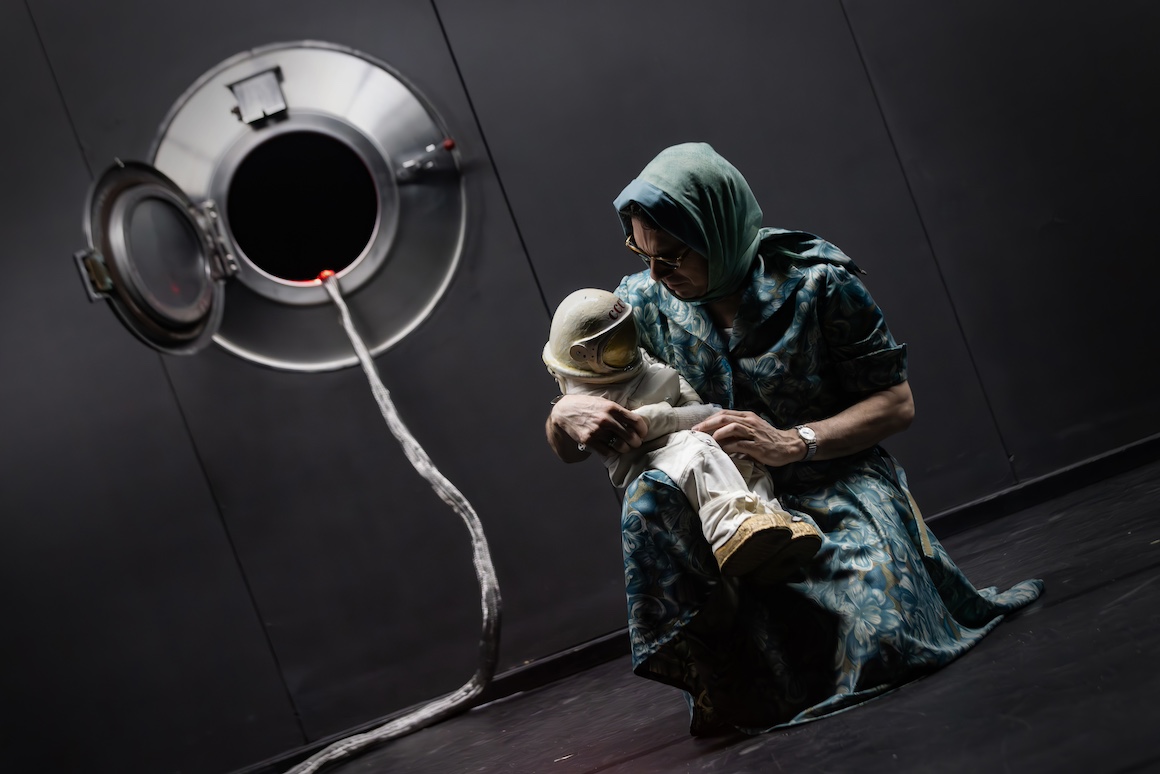
The Far Side of the Moon opened at Canadian Stage on Saturday evening. It’s a Robert Lepage production; written, designed and directed by him. It’s very Lepage with the strengths and weaknesses one might expect. We will come to that in more detail. It’s a homage to Lepage’s childhood obsession with the US and Soviet space programmes and to the moon in general. It plays out in two parallel narratives; the space programmes from Sputnik 1 to the Apollo Soyuz mission in 1975 and the tale of two brothers in Quebec City circa late 1990s. The older is an introverted nerd working on a doctoral thesis about popular perceptions of the space programmes and narcissism. The younger brother is a presenter for the Weather Channel and is shallower than the water over Dogger Bank at low spring tide. Their mother has just died and they are clearing out her apartment in an Old People’s Home.
Tag Archives: lepage
The Tragedy of Hamlet
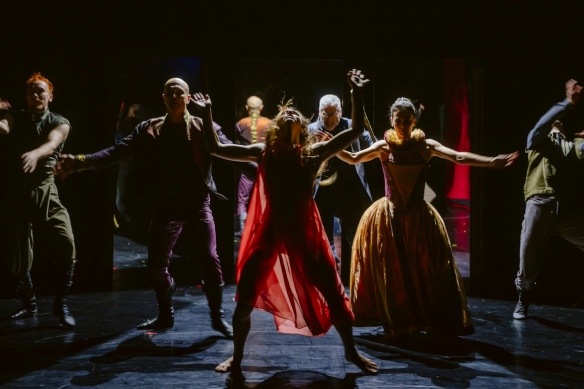
The Tragedy of Hamlet; directed by Robert Lepage with choreography by Guillaume Côté is a 100 minute long dance work based on Shakespeare’s play. It opened last (Thursday) night at the Elgin Theatre.

Photo : Stéphane Bourgeois
The Nightingale sang
The COC’s revival of Robert Lepage’s 2009 production of Stravinsky’s The Nightingale and Other Short Fables, revived by Marilyn Gronsdal, is a delightful mix of witty and clever stagecraft coupled with some fine music making. It’s very much a work of two contrasting halves. The first is a carefully constructed program of shorter Stravinsky vocal and instrumental works; all from the period 1911-1919 and all with a sound world reminiscent of The Firebird or Petrouchka rather than The Rite of Spring or the Dumbarton Oaks Concerto. The full line up was:
- Ragtime
- Three Pieces for Solo Clarinet No.1
- Pribaoutki
- Berceuses du chat
- Two Poems of Konstantin Balmont
- Three Pieces for Solo Clarinet No.2
- Four Russian Peasant Songs
- Three Pieces for Solo Clarinet No.3
- The Fox

L’Amour de Loin in HD
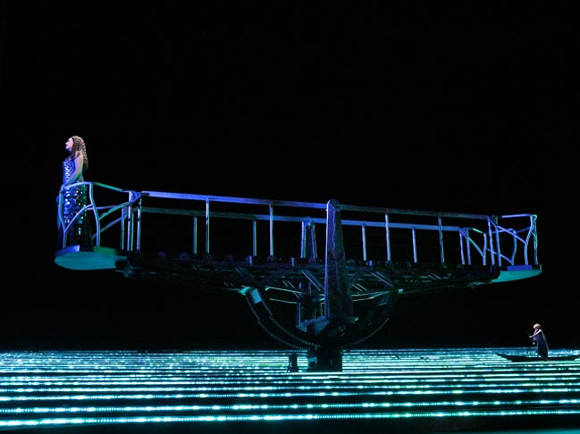
Averse as I have become to the Met’s HD broadcasts the lure of Kaija Saariaho’s L’Amour de Loin in a new production by Robert Lepage proved too strong. I’m glad I went. In fact this was probably the best Live in HD broadcast that I’ve seen. Lepage’s production is magical and absolutely at one with the libretto and the score. It’s deceptive simplicity mirrors the same qualities in both. Basically we are face with bands of light (32000 LEDs) across the stage which change colour as required and provide an ethereal shimmering backdrop. The chorus, rarely more than their heads or hands or both, appear in tight ranks from among the lights. There’s a sort of swivelling gantry with a platform at each end that configures to be the various settings for Jaufré and Clémence and there is the Pilgrim and his/her boat. Simple, configurable, effective and very, very beautiful. Indeed, Lepage and his team at the top of their game.

La vie bohème
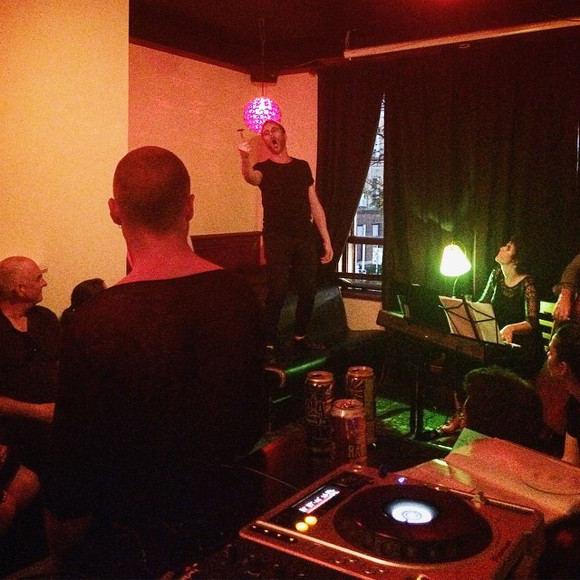
So this week instead of hobnobbing with the rich and famous over wine and canapés in tony North Toronto I was slumming it with the kool kids on Queen West. Specifically I was at a fund raiser to help send Amanda Smith to intern with Robert Lepage (and maybe bring her back again).
Bluebeard’s Castle/Erwartung
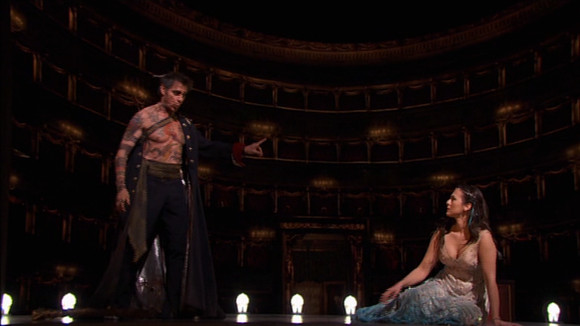
Robert Lepage’s 1993 double bill production of Bartok’s Duke Bluebeard’s Castle and Schoenberg’s Erwartung was the iconic director’s first foray into opera and it has been argued tht it put the COC “on the map” as a serious international opera company. It was revived last night with François Racine directing.
All who were lost are found
Thomas Adès’ 2004 opera The Tempest was given at the Metropolitan Opera in 2012 in a new production by Robert Lepage. It got an HD broadcast and a subsequent DVD release. It’s an interesting work which, on happening, was compared to Peter Grimes as the “next great English opera”. Whether this early hype will turn into a sustained place in the repertoire is yet to be seen. Musically it’s not easy to characterize. Adès very much has his own style; mixing lyricism with atonality and, in this piece, setting one of the roles, Ariel, so high it’s surprising anyone has been found to sing it. Certainly it’s a more aggressively modern style than most of the work currently being produced in North America. The libretto two is unusual. Shakespeare’s own words were, apparently, considered too difficult to sing though, of course, Britten famously set great screeds of unadulterated bard in A Midsummer Night’s Dream. For the Tempest, Meredith Oakes has rendered the text into couplets; rhymed or half rhymed. It works quite well with only the occasional touch of Jeremy Sams like banality.
Shelter
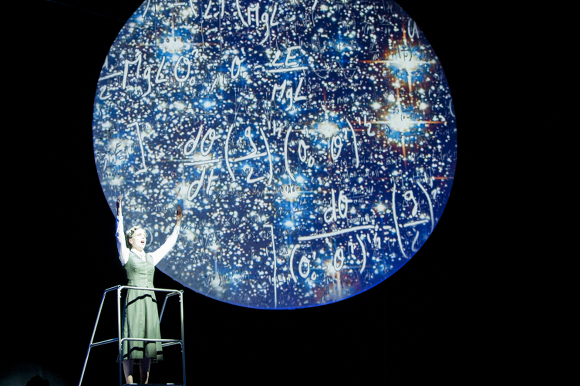
Shelter; music by Juliet Palmer, libretto by Julie Salverson, has been ten years in the making. It premiered in Edmonton a couple of years ago, finally, got its Toronto premiere at the Berkeley Street Theatre last night under the auspices of Tapestry. It’s a complex and eclectic piece dealing with what it is to be human in a nuclear age. There are two parallel plots which intersect in a way that makes dramatic sense but violate conventional notions of synchronicity. This is, after all, a piece rooted in post Einsteinian physics. The first concerns Austrian Jewish physicist Lise Meintner, one of the discoverers of nuclear fission. She has been forced into exile by the Anschluss and is seen here refusing to work on the Manhattan project. The second plot concerns a highly stereotypical 1950s American couple Thomas and Claire who meet at a social, marry and quickly produce a child; Hope. Their “American Dream” is shattered when it turns out that the baby glows! Fast forward 21 years and Hope is demanding her freedom in a world from which she has thus far been sheltered. Reenter Meintner, engaged by Thomas to be Hope’s tutor, and still obsessing about the Manhattan project. The final twist comes with the arrival of the Pilot, in WW2 Army Air Corps uniform, who uses a Geiger counter to find his prey. He fails to convince Meintner to change her mind but does persuade Hope to fulfill her destiny as He pilots the Enola Gay to 31,000 feet and a clear sky. It’s weird, disturbing and powerful.
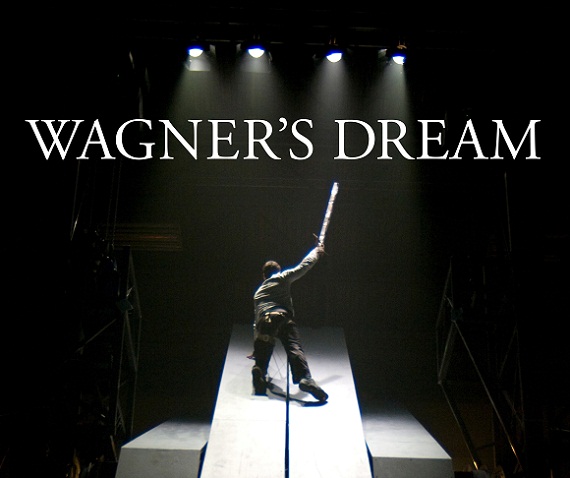
Wagner’s Dream
So TIFF, as part of a broader Robert Lepage retrospective, today screened Susan Froemke’s Wagner’s Dream. It’s a documentary about the creation of the Lepage Ring at the Met and it’s very good. We were fortunate to get a brief introduction and Q&A session with M. Lepage himself before the screening.
Lepage at TIFF
There’s going to be a Robert Lepage retrospective at the TIFF Bell Lightbox from March 27th to April 1st. Most of the screenings/events will focus, naturally enough, on Lepage’s output for cinema but there are a couple of showings of interest to opera fans. On Saturday March 29th at noon there’s a showing of his production of Berlioz’ La Damnation de Faust first seen in the MetHD series and the following day at 12.30 pm one can see Susan Froemke’s documentary Wagner’s Dream about the making of the Metropolitan Opera Ring cycle. Lepage will be present at both shows.