 Humperdinck’s Hansel and Gretel was one of the earlier “Live in HD” broadcasts from the Metropolitan Opera and has been out on DVD for some time. The newness of the concept is immediately apparent in Renée Fleming’s almost awed tone as she introduces the work. She certainly sounds more blasé these days. Hansel and Gretel, given here in David Pountney’s English translation is an odd work. The libretto is much more than a Disney fairy tale. There is poverty, hunger, drunkenness, threats of beatings and murder. There is also a layer of religious sentimentality so thick it could only be 19th century and German. The score is astonishingly heavyweight given the subject matter. Humperdinck worked with Wagner and that is very, very apparent in this piece.
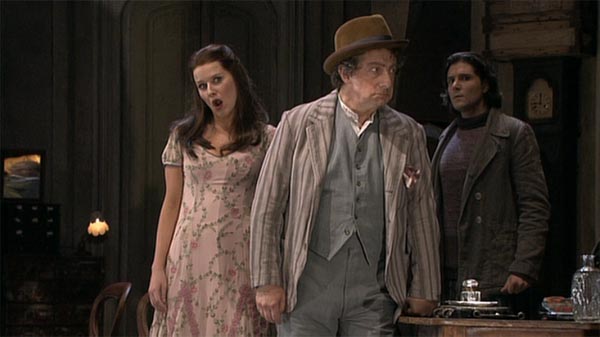
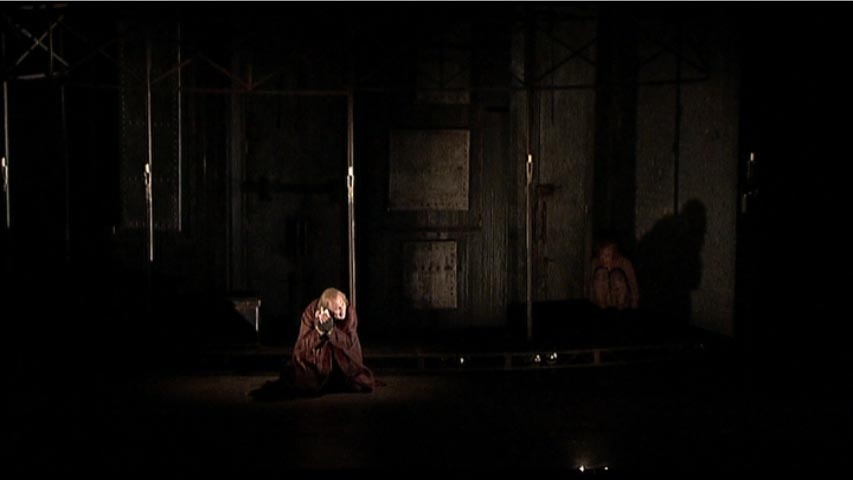
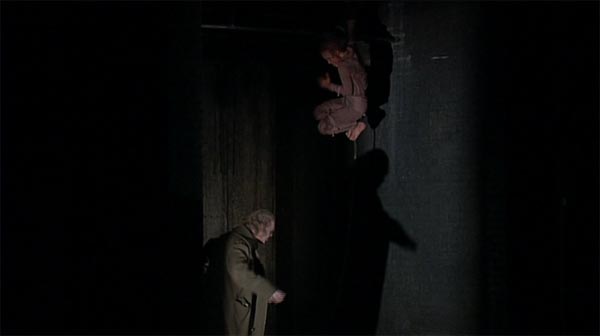
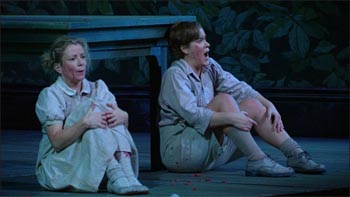 Unsurprisingly, modern directors have tended to emphasize the darker side of the work and Richard Jones is no exception. Hunger is the driving force here and each act is set in a kitchen. A poor peasant cottage in Act 1, a dream like banquetting facility in Act 2 and the Witch’s nightmarish cake factory cum kitchen in Act 3. Much food is thrown around and smeared over people. It’s pretty succesful as a concept if a bit one dimensional.
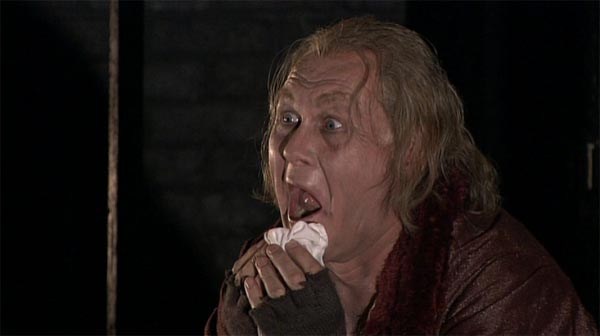
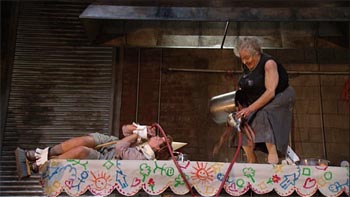 The performances are spectacular and based on some serious luxury casting. Alice Coote and Christine Schäfer as Hansel and Gretel are terrific, especially Schäfer. It’s a wonder to me that a beautiful and elegant woman like her can do grubby so well but she nails it every time (Cherubino in Salzburg, Lulu at Glyndebourne) and this is no exception. Alan Held is a booming father; as big in voice as he is in stature. Rosalind Plowright doesn’t sing prettily but she is utterly convincing as the depressed, shrewish, drug addled mother. Then there is the much missed Philip Langridge camping it up as the Witch. He’s like an incredibly messy Julia Child on speed. He’s hilarious. Sasha Cooke plays the Sandman and Lisette Oropesa plays the Dew Fairy complete with washing up joke. Vladimir Jurowski conducts the Metropolitan Opera Orchestra as if he was conducting The Ring and they play beautifully for him. The very well drilled Met Children’s Chorus also get a look in in the final scenes. Overall, the performance has a high degree of integrity and very high musical values. It’s a good bet for this work which I still can’t really bring myself to like.
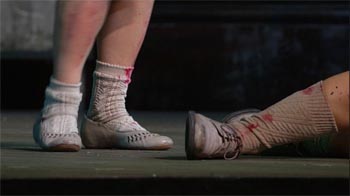 Technically this is what you would expect from a Met “Live in HD”. No video director is credited (so far as I can tell) but it’s got about the usual quota of super close ups, including a completely gratuitous foot shot, which is actually a bit odd as the sets for Acts 1 and 2 are basically confined to a thirty foot cube so it would be easy to encompass the whole picture. The picture quality is good, not stunning, DVD standard. The DTS 5.1 soundtrack is excellent and is particularly good at bringing out the very precise orchestral playing. There is also LPCM stereo. It has the usual HD Broadcast extras. There are English, French, German, Spanish and Italian subtitles. The documentation (English only) includes track listings, a synopsis and a short essay. There is additional information in English, French and German in a PDF on the disc itself.






 operaramblings