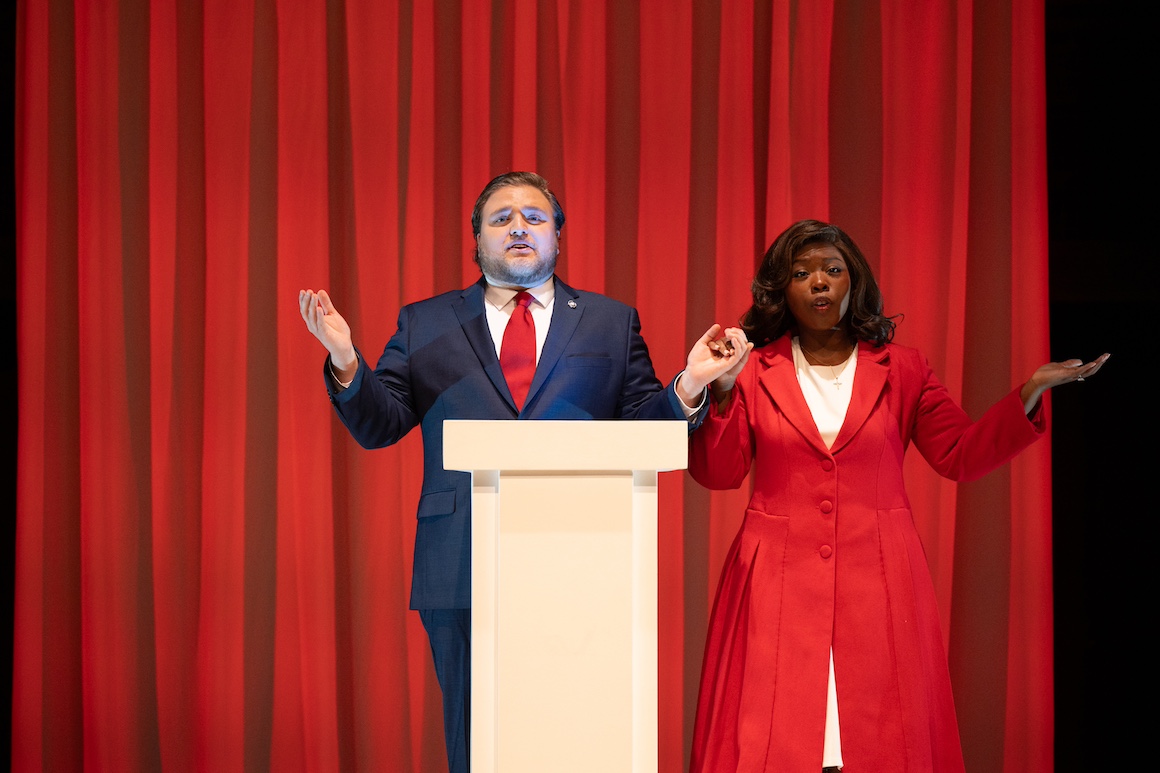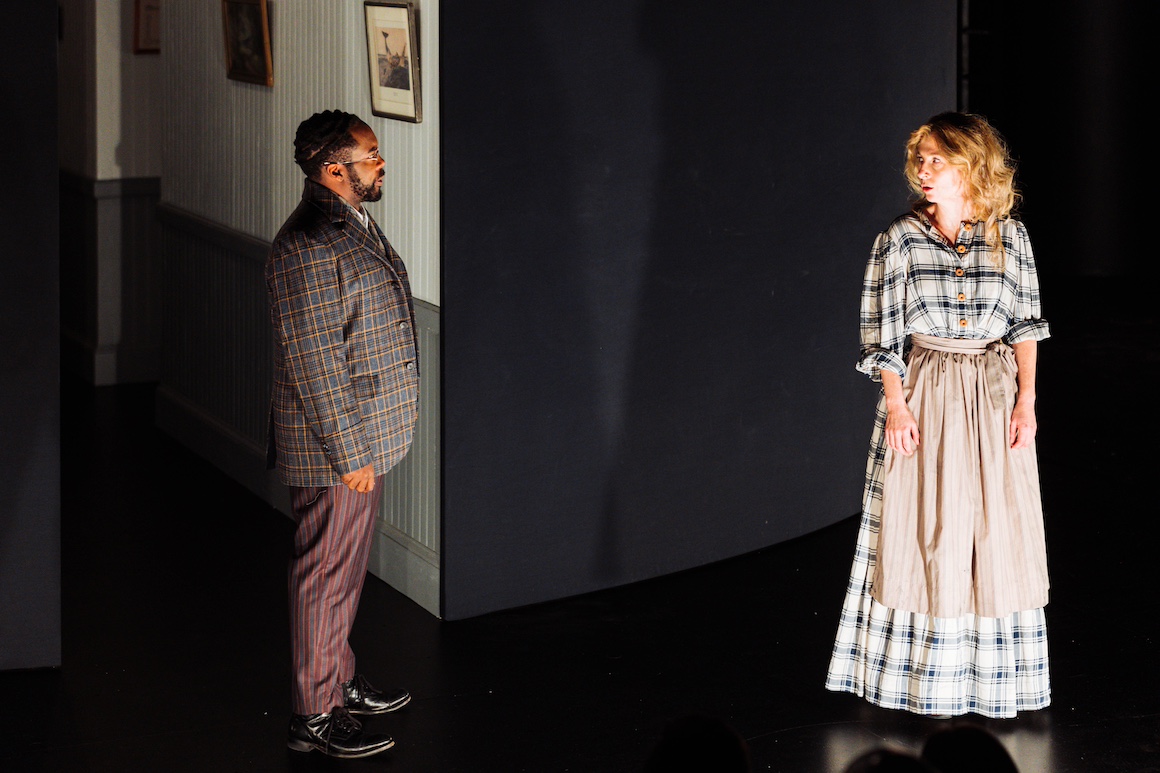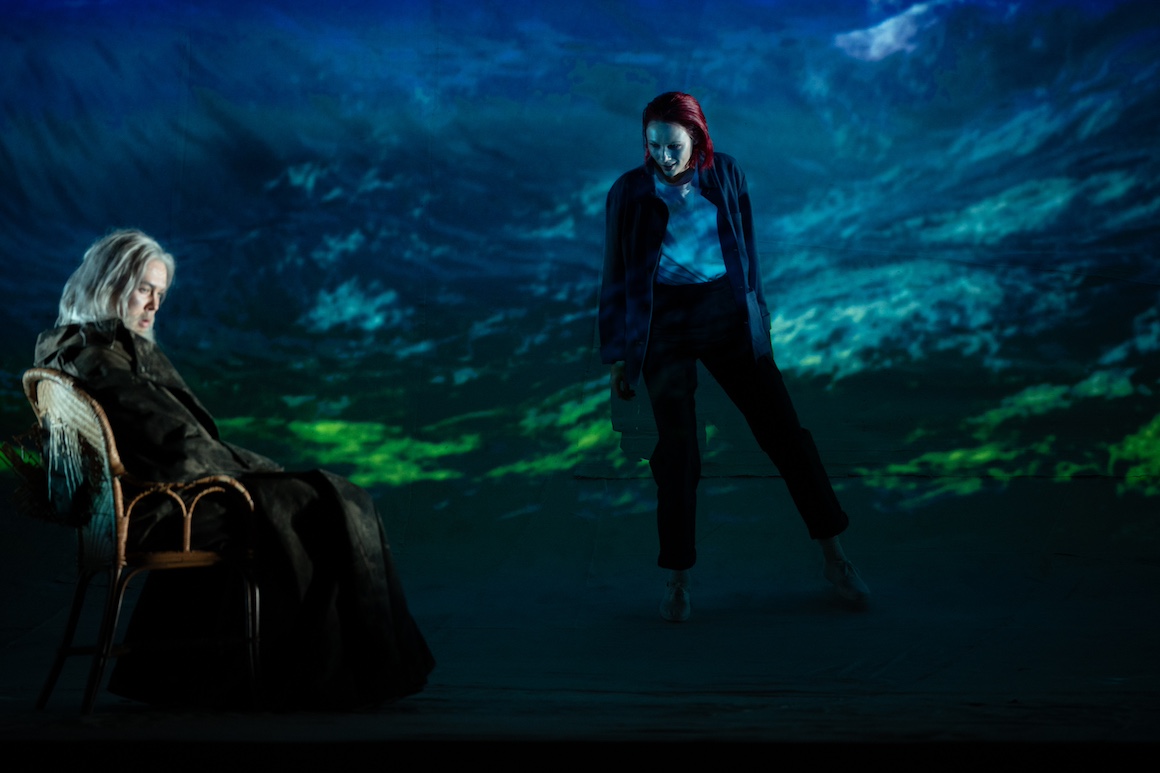
This season’s main stage production from Tapestry Opera will be Ten Days in a Madhouse; music by Rene Orth, music by Hannah Moscovitch. It’s based on the true story of 19th century journalist Nellie Bly who pretended to be insane in order to expose the conditions women patients were being kept under at New York’s Women’s Lunatic Asylum. It’s the Canadian premiere of a Tapestry/Opera Philadelphia commission co-presented with the COC and Luminato. This follows a critically acclaimed run last year at Opera Philadelphia.
Tag Archives: horst
UoT Opera’s Così
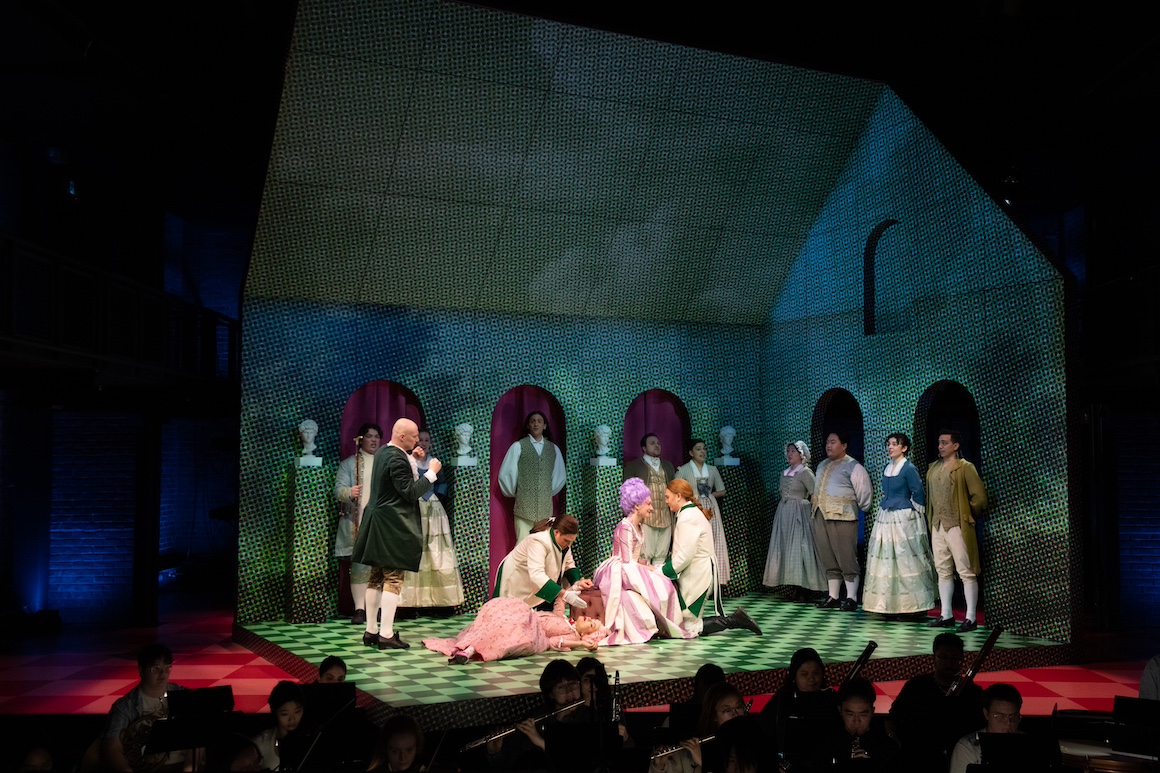
The spring production from UoT Opera is Mozart’s Così fan tutte and it’s playing at the Harbourfront Centre Theatre. Anna Theodosakios directs with some conceptual input from Michael Patrick Albano. The production is interesting and I think there are three layers to unpack. On the surface it’s a fairly straightforward 18th century setting with uniforms, wigs, elaborate dresses and so on but with a rather striking colour scheme; pinks and lilacs.
Three Islands
Three Islands is a UoT Opera show that opened at the Sandra Faire and Ivan Fecan Theatre at York University on Thursday night. The show is conceived and directed by Tim Albery who has wrapped two 20th century English language one act operas in a wrapper crafted from Kaija Saariaho’s Tempest Songbook.

Ariel’s Hail from Tempest Songbook (Saariaho): Prospero – Ben Wallace, Ariel – Aemilia Moser
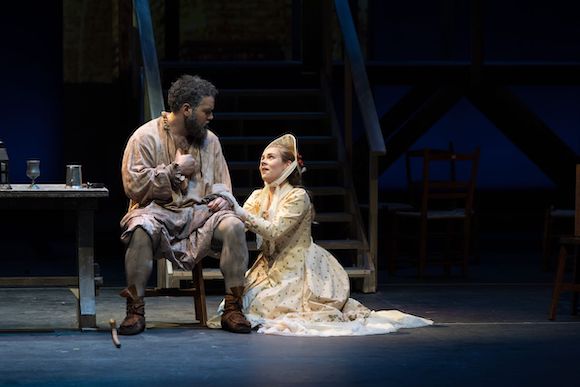
Satisfying Cendrillon from UoT Opera
UoT Opera’s spring production; Massenet’s 1899 opera Cendrillon, has been transferred to the Elgin Theatre with the MacMillan currently out of commission. They have made some sensible accommodations to the rather unfriendly Elgin acoustic. The orchestra is reduced to about thirty players and placed at floor level in front of the stage. Almost all the stage action takes place right at the front which helped significantly with voice projection.

Pandolfe & Servants
Lysistrata Reimagined
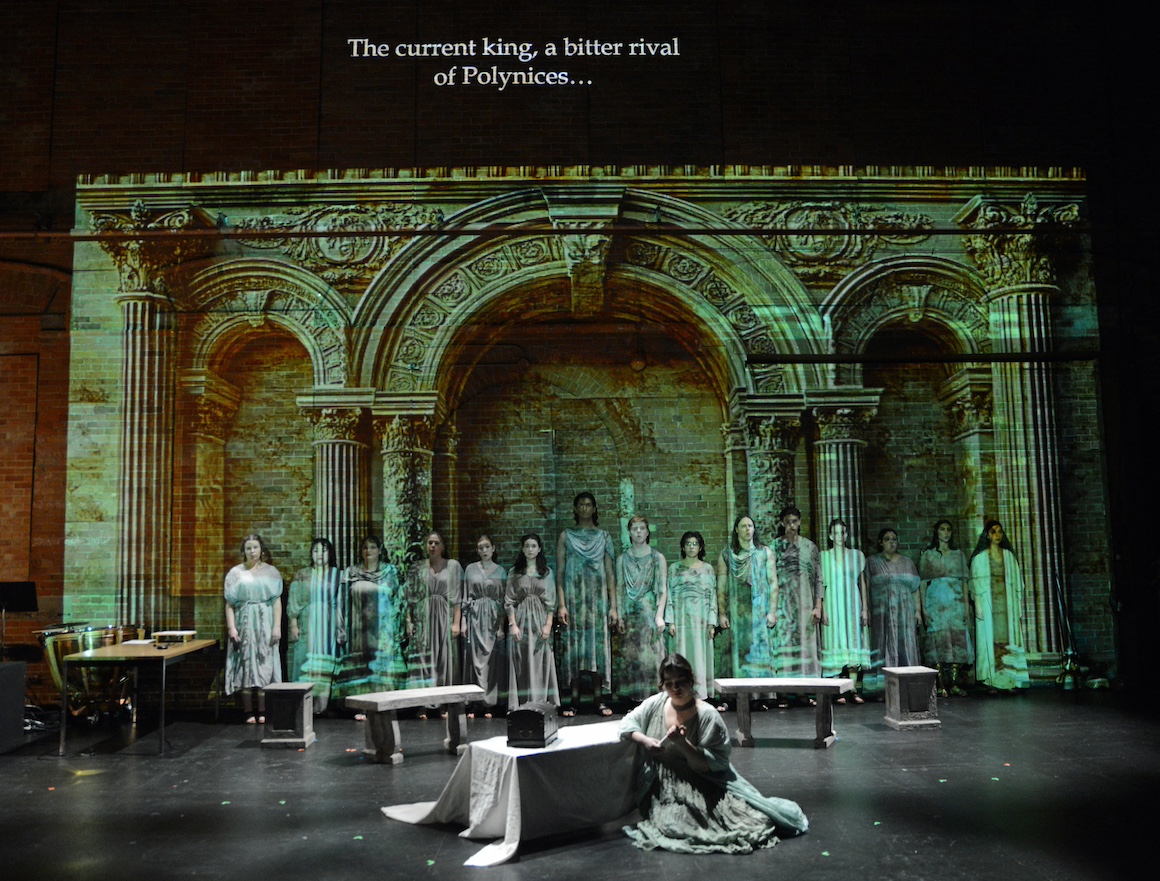
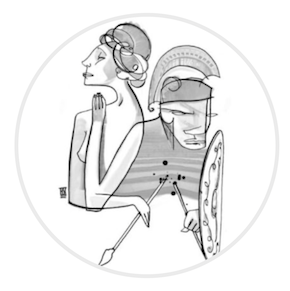
Lysistrata Reimagined is this year’s UoT Opera Student Composer Collective production. It’s a setting of a libretto by Michael Patrick Albano loosely inspired by Aristophanes’ Lysistrata. In fact about all of Lysistrata that remains is that it’s in Greece, there’s a sex strike to stop a war and a couple of character names are retained. But then, as the first scene tells us, nobody reads that stuff, or remembers it, anymore.
So, we are in a city. The men, up to now gainfully employed making triangular wheels, writing romance novels or teaching interpretative dance decide that “war” is a good thing and they want one. Lysistrata who is, apparently, the leader of the local womenfolk isn’t so keen and persuades the ladies to withdraw their favours until the men drop the war idea. One woman, though, Lampito (inevitably), rather likes the war idea and kits herself out for it but doesn’t really convince anyone else. With deadlock reached after three weeks Lysistrata calls on the local (female) sage for help but all she gets are “a string of proverbs and useless clichés”. But then a miracle happens. Overnight some people change gender and some realise it’s just a social construct. So now there’s nothing particularly masculine about war which persuades the boys (or whatever they are now) to drop the idea and normal relations are resumed though one suspects in greater variety.
It was the best of times…
UoT Opera Division’s production of Arthur Benjamin’s A Tale of Two Cities, currently playing at the MacMillan Theatre, is really rather good. Its partly the work itself which surely deserves to be better known. It’s a 1950 work to a libretto by Cedric Cliffe. It was written for the Festival of Britain and was considered a success at the time. It is in many ways typical of mid 20th century English opera (though Benjamin was a peripatetic Australian rather than a Brit). It’s colourful and uses a large orchestra with lots of brass and percussion and combines lyricism with some fairly heavy dissonance. It also includes a few good arias, notably one for Lucie Manette, the romantic female interest.

Dr. Manette (Burak Yaman), Lucie Manette (Emily Rocha)
Trilogy
This year’s fall offering from UoT Opera is three short comic operas presented at the MacMillan Theatre in productions by Michael Patrick Albano. The first is Paul Hindemith’s Hin und Züruck; a twelve minute musical joke which manages to send up a lot of operatic conventions in a very short time. It’s a musical and dramatic palindrome. A man discovers his wife has a lover and shoots her. The paramedics arrive and attempt to revive her. In this staging this includes a giant syringe and no prizes for guessing where that goes. The remorseful husband shoots himself. An angel (Ben Done) appears and explains that the usual laws of physics don’t apply in opera and the entire plot and score is replayed backwards. It was played effectively deadpan by Cassandra Amorim and Lyndon Ladeur while Jordana Goddard, as the elderly deaf aunt, sat through the whole thing entirely oblivious. Good fun.

Miles Mykannen in the RBA
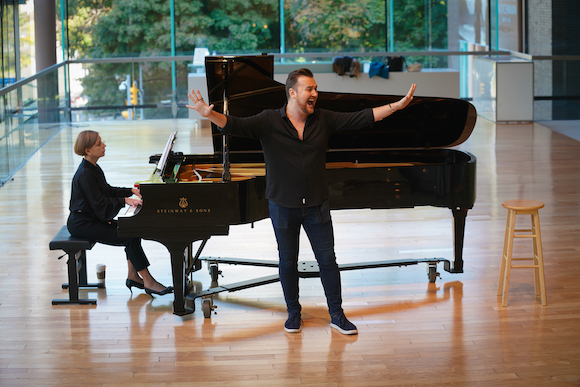
Tenor Mlles Mykannen, currently on the COC main stage as Steuermann in Der fliegende Holländer performed in the RBA on Tuesday accompanied by Sandra Horst. It was a bit unusual. There was no published programme and Mykannen talked a lot. Also a quiz at the end (really). He’s extremely engaging, even funny, and an excellent singer. His opera choices were unusual; Arnalta’s lullabye from L’incoronazione di Poppea, an “aria” from Silent Night and “Miles, Miles” from The Turn of the Screw. The last was particularly good with maximum spookiness achieved (though not for the first time I noticed just how “wrong” TotS sounds on piano!)

UoT Opera in the RBA
It’s been three long years since the UoT Opera Program students performed in the RBA. Unsurprisingly none of the current crop are familiar to me at all. They are a strong group though and I look forward to seeing them again over the course of the academic year.
Yesterday’s programme was a curated and directed selection of duets and larger ensembles from 19th century repertory. Introductions were provided by Sandra Horst who conducted and Michael Albano and Mabel Wonnacott who directed. With fifteen singers involved in a show lasting well under an hour including the intros there wasn’t really enough time to get more than a very superficial idea of what each singer is capable and so I think it would be inappropriate to write a conventional review. Let’s just say that it was wonderful to see them back, a great way to spend a lunchtime and that there was some very classy singing.

Watch this space…
The nightingale flies from its gilded cage
Florence: The Lady with the Lamp, music by Timothy Sullivan, libretto by Anne Mcpherson, premiered at the Elora Festival in 1992 and n 1995 was the first Canadian work performed by VOICEBOX: Opera in Concert. Yesterday afternoon they presented it again at the St. Lawrence Centre; staged and with orchestra.
It’s an interesting piece. Some of it I liked a lot and some not so much. The orchestral writing is excellent; colourful and atmospheric with some jazz influences. I quite often found myself drifting off into listening to the orchestra when perhaps I should have paid more attention to the words, especially as there were no surtitles. The vocal writing is less interesting but it had its moments especially in some of the ensembles. It’s the old dilemma of whether or not to prioritise the comprehensibility of the words over strictly musical values. Continue reading