
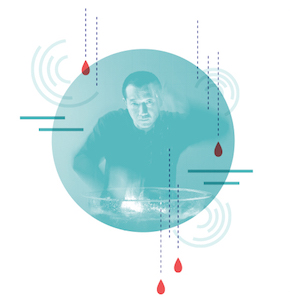
 Tan Dun’s Water Passion After St. Matthew, given last night by Soundstreams at Trinity St. Paul’s is very Tan Dun. The work is in nine movements and scored for chorus, soprano and bass-baritone soloists, violin, cello, electronics and lots of percussion. And bowls of water and rocks. The texts broadly follow the Passion story finishing with a final Resurrection movement in which water is the symbol of rebirth, recycling and spiritual completeness. There are also ritual elements. Bowls of water laid out in a cruciform pattern are lit from beneath. The musicians change position and the players, especially the percussionists, perform hieratic gestures with the water bowls and their contents. It also involves a complex and dramatic lighting plot.
Water Passion
Reply


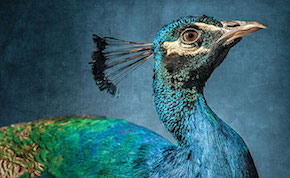 The Toronto Consort has recently announced leadership changes concomitant on David Fallis stepping back his involvement as Artistic Director. I have to admit that although I’ve attended and enjoyed Toronto Consort shows from time to time I’ve been a bit hazy about what they were about so it seemed like a good time to put that right. Yesterday I set down with David Fallis and Laura Pudwell to talk about the Toronto Consort; past, present and, especially, future.
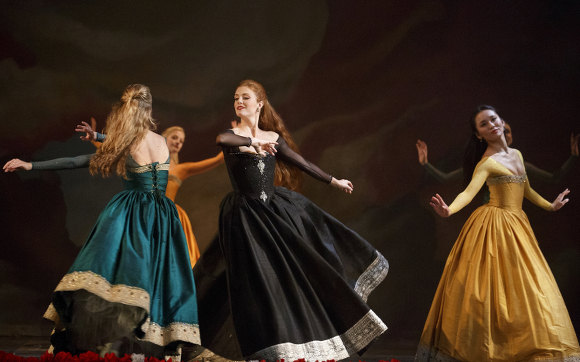

 Opera Atelier has announced its 2016/17 season. The fall production will be Purcell’s Dido and Aeneas. It isn’t clear whether this is a new production or a revival. The company has done the piece before; at the MacMillan Theatre in 1989 and 1994, in 2005 at the Elgin and in sundry tour venues. It’s not paired with anything so it’s either a very short show or there is a lot of interpolated dance. Wallis Giunta and Chris Enns play the lovers with a supporting cast that includes Meghan Lindsay, Laura Pudwell, Ellen McAteer, Karine White and Cory Knight. Nice to see Karine getting a chance on a professional stage. There are six shows at the Elgin between October 20 and 29, 2016.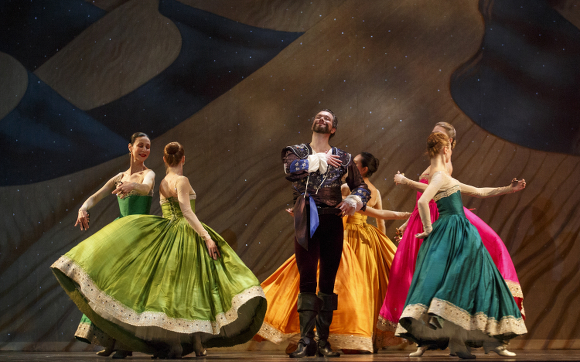
 operaramblings