Die Fledermaus auf Mörbisch

Johann Strauss’ Die Fledermaus is a work I know next to nothing about beyond it being an operetta and one that tends to be used for gala events with lots of interpolations, star turns and updated dialogue.  Since in a few months time I shall be seeing a new production by Christopher Alden I figured I had better try and establish some sort of reference base from which I might be able to figure out what Alden was getting up to.

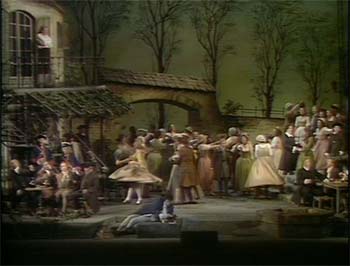
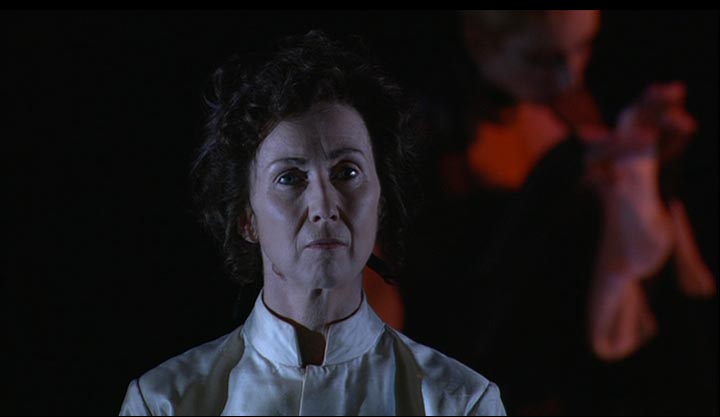
First up in my research project ids a 1996 production from the Seefestspiele Mörbisch.  Since this festival claims to be the operetta capital of the world and is only 60km from Vienna I thought it might be along the lines of going to Stratford to see Shakespeare.  The Seefestspiele is situated on the banks of the Neusiedler See and features a 6000 seat “audience park” overlooking a very large stage/set actually on the lake so obviously it’s not a normal opera house setting.  In this production by Elmar Ottenthal the huge area available is used to stage the big set pieces in Act 2 but otherwise a very restricted area of the stage is used for the main action.  There seems to be quite a lot of background business in Act 2 but the video director (Georg Madeja) rarely lets us see it.

The production starts off feeling like an old fashioned musical comedy and pretty much stays that way through Act 1.  In Act 2 it takes a slightly weirder turn.  There are some very strangely costumed characters wandering around Orlofsky’s ballroom and the ballet is a strange mixture of Swan Lake, a fetish club, Disney Cavalcade of Lights and Daleks with Christmas lights.  It’s not very interesting choreography since the one decent dancer (Marion Rainer playing Ida) spends the entire scene on a silver platter held up by several strapping fellows in scraps of leather while their team mates aim bull whips at her rather ineffectually.  Also the Skovakian Folk Dance Ensemble SLUK puts in an appearance for no obvious reason.  Act 3 is dominated by the Jailer, Frosch, played by one Thaddäus Podgorski.  He is apparently a TV personality so the audience find his every gesture hilarious even if it’s all about as sophisticated (and funny) as Benny Hill.  The whole thing feels a bit disjointed as a result.  Here’s a clip showing the rather weird ballet:

The singing and acting is pretty good if very varied in style.  The Alfred of Tomas Lind is very much a light musical theatre type voice and he rather camps up the “anyone for tennis” approach.i Ute Gfrerer’s Adele is a typical soubrette soprano.  She’s got a pleasant voice, her colotura is lively and accurate and she acts very well.  The genuine operatic component is supplied by Peter Edelmann as Eisenstein and Silvana Dussmann as Rosalinde backed up by Waldemar Kmentt as the prison governor.  All three are solid opera professionals if not exactly international stars and they all sing and act very well.  Edelmann is surprisingly athletic while Dussmann comes across as very much the diva.  Orlofsky is played by a counter-tenor, Artur Stefanowicz.  I didn’t much like his rather thin toned voice or stiff acting and I’m not convinced that there is any good reason not to use a mezzo in the role. Rudolph Bibl conducts the Symphonie-Orchester Burgenland and the Chor der Seefestspiele  Mörbisch.  It’s not the most demanding score in the world and it all sounds fine.
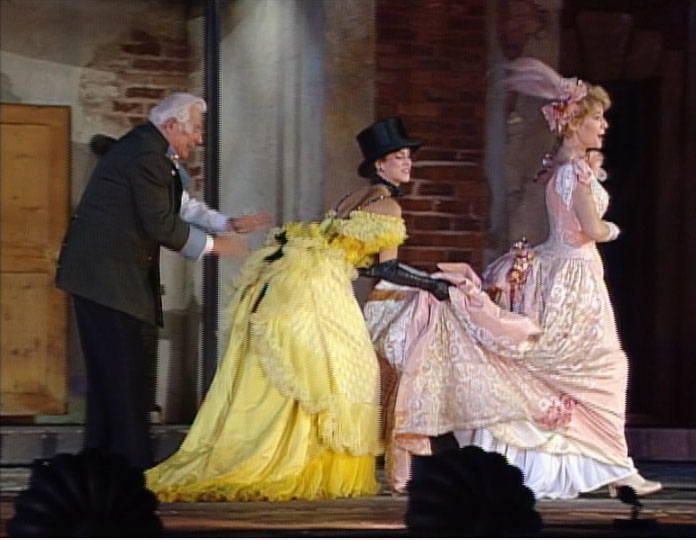
The disk quality is OK for the period.  It’s a 4:3 picture that doesn’t have enough resolution to carry the long shots which pretty much forces the video director to get in close.  Sound is adequate Dolby 2.0.  It places some off screen voices rather well but isn’t especially lively.  Subtitles are English only and there’s a basic English/German booklet.

Dull Tamerlano

Handel’s Tamerlano cries out for a Regie approach because it’s basically boring. The motivation of the characters is so oddly straightforward that the plot(1) seems inevitable right up until the utterly implausible ending and character development is all but impossible. Unfortunately Regie is exactly what we don’t get in the 2001 production of the work from the Halle Handel Festival.  Jonathan Miller directs and attempts to convey the story in an entirely straightforward way with the barest minimum of support.  The very small stage is furnished with a couple of screens and a chair/throne.  The brightly dressed characters (costumes by Judy Levin) basically wander about and sing.  Any drama is entirely dependent on the acting ability of the cast, which varies.  Tom Randle as Bajazet acts rather well throughout and Anna Bonitatibus is a fiery Irene (complete with a riding crop which she shows every sign of being willing to use and thus provides the obligatory Handel opera BDSM reference) but Elizabeth Norberg-Schulz as Asteria, although very easy on the eye, seems capable of no more than stock gestures from the Dummies Guide to Baroque Acting.  Graham Pushee is a bit better as Andronico but his simpering acting coupled with being a fairly “thin” counter-tenor does come off as a bit effeminate.  Maybe the worst acting of the lot comes from Monica Bacelli in the title role.  She is a sort of low energy Snidely Whiplash (with Snidely like moustache) and manages exactly one emotional register and no hint of menace from beginning to end.  The whole thing feels like a rather dull semi-staged performance.

As to the music, one has to say that the playing and singing are very good.  Everybody can do what’s needed and there are some interesting variations on the normal “voice” one hears in Handel.  Randle and Bonitatibus in particular can sound quite dramatic.  Trevor Pinnock conducts the English Concert so no problems there.  The problem is the music itself.  It’s horribly unvarying.  The first two hours plus go by in a series of reciitatives and da capo arias at what seems to be a constant andante soporifico.  The first lively number comes well after the two hour mark and is so surprising I jumped out of my chair.  It finishes a little stronger with a couple of pleasant duets and the obligatory closing ensemble but this really is not Handel at his best.

Helga Dubnyicsek is the video director.  She really doesn’t have much to work with so, for once, the succession of close ups, angle changes and dissolves seems almost a relief.  The picture is 16:9 and normal DVD quality.  The sound is Dolby 5.1 (LPCM stereo option) and is pretty decent though not as vivid as some more recent releases.  Subtitles are English, French, Spanish and Japanese.  There’s an interesting subtitle option called “Score plus”(2) which projects the score onto a faded out picture of the action.  There a couple of bonus interview features.

There is one other video version of Tamerlano available. It’s from Madrid with Placido Domingo as Bajazet and it’s available on DVD and Blu-ray from Opus Arte.  I think it will be a long time, if ever, though before I sit through this one again.

fn(1) Bajazet, formerly Ottoman emperor has been captured by the Tartar leader Tamerlane.  Bajazet hates Tamerlane unreservedly because (a) he won and (b) he sees him as a lower class usurper.  Bazajet spends most of the opera wishing he was dead but only manages to poison himself right at the end.  Bajazet has a daughter, Asteria, who hates tamerlane because that’s the filial thing to do.  Asteria is betrothed to Andronucus, a Greek client king of Tamerlane.

Tamerlane is betrothed to the Greek princess Irene but decides, for unspecified reasons, that he wants to marry Asteria instead and palm Irene off on Andronicus.  There are multiple misunderstandings as Asteria appears to go along with this while really intending to kill Tamerlane.  She makes two hamfisted attempts to do so which don’t seem to bother Tamerlane as much as attempted murder of a head of state usually does.  Finally Bazajet poisons himself which (why?) causes Tamerlane to repent.  Tamerlane marries Irene, Asteria marries Andronicus and the obligatory triumphal ensemble is sung.

fn2 This is what “Score plus” looks like:

A blast from the past

The 1983 Royal Opera house production of Puccini’s Manon Lescaut is probably a pretty good representation of what that annoying person at your local opera company’s season launch means when they ask why they can’t have productions the way they used to be.  Except it’s a rather exceptionally good example of what s/he means. Continue reading

Pelléas et Mélisande in the Valleys

The Gramophone Classical Music Guide 2010 describes the DVD of the 1992 Welsh National Opera performance of Debussy’s Pelléas et Mélisande thusly:

This is, in every respect, a model of what a DVD ought to be, a perfect realisation in picture and sound of Debussy’s sole and inspired opera.

Followed by a good deal more in the same vein.  This, regrettably, tells us more about the Gramophone Guide than about this DVD(1).  Actually it’s not bad at all by 1992 standards but “a perfect realisation” it isn’t.

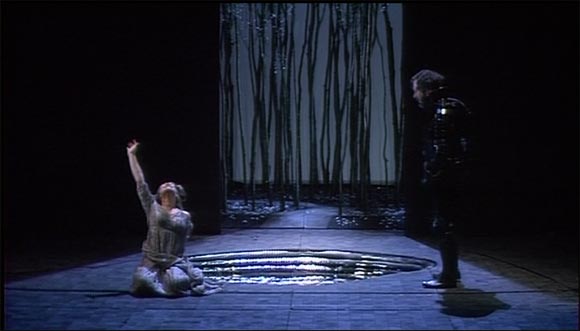
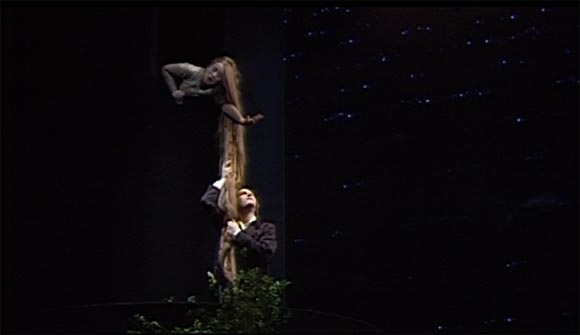
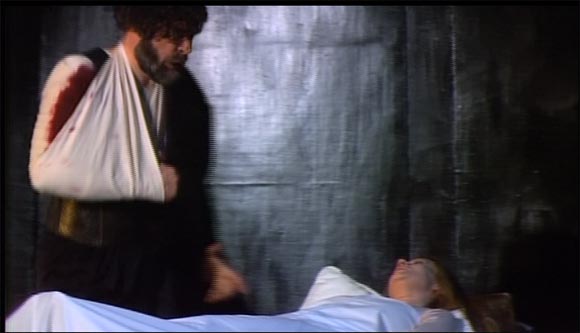
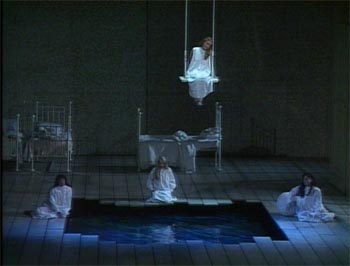
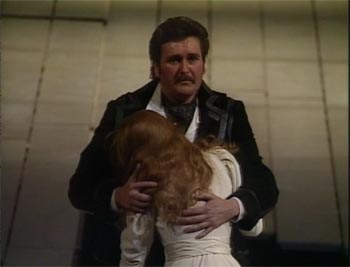
Peter Stein’s production is semi-abstract and monotone.  The tone is “dark”.  There’s some interesting lighting but visually it’s pretty nondescript.  The director’s focus is clearly on the actors and their interactions and in a work like Pelléas et Mélisande that makes sense.  There is some very good acting, especially from Alison Hagley as Mélisande.  The tower scene is brought off rather well with perhaps the most extravagant hair extension in the history of opera.  This also features in a disturbingly violent Act 4 Scene 2.  Act 4 also sees a brief appearance by a live sheep, no doubt in deference to local sensibilities.  I’m not entirely convinced that Stein gets enough complexity from his cast to really raise the psychology beyond the cardboard cut out level.  Donald Maxwell’s rather crude and coarse Golaud doesn’t really make a case for his descent into jealousy, madness and murderous rage based on not much at all really.  He’s not helped by the rather colourless Pelléas of Neill Archer.  On the other hand Alson Hagley conveys the fragility and mystery of her character exceptionally well.  (I also wondered whether a visual reference to Gerald of Wales’ Melusine was being made in the tower scene but maybe that’s over-theorising).  She’s very much in the same frantic and febrile mould here as Natalie Dessay on the Theater an der Wien recording.  Kenneth Cox gives a strongly characterised Arkel with particularly good chemistry with Hagley.  Stein uses a boy treble, Samuel Burkey, in the role of Yniold.  It works dramatically but I don’t much care for it musically.

In general the singing is very good.  All the principals have adequate French at least, though they can’t quite match Vienna’s line up of Francophone star talent.  Pierre Boulez conducts.  He gets a very detailed, transparent reading from the WNO orchestra while occasionally pushing out a genuinely Wagnerian dramatic climax.  No complaints here.

Stein also directed for TV/DVD.  It’s pretty conventional 1992 TV direction.  There are lots of close ups but generally there’s no sense that one is missing anything.  Although recorded live, there is no applause and no sign of an audience.  During the orchestral interludes we get film of the orchestral score which is an interesting treatment but tends even more to make this like a film rather than a theatre performance.

The picture is average DVD 16:9 and the sound options are PCM stereo, Dolby 5.1 and DTS 5.1.  The surround tracks were created from an original stereo source using DG’s AMSI II technology.  The DTS track is very decent but not quite up to best modern standards.  Extras include a trailer, a picture gallery and some DG promo material.  Subtitles are French, English, German, Spanish and Chinese.  There’s a trilingual booklet with track listings, synopsis and a short, not very useful essay.

This is a good (though far from perfect!) effort.  It’s definitely worth a look though I personally prefer the more recent Vienna recording.

fn1. I’ve long been skeptical about reviewers who claim that the best recording of a well known work is one made by Fritz Busch in his garden shed in 1935.


Rusalka in the nursery

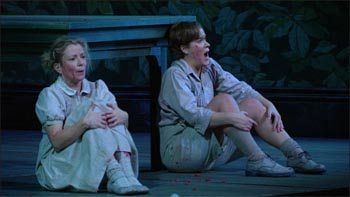
David Pountney’s 1986 ENO production of Dvorak’s Rusalka is set in an Edwardian nursery. The action is all a dream or a figment of Rusalka’s imagination in which her grandfather, in a wheelchair, becomes the Water Gnome, her sisters water sprites, her governess the witch Jezibaba and so on. In Act 1 it works reasonably well. Clearly we are looking at a metaphor of Rusalka escaping the nursery for adult life with all the risks and discoveries that involves. It starts to get pretty strained in Act 2. There’s some not very subtle loss of virginity imagery but that’s about it. By Act 3 Pountney seems to have run out of ideas and the final denouement is played out pretty straightforwardly. Certainly there’s nothing in the ending to bring closure to the concept which seems like a cop out.

The performances, in English this being ENO, are mostly OK but not stellar. Elaine Hannan has a clear bright voice which suits the idea of Rusalka as a young girl but she doesn’t have the range of colour or dynamic range of, say, Renee Fleming. John Treleaven is rather good, if a bit stiff, as the Prince. You can definitely hear heldentenorish qualities in the voice. It’s a shame that, with his ‘tache and sideburns, he looks like a 1970s lounge lizard. Ann Howard is vocally competent as the governess/witch/Jezibaba but while she’s be fairly scary in a schoolroom she isn’t really the stuff of nightmares the part needs. Rodney Macann is a straightforwardly effective grandfather/Water Gnome but he doesn’t really dominate. The other parts are all quite well sung tough far from thrilling.Mark Elder conducts a rather routine sounding reading from the ENO Orchestra and Chorus. To be fair, part of the problem may be the sound, see below.

The video direction by Derek Bailey needs to be taken on its own terms for a record of what’s happening on stage it isn’t. There are lots of superpositions and some weird camera angles. It does reinforce the “dream” aspects of the production so I think it can be considered a valid approach.


Technically this is not a great disk. The 4:3 picture is 1986 TV to DVD quality. I suppose that, in a way, reinforces the dream quality too. The sound is very average Dolby 2.0. At times it’s worse than that. At the end of Act 1 it sounds like Treleaven is singing from the bottom of a well and nowhere does it do the orchestra any favours. There are no subtitles and the less than vivid sound makes it even harder than it otherwise might be to figure out the words. Documentation is limited to a track listing.

Given that Robert Carsen’s fascinating Paris production; strongly cast and well recorded, is also available on DVD it’s a bit hard to see why anyone would bother with this one.

The Vickers Grimes

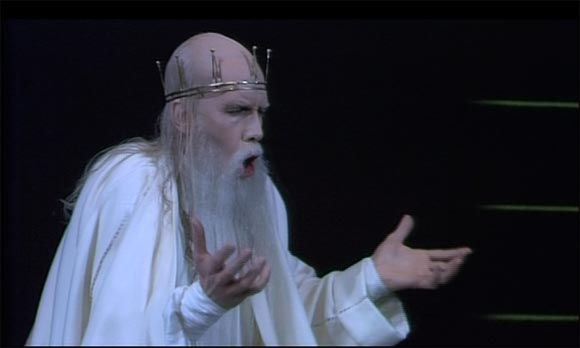
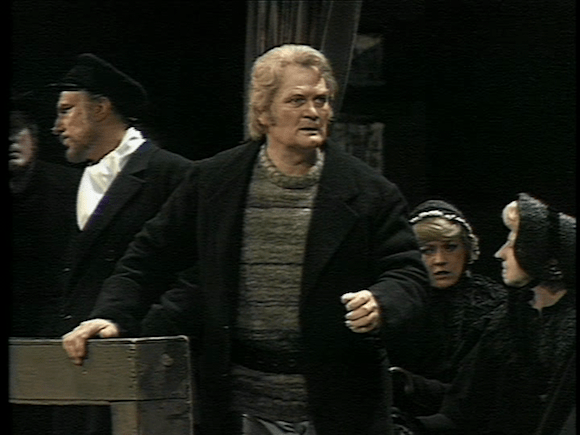
When the Royal Opera House mounted a new production of Britten’s Peter Grimes in 1975 with Canadian heldentenor Jon Vickers in the title role it was controversial. Whatever else one could say about it Vickers’ interpretation of Grimes was very different from that of Peter Pears for whom the part was written. Britten, it was said, hated it. I saw it that summer and was pretty impressed but then seventeen year olds impress easily. I certainly never expected that the young baritone singing Ned Keene would end up as a knight and Chancellor of the university where I began my degree a few weeks later. When the production was revived in 1981 there were some significant cast changes. Norman Bailey had replaced the retired Geraint Evans as Balstrode, Philip Gelling was in for Thomas Allen as Ned Keene and one John Tomlinson had taken over as Hobson the carter. The incomparable Heather Harper remained as Ellen Orford. It’s the revival cast that was recorded and broadcast by the BBC and which is available on DVD from Kultur in the Americas and Warner Video elsewhere.

1.grimes

Continue reading

Domingo’s Boccanegra

Simon Boccanegra was the work that persuaded me that maybe I did like Verdi after all. It’s a terrific score and if the plot isn’t without it’s artificialities it’s full of strong characters and strong emotions which Verdi brings to life with fabulous orchestral and vocal writing.

The most recent DVD version to appear is of the 2010 Royal Opera House production that was broadcast live on the BBC. It features Placido Domingo in his baritone incarnation in the title role. There’s a strong supporting cast with Ferrucio Furlanetto as his arch enemy, Fiesco; Jonathan Summers as the villain, Paolo; Joseph Calleja as the young rebel, Gabriele Adorno and Marina Polpavskaya as Boccanegra’s “lost” daughter, Amelia/Maria. The singing and acting are generally very strong. Placido is, of course, terrific. What more can one say? Furlanetto is a strong foil; excellent in both the prologue and the crucial final scenes. Summers is more than adequate though I might have hoped for more of a frisson when he curses himself. The real star for me is Calleja. He has a gorgeous voice and can float out a lovely pianissimo. His big aria early in the second act is particularly good but he is excellent all through the piece. The one weak link is Poplavskaya’s Amelia. It’s not bad. She acts well and looks the part but one really wishes for more beauty of tone. Pieczonka, in the Met HD broadcast, was much closer to the required vocal quality. Ensemble work throughout is excellent and there are some big set pieces! Antonio Pappano conducts brilliantly. He gets really good playing from the orchestra which is pretty crucial as there are some cruelly exposed woodwind and brass lines. He manages drama and urgency while still giving the singers room to do their thing when they need it. All in all, this is musically very satisfying.

The production, by Elijah Moshinsky, is pretty conventional. It’s a period setting with simple designs that suggest renaissance paintings. There are a few nice touches like the graffiti on the walls in the exterior scenes but mostly the look is just undistracting. There’s nothing beyond the text in the way the story is told either. Blocking is fairly basic and there’s a fair bit of “park and bark”. One senses that Moshinsky’s efforts have gone into character development rather than in trying to make any bold statement.

Sue Judd directed for TV and video and it’s a conventional TV view with too many close ups. She needs to watch some of François Roussillon’s recent work. We also get little chats from Pappano between scenes. These probably work OK first time through but I think would get pretty tedious on repeat viewing. There are short bonus features on  WorshippingWorking with Placido Domingo and Rehearsals with Elijah Moshinsky. The technical quality is very good. It was filmed in HD and the picture is clear and detailed. The DTS 5.1 sound is really excellent; detailed, very spacious and coping very well with the more congested passages. There is also LPCM stereo. This really deserves a Blu-ray release but it’s on EMI who so far seem not to have gone that route(1). There are English, French, Spanish, German and Italian subtitles. The documentation is missing from my library copy but apparently contains a track listing, synopsis and “notes”.

This is definitely worth a look and it will be very interesting to do a detailed “compare and contrast” if I can get my hands on the Sony DVD release of the 2010 Met HD broadcast with Domingo, Morris, Giodarno and Pieczonka.

fn1. EMI was recently sold to Universal; parent of Deutsche Grammophon, and Decca so I suppose anything is possible.

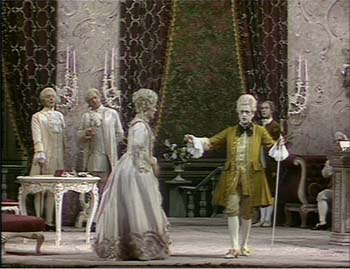
Well conceived and executed Cosi Fan Tutte

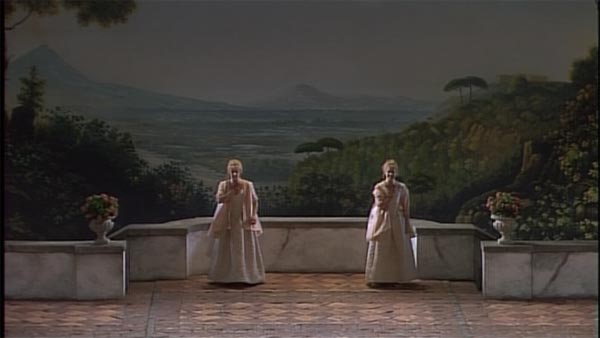
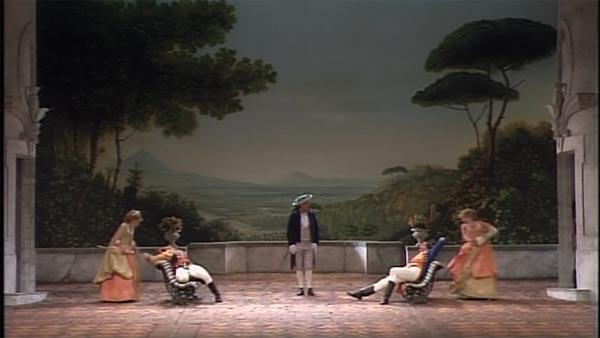
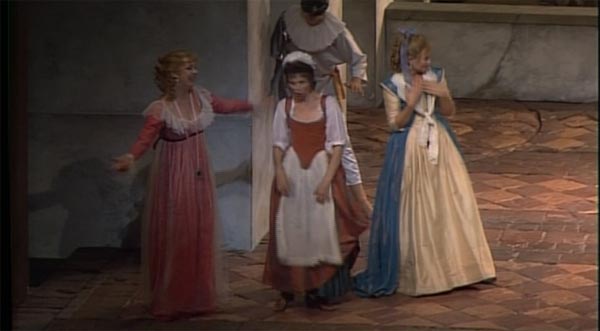
John Eliot Gardiner’s 1992 Cosi Fan Tutte is, on the face of it, very similar to the Il Nozze di Figaro he recorded the following year. Both feature period costumes and sets and no attempt is made to hide that these are stage productions in a theatre (the Châtelet). Both productions feature young, attractive singers of talent drawn from Gardiner’s orbit. However , where the Figaro seems devoid of original dramatic ideas, the Cosi is more densely constructed. Gardiner produced this himself and although he leaves the detailed stage direction to Stephen Medcalf the concept is clearly his. He sees the piece being largely about the development of the two sisters from essentially undifferentiated stereotypical unmarried girls of their class in Act 1 into fully self aware adults in Act 2. He roots this interpretation in the score arguing that Mozart wasn’t even sure which of the girls he was writing for in the first act. To support this concept he casts two similar sounding sopranos. To cast a mezzo as Dorabella is, says Gardiner, “a 20th century aberration”. In Act 1 they are dressed identically transitioning in the final scene to mirror images of each other. In Act 2 they are visually fully differentiated. This overall idea is backed up bu careful direction of the singers and painterly sets evoking the Bay of Naples. Good use is made of the auditorium as well as the stage especially in Guglielmo’s Act 2 aria “Donne mie, la fate a tanti”. So, it’s pretty to look at but there’s a good deal more to it than that.

Musically it’s of the highest quality; at least if you like period instruments in Mozart and I do. From the very first bars of the overture; taken at a pretty fair lick, I bounced to the spritely sound of the English Baroque Soloists. The singers are excellent. Amanda Roocroft is Fiordiligi and she manages a vocally sure but psychologically conflicted “Come scoglio” with aplomb. She also sings a really lovely “Per pietà”. Rosa Mannion is not far behind as Dorabella though, of course, she has rather fewer opportunities for display. Rainer Trost is a wonderfully lyrical Ferrando with a lbeautiful rendering of “Un’aura amorosa”. Rodney Gilfrey is a muscular, even macho, Guglielmo. Mezzo Eirian James plays Despina and is more convincing than many in that role especially in the doctor/attorney scenes. She’s the scheming maid to the life. Don Alfonso is played by baritone Claudio Nicolai and he’s much lighter voiced than is usual for the role. This fits with an interpretation that is nuanced rather than buffo. Ensemble work is consistently excellent.

Peter Mumford directed for DVD. I think this was specifically recorded for home use rather than for TV broadcast and, for the era, it’s really good. He uses some unusual camera angles but never gratuitously and we can see what we need to see to understand the production. There are a few moments of gratuitous artsiness with head shots fading to backdrop and so on but it’s not really troubling. The picture is 16:9 and good DVD quality though not on a par with true modern HD. The production was recorded in stereo but DGG have worked some digital wizardry to produce Dolby 5.1 and DTS 5.1. The DTS is pretty vivid and well balanced. The only extras are some trailers for other Gardiner Mozart recordings. The documentation includes an interesting essay by Gardiner. There are English, German, French, Italian , Spanish and Chinese subtitles.

All in all, this is well worth seeing for anyone interested in HIP versions of mozart or just looking for a solid, undistracting well played and sung version. It won’t do much for the Regie fans though.

Starvation, drugs and child abuse? It must be Christmas

Humperdinck’s Hansel and Gretel was one of the earlier “Live in HD” broadcasts from the Metropolitan Opera and has been out on DVD for some time. The newness of the concept is immediately apparent in Renée Fleming’s almost awed tone as she introduces the work. She certainly sounds more blasé these days. Hansel and Gretel, given here in David Pountney’s English translation is an odd work. The libretto is much more than a Disney fairy tale. There is poverty, hunger, drunkenness, threats of beatings and murder. There is also a layer of religious sentimentality so thick it could only be 19th century and German. The score is astonishingly heavyweight given the subject matter. Humperdinck worked with Wagner and that is very, very apparent in this piece.

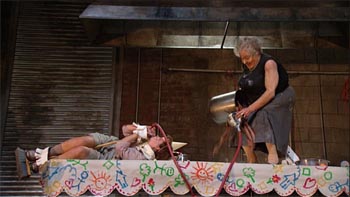
Unsurprisingly, modern directors have tended to emphasize the darker side of the work and Richard Jones is no exception. Hunger is the driving force here and each act is set in a kitchen. A poor peasant cottage in Act 1, a dream like banquetting facility in Act 2 and the Witch’s nightmarish cake factory cum kitchen in Act 3. Much food is thrown around and smeared over people. It’s pretty succesful as a concept if a bit one dimensional.

The performances are spectacular and based on some serious luxury casting. Alice Coote and Christine Schäfer as Hansel and Gretel are terrific, especially Schäfer. It’s a wonder to me that a beautiful and elegant woman like her can do grubby so well but she nails it every time (Cherubino in Salzburg, Lulu at Glyndebourne) and this is no exception. Alan Held is a booming father; as big in voice as he is in stature. Rosalind Plowright doesn’t sing prettily but she is utterly convincing as the depressed, shrewish, drug addled mother. Then there is the much missed Philip Langridge camping it up as the Witch. He’s like an incredibly messy Julia Child on speed. He’s hilarious. Sasha Cooke plays the Sandman and Lisette Oropesa plays the Dew Fairy complete with washing up joke. Vladimir Jurowski conducts the Metropolitan Opera Orchestra as if he was conducting The Ring and they play beautifully for him. The very well drilled Met Children’s Chorus also get a look in in the final scenes. Overall, the performance has a high degree of integrity and very high musical values. It’s a good bet for this work which I still can’t really bring myself to like.

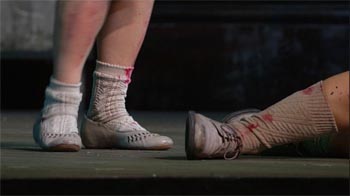
Technically this is what you would expect from a Met “Live in HD”. No video director is credited (so far as I can tell) but it’s got about the usual quota of super close ups, including a completely gratuitous foot shot, which is actually a bit odd as the sets for Acts 1 and 2 are basically confined to a thirty foot cube so it would be easy to encompass the whole picture. The picture quality is good, not stunning, DVD standard. The DTS 5.1 soundtrack is excellent and is particularly good at bringing out the very precise orchestral playing. There is also LPCM stereo. It has the usual HD Broadcast extras. There are English, French, German, Spanish and Italian subtitles. The documentation (English only) includes track listings, a synopsis and a short essay. There is additional information in English, French and German in a PDF on the disc itself.

Foaming at the mouth

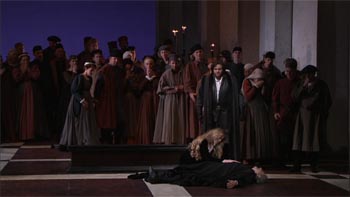
I am developing a pathological hatred of the people who do the video direction for opera DVDs. The sole exception I can think of is François Roussillon. Brian Large, Humphrey Burton, Kriss Rumanis, Gary Halvorson and the rest I could happily roast over a slow fire while poking them with a sharp stick. I do not want to see the tenor’s dental work or the soprano’s tonsils. I certainly don’t want a head shot of someone who isn’t even singing filling the whole screen. I do not watch opera on a 1950s television with a ten inch screen. Who does? FFS let us poor viewers see what is going on on the stage. It’s quite likely that the stage director does all that stuff deliberately(1) and maybe we might be able to understand the production if we could only see the bloody thing. This rant brought to you courtesy of trying to decode David Alden’s Ariodante while looking through the wrong end of the telescope.

This is what I want to see much/most of the time:

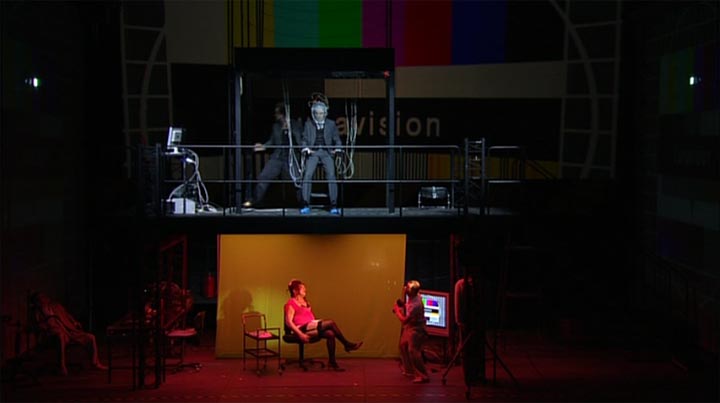
With tons going on all around and in the background this isn’t helpful:

And as for this…

Words fail me.

fn1. OK this may not be true of Zeffirelli or similar Met favourites. If the alternative is a furniture catalogue I’ll take the close ups.