
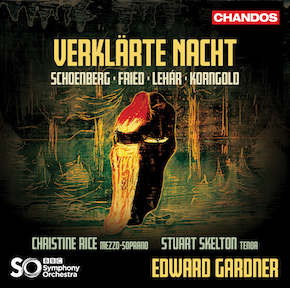
 No, not Flanders and Swann but rather a well constructed new recording from Edward Gardner and the BBC Symphony Orchestra. It contains music by four composers exemplifying that lush territory that lies emotionally, if not always temporally, between Wagner and the Second Vienna School. The two central works were both inspired by Richard Dehmel’s Verklärte Nacht. The first is a 1901 setting of the text for mezzo, tenor and orchestra by Oskar Fried. It’s lushly scored and rather beautiful. The sound world is not dissimilar to Schoenberg’s Gurrelieder. Gardner gets a lovely sound from his players and some really gorgeous singing from Christine Rice and Stuart Skelton. The second Verklärte Nacht is the more familiar Schoenberg piece for string orchestra. It’s curious how without voices and with only strings it manages to sound almost as lush as the Fried.
Music to wallow in?
Reply
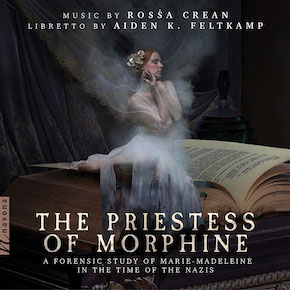 The Priestess of Morphine is a new short opera with music by Rosśa Crean to a libretto by Aiden K. Feltkamp. It deals, allusively, with the life of German writer Gertrud Günther who, under the name of Marie-Madeleine was a best selling author of erotic fiction and poetry. She was also Jewish, a lesbian and an opium addict. She died rather mysteriously at a sanatorium in Katzenelnbogen in 1944; her work having been denounced as degenerate and banned by the Nazis.
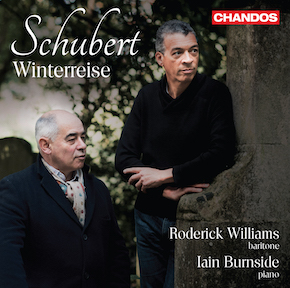 Presto Classical lists over 100 recordings of Schubert’s Winterreise for (almost) every voice type accompanied on pianoforte, fortepiano, string quartet and probably more. It’s also frequently performed live and I’ve certainly seen it done multiple times in settings ranging from the most formal of Liederabend to staged with projections and all manner of things. So why bother with another new recording? Well it’s largely because I’m a fan of English baritone Roderick Williams who has just had a Winterreise recording, with Iain Burnside at the piano, released on the Chandos label.
 Tapestry Opera’s original 2019/20 season was to have included a remount of Gareth Williams’ and Anna Chatterton’s Rocking Horse Winner which premiered
  And now, as they say, for something completely different. Take the Dog Sled is a short piece in eight movements by Canadian composer Alexina Louie scored for instrumental ensemble and Inuit throat singers. The movements have titles like Bug Music and Sharpening the Runners on the Dog Sled. The style is mostly a kind of high energy playful minimalism with quite a lot of percussion and percussive effects from other instruments. It’s often quite onomatopoeic. There are also some quite beautifully, hauntingly evocative passages. The throat singers are used sparingly but to good effect.
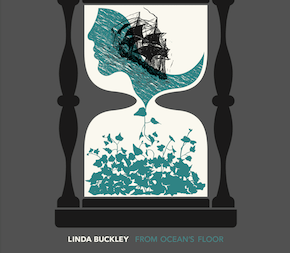 Linda Buckley is an Irish composer whose music combines, among other things, traditional Irish vocals, classical instruments, of more or less conventional form, and electronics to create an entirely unique sound world. This new album starts off with the most substantial and, to my mind, most interesting, piece; Ó Íochtar Mara (From Ocean’s Floor). The four movements combine Iarla Ó Lionáird singing in the traditional sean nós style with string quartet (Crash Ensemble) and Buckley herself on electronics. Each movement sets a poem in Irish with an accompaniment that is quite sparse and never overwhelms the vocalist. It’s mostly electronic drones with the strings kicking in in similar vein. It’s very beautiful and quite haunting. The vocals are sung with a great sense of the proper style and it’s an object lesson in how to combine folk vocals with classical instruments without making it sound like Victorian parlour music.
 I’ve listened to a lot of music for voice and piano and a lot of music by Shostakovich but it was only on listening to this new album by Margarita Gritskova and Maria Prinz that I realised that I had hardly heard any of Shostakovich’s art songs; except for a few with orchestra. So I was glad to discover the interesting collection on this CD. There are twenty songs taken from twelve different works. (most of DS’ song cycles seem to require multiple voice types. I guess labour was cheap in the USSR). The pieces are drawn from right across Shostakovich’s career from Op.4 to Op.145. The evolution of style is as clear as in his chamber or orchestral music.
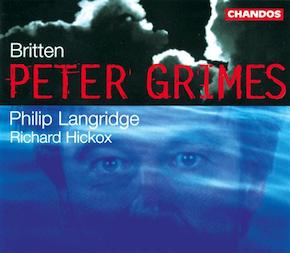 Earlier this month I was reviewing a new CD recording of Britten’s Peter Grimes for Opera Canada (you can read it in the Fall 2020 issue or
  Vladimir Jurowski is a notable Mahler interpreter so a new recording of Mahler’s great symphonic song cycle Das Lied von der Erde is welcome; especially when Jurowski’s own Rundfunk-Sinfonieorchester Berlin is combined with soloists as fine as Sarah Connolly and Robert Dean Smith.
 operaramblings