Lorraine Hunt-Lieberson remastered

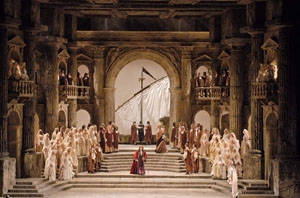
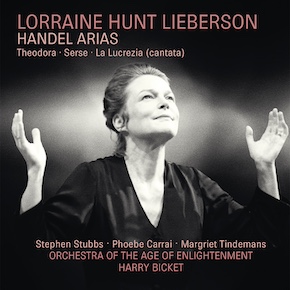
In 2003, in conjunction of a revival of Peter Sellars’production of Handel’s Theodora at Glyndebourne ,Lorraine Hunt-Lieberson went into the studio and recorded a Handel album with Harry Bicket and the Orchestra of the Age of Enlightenment.  That album was released to great acclaim in 2004.  It’s now been remastered and the new version will be available on October 17th.

The album contains all of Irene’s music from Theodora including superb versions of “As with rosy steps the morn” and “Lord, to Thee, each night and day”.  There’s also the cantata Lucrezia where she is accompanied by Harry Bicket on harpsichord & chamber organ, Stephen Stubbs on 10-course lute and Baroque guitar, Phoebe Carrai on cello and Margriet Tindemans on viola da gamba.  There are also two arias from Serse; “Se bramate d’amar, chi vi sdegna” and “Ombra mai fu”. Continue reading
Handel’s Serse from the English Concert

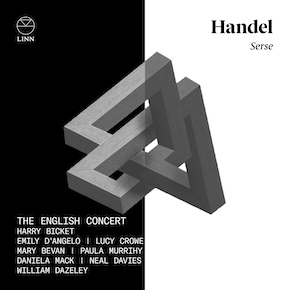
serse_englishconcertI don’t review a lot of full length audio only recordings of mainstream operas.  Generally I think video makes more sense but sometimes something comes along that attracts my attention.  The recent recording of Handel’s Serse by the English Concert with Harry Bicket was one such.  This time it’s the cast that caught my attention.  There’s Emily d’Angelo (are we allowed to call her “young” or “emerging” any more?) in the title role but also such fine Handel singers as Lucy Crowe as Romilda and Mary Bevan as Atalanta.  As it turns out there’s not a weak link in the cast and while these three turn in fine performances so do Daniela Mack (Amastre), Paula Murrihy (Arsamene), Neal Davies (Ariodata) and William Dazeley (Elviro). Continue reading
Theodora with a twist

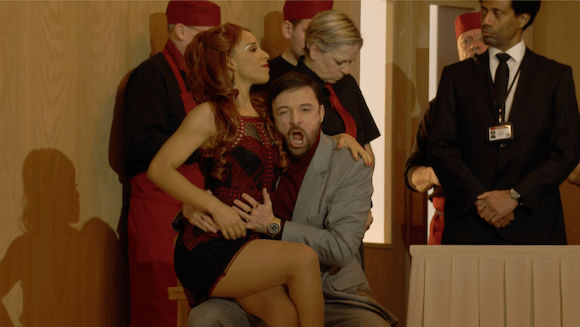
I don’t often get deeply emotionally affected by an opera video.  Generally it’s less immersive than a live performance in a way that  diminishes emotion.  That wasn’t my experience though with the 2022 recording of Handel’s Theodora from the Royal Opera.  Admittedly Theodora is an opera I can get very emotionally involved in but Katie Mitchell’s production really did get to me.

1.valensandfriend

Continue reading

Neumeier’s Orphée et Eurydice

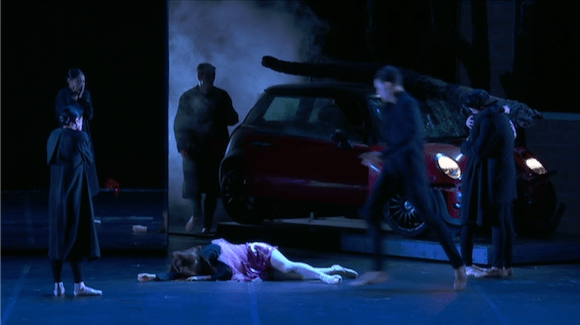
John Neumeier’s production of Gluck’s Orphée et Eurydice, recorded at Lyric Opera in Chicago (also seen in Neumeier’s home house of Staatsoper Hamburg and scheduled for this year’s Salzburg Whitsun Festival with the same principals) is quite unusual. Neumeier designed sets, costumes and lighting and served as both director and choreography. It’s very much his work. It’s also the Paris version rather than the Vienna (Italian) version more usually seen. Orphée is sung by a tenor and there’s a lot of ballet which extends the opera to three acts spread over two hours; maybe half an hour longer than an average production. Neumeier also chooses to give the story a modern frame. Orphée is a choreographer, Amour his assistant and Eurydice his prima ballerina as well as wife. The piece opens with a ballet rehearsal during the Overture. Orphée and Eurydice have a flaming row, She storms out and is hit by a car. At the end Eurydice, or her ghost, shows up during another rehearsal. The ending is in fact very unclear. As is the purpose of the frame. Is all the action supposed to be a dream or a trip? I couldn’t tell and it really didn’t seem to add anything.

1.crash

Continue reading

Maometto II

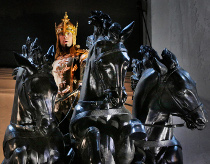
Rossini’s rarely performed opera seria Maometto II opened at the Four Seasons Centre last night in a production by David Alden and with substantially the same cast as when it played in Santa Fe on 2012.  This is the restored Maometto in the edition prepared by Hans Schellevis in an attempt to get as close to Rossini’s initial Naples score as possible.  So, no happy ending and all the complexity of Rossini’s original design.

Maometto-MC-0287

Continue reading

A new program from the COC

MAO_0790aThis just in from frequent Operaramblings commenter and COC Adult Education Programs Manager Gianmarco Segato.  The COC is launching Opera Insights, a series of free adult education events linked to the productions of the 2015/16 season.  It’s a pretty broad range of programming ranging from scholarly discussions on reconstructing the score of Maometto II and the history of the ball gown to Traviata singalongs and Carmen themed dance lessons.  Participants include composers Barbara Monk-Feldman and Norbert Palej, conductors Johannes Debus, Harry Bicket and Sandra Horst and singers like Christine Goerke plus, inevitably, lots of academics (we love them really we do).  Looks like a lot of fun.  The events are all free but are ticketed.  Full details can be found here.

Sellars does it again

There’s a unit set; some marble flags, a few broken columns surrounding  a “fire pit”.  Even this is stripped down for much of Act 2 which takes place on the stage apron in front of a plain curtain.  There are five singers, a chorus and an orchestra.  That, plus Peter Sellars, is all it takes to produce an extraordinary piece of music drama.

Hercules1a Continue reading

David Alden’s Poppea

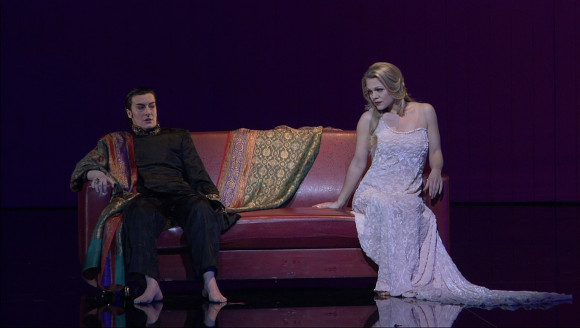
I’m never quite sure what to expect from David Alden.  Some things are predictable; striking images, bold colours and a degree of vulgarity, but beyond that it’s hard to be sure.  Sometimes he seems to be trying to be deep (his Lucia for example), sometimes more kitschy (Rinaldo) and there’s always a slight undercurrent of him thumbing his nose at the audience.  His production of L’incoronazione di Poppea at Barcelona’s Liceu is a curious combination of all these things and I think it works pretty well.

1.neropoppea Continue reading

What’s green and blue and Carsen all over?

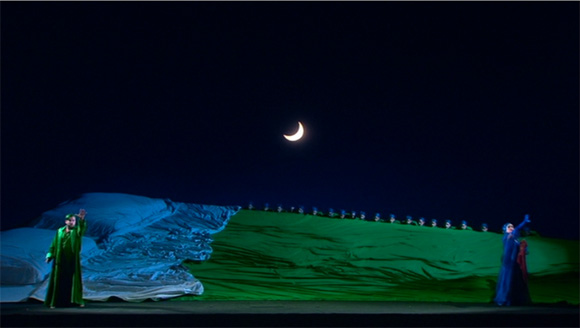
Robert Carsen’s production of Britten’s A Midsummer Night’s Dream is as visually striking as any of his productions.  It’s also one that’s done the rounds, playing in Aix and Lyon before being recorded by a strong cast at the Liceu in Barcelona in 2005.  The challenge with Dream is to create visual worlds for the Fairies and the Mortals that are different but work together.  Carsen and his usual design team do this very well in this case.  The Fairies are given striking green and blue costumes with red gloves.  The mortals mostly run to white and cream and gold and they seem to spend a lot of time in their underwear.  The lighting, as always with Carsen, forms an important part of the overall design.  Carsen completists will also notice certain other characteristic touches like starkly arranged furniture.

1. Fairies Continue reading

Not a potato in sight

clemenzaToday’s MetHD broadcast was Mozart’s last, and arguably best, opera La Clemenza di Tito.  J-P Ponnelle’s production has been around for a while and offers nothing to offend traditionalists.  There’s not a baked potato, muscle suit or child sacrifice in sight.  The set, maybe more Italian Renaissance than Imperial Rome is elegant, undistracting and very singer friendly.  The costumes are a rather eclectic mix of late 17th century and Republican Rome with a bit of Lady Capulet thrown in but only the black number with the big panniers that Vitellia gets in Act 2 would excite much comment.  Direction then focuses rather on the characters and their relationships.

Continue reading