Wozzeck in Moscow

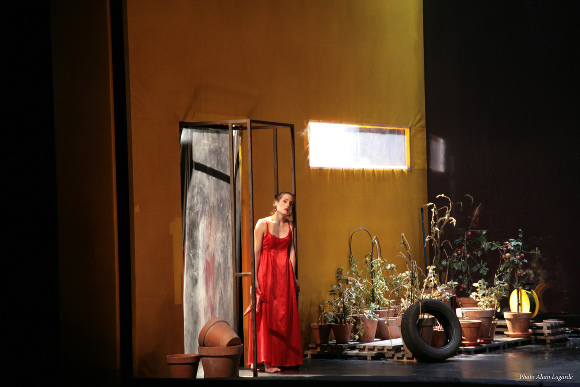
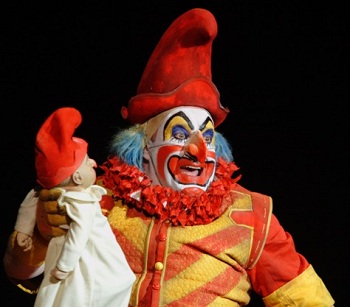
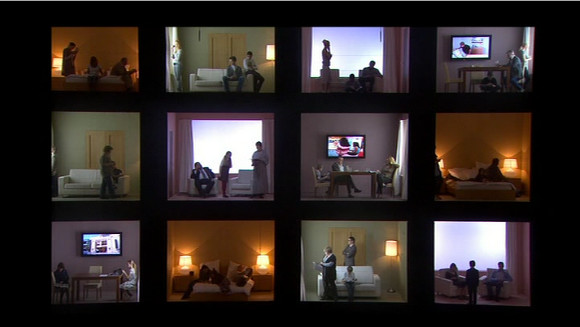
In 2010 Berg’s Wozzeck was produced in Russia for the first time since 1927.  The production, at the Bolshoi, was directed by Dmitri Tcherniakov.  Few people familiar with his work will be surprised to learn that Tcherniakov does not see Wozzeck as a  down trodden and impoverished soldier.  In fact he doesn’t see him as downtrodden and impoverished at all (unlike, say Calixto Bieito who transplants the action to a chemical plant but leaves the power relationships pretty much intact).  Rather, Wozzeck is a sort of 21st century salaryman leading a life of modest prosperity but crushing boredom with Marie and their son in a city inhabited entirely by other such families.  What’s missing is anything that resembles sensation or “life”.
1.calendar

Continue reading

A busy week

Next week is a bit crazy.  Tomorrow is the Elizabeth Krehm memorial concert in aid of St. Mike’s ICU.  They are playing Mahler 2 and it’s PWYC with a tax receipt.  8pm at Metropolitan United Church.  Tueday sees the opening of Philippe Boesmann’s Julie at 8pm at the Bluma Appel.  It’s an important, if bleak, contemporary piece and for the first time here, in a Soundstreams/CanStage presentation, it will be sung in English.  It runs until the 29th so plenty of chance to catch it.

julie_preview Continue reading

Darknet

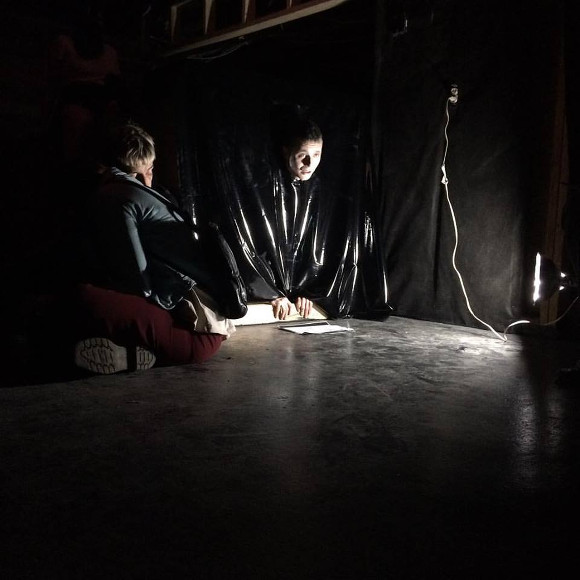
Great idea.  Create a sort of spooky, short opera program in a funky location and use it as a fundraiser for your next major project.  That was Darknet at Mây last night.  Jennifer Krabbe, singing Berlioz, rounded us up in the bar and ushered us downstairs into an installation created by Alessia Naccarato and Noah Grove.  It was dark.  It was eerie.  We were offered masks.  Cairan Ryan sang The Cold Song from Purcell’s King Arthur while writhing on the floor.  Jonathan MacArthur sort of emerged from some sort of primeval goo singing Aria by John Cage and Beth Hagerman gave us one of Lulu’s arias.  Then we were rounded up and ejected into the light again.  Loved it.

jma

Phantom of Lilith

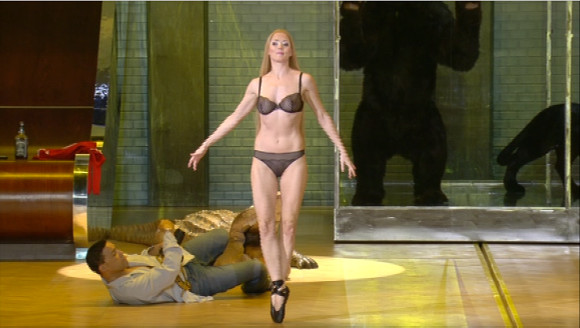
Krzysztof Warlikowski’s production of Berg’s Lulu (it’s the three act version with the Cerha completion) recorded at Brussel’s La Monnaie in 2012 is so stuffed full of symbolism it’s really hard to fully unpack.  There’s a sense that Lulu represents Everywoman, for some rather twisted definition of “woman”.  She’s Lilith.  She’s Pandora.  She’s the Black Swan and the White Swan.  She’s lost or corrupted childhood and she’s love gone wrong.  Maybe she’s even the phantom of Berg’s estranged daughter.  All these symbols recur again and again in various combinations.  In fact, on DVD, it’s pretty much impossible to keep track of them.

1.point Continue reading

Transfigured: Transcribed

Yesterday’s Amici Ensemble concert featured four works transcribed for different combinations of instruments than the composer originally intended.  First up was Berg’s Adagio for violin, clarinet and piano.  This is from the Kammerkonzert originally scored for violin, piano and thirteen assorted wind instruments.  Unsurprisingly it doesn’t get played often in that arrangement.  It’s pretty typical second Vienna school; twelve tone but quite accessible and very pleasant to listen to.  It was expertly played by Serouj Kradjian (piano), David Hetherington (cello) and Joaquin Valdepeñas (clarinet).

amicirecordings Continue reading

Petitbon’s Lulu

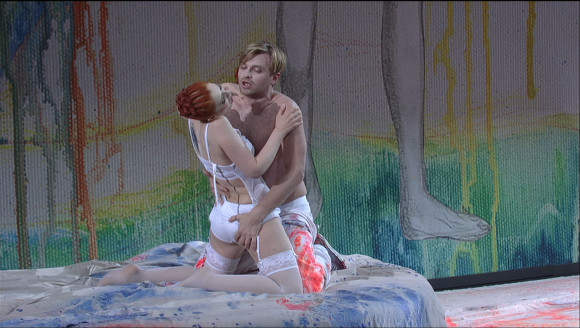
Vera Nemirova’s production of Berg’s Lulu was recorded in the Haus für Mozart at Salzburg in 2010.  It’s presented in the now conventional three act version completed by Friedrich Cerha.  The sets are painterly, including in Act 1 a giant painting of the title character.  Lighting is used to create a very distinct palette for each scene and the detailed direction of the actors is careful and effective.  I didn’t see any big ideas but then on this video recording, if there had been any, they would likely have been lost in the incessant close ups and strange camera angles.  One “trick” perhaps is that much of the action in Act 3 Scene 1 takes place in the auditorium with a fair bit of confusion as the actors hand out fake cash to the punters.  This is, of course, the scene where the glitterati go broke so perhaps some irony is intended.

1.ass Continue reading

Nihilist Night at the Opera

punchLater this month I’ll be attending a double bill of Barber’s A Hand of Bridge and Jean-Paul Sartre’s Huis Clos.  The latter, for those who don’t know the play, is the one with the famous line “L’Enfer; c’est les autres”.  I posted the details earlier.  Anyway, this led me on a train of thought that ended with the idea of Nihilist Night at the Opera; a sort of antidote to Rossini.  Ideally Nihilist Night would feature a double or triple bill of unrelievedly depressing operas and should leave the audience with no hope at all for humanity.

What might qualify?  Wozzeck coupled with Moses und Aron seems just about ideal.  Want something more contemporary?  How about Turnage’s Greek coupled with Birtwistle’s Punch and Judy?

The lines are open.

Honest Injun?

I confess to having mixed, nay conflicted, feelings about the 2003 Palais Garnier recording of Rameau’s Les Indes Galantes.  On the one hand there is some really good music, idiomatically played and sung by musicians utterly at home in this repertoire, there’s some brilliant dance; both the choreography and the execution, and there is spectacle on a grand scale.  On the other hand there’s a nagging sense of cultural appropriation and, perhaps worse, a feeling that the whole thing may just be a giant piss take.  Actually in some ways it’s all of the above and if one can get into the spirit of the thing it sort of works.

1.danni Continue reading

Traditional Wozzeck from Vienna

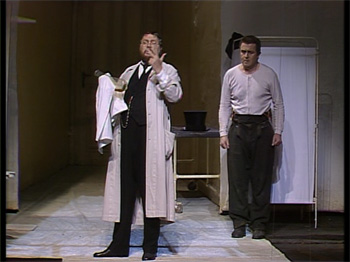
1.doctorThe 1987 recording of Berg’s Wozzeck from the Vienna State Opera is a bit of a mixed bag.  Claudio Abbado’s reading of the score is incredibly intense and powerful and he gets great support from the orchestra,  There’s also some very good singing.  Dramatically it’s a bit of a mixed bag and the DVD production isn’t particularly good.  Continue reading

Creepy and claustrophobic Wozzeck

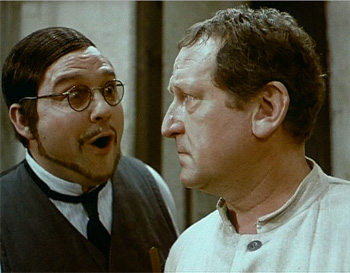
In 1970 Rolf Liebermann took the assembled forces of the Hamburg State Opera down to a castle in South Germany and made a film of Berg’s Wozzeck.  The production is pretty literal.  It’s set in Austria in the late 19th century and everything plays out very literally per the libretto but it’s far from being a routine or dull reading.  A combination of brilliant conducting, slightly over the top acting, pointing up the Expressionist elements in the music and really good cinematography make this a very tense, creepy and claustrophobic experience.  It’s simultaneously rather repellent and hard to watch and deeply engaging.  Continue reading