From the House of the Dead
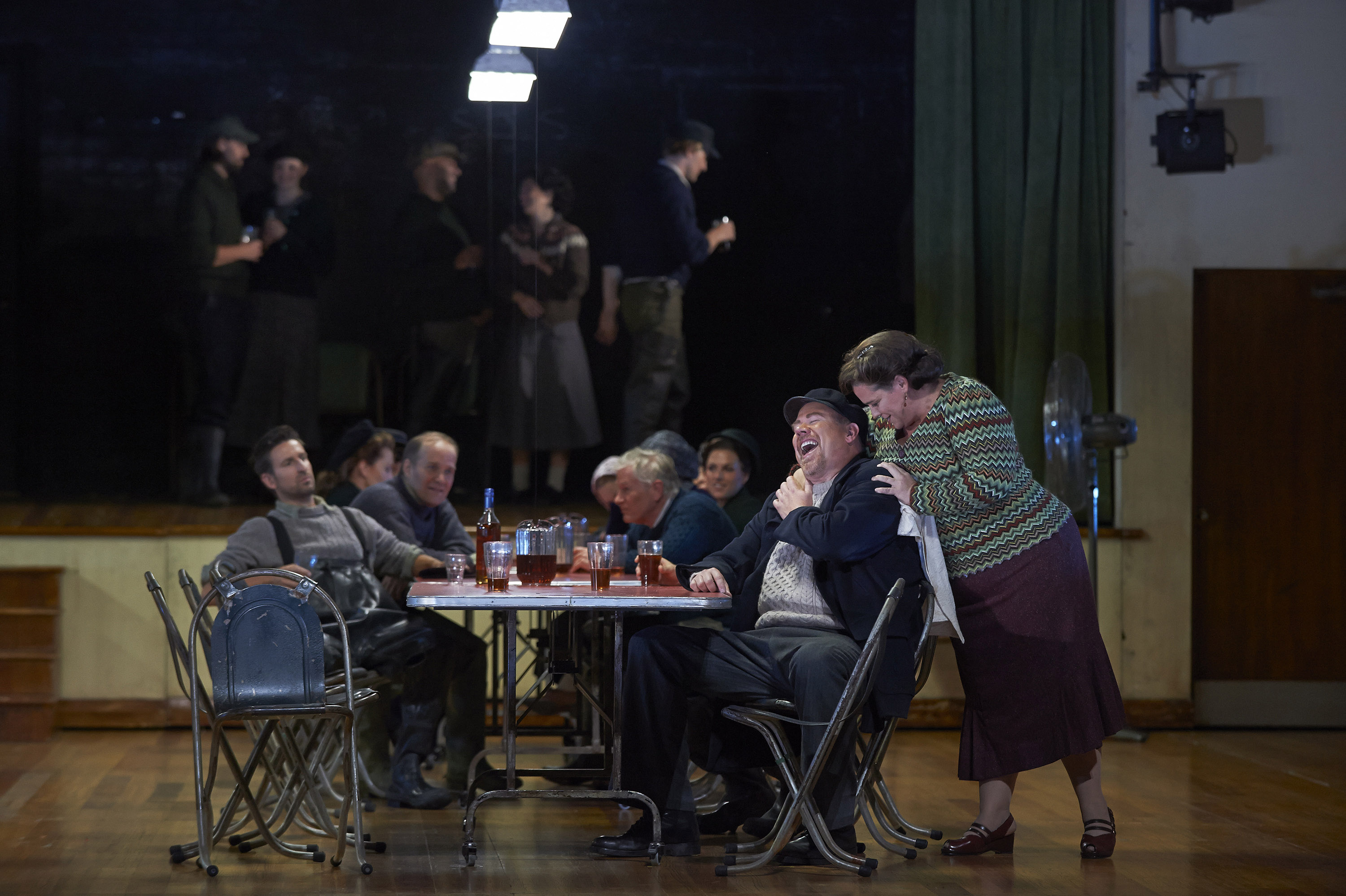
Janáček’s last opera, From the House of the Dead, is a curious piece. It sets certain episodes from Dostoevsky’s account of his life in prison into a collage of stories that doesn’t have a straightforward narrative arc at all. It’s quite brutal, as one might expect, and very male dominated. Few characters stand out as individuals and so the piece becomes very much an exercise in ensemble musical theatre. The music is unusual too. In Pierre Boulez’ words it is “primitive”. Certain phrases are repeated over and over with minimal development to create a sort of “expressionist minimalism”. It’s extremely interesting to listen to and a great sonic match for the brutal and repetitive nature of prison camp life.
Toronto’s got talent
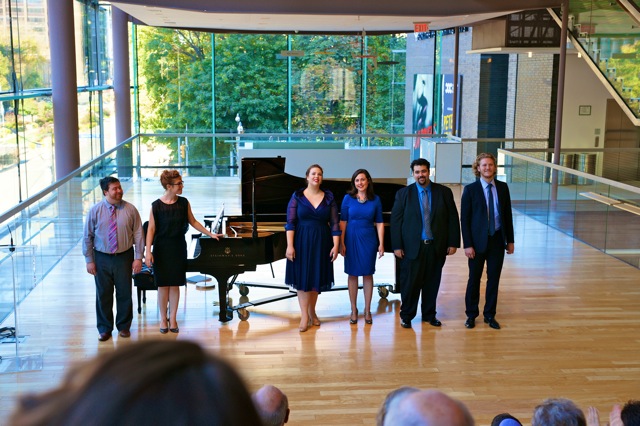
Recitals at Rosedale is a new venture from collaborative pianists John Greer and Rachel Andrist. There will be four themed recitals, each featuring multiple singers, on Sunday afternoons at Rosedale Presbyterian Church. Last night saw a preview of excerpts from all four programs. Around 200 people showed up on a very hot and humid Saturday evening to see a pretty decent cross section of Toronto’s singing talent. The venue has a typically resonant church acoustic and tends to swallow the words a bit however carefully the singer enunciates but it’s a sensible size, holding maybe 200-300 and so avoids the problem of feeling empty even when there is actually a pretty decent crowd.
Perplexing Tannhäuser
In Kasper Holten’s production, recorded at Royal Danish Opera in 2009, Tannhäuser is a poet torn between family and the conventional world of the Landgraf’s court and his creative processes symbolized by Venus and Venusberg. There are numerous visual clues that perhaps we are even supposed to identify Tannhäuser with Wagner himself. Far from being a young man, this Tannhäuser is middle aged, married to Eizabeth and has a son. He has withdrawn into a psychological world of his own and Venus, his muse, and Venusberg are in his imagination. Only after death is he recognized as a genius. Of the rest, how much is supposed to be external and how much internal to Tannhäuser’s imagination is a bit hard to grasp. If nothing else it goes some way to making the sixty year old Stig Andersen as Tannhäuser and the equally mature Susanne Resmark as Venus almost believable. The 1900ish setting works quite well for the sexually repressed court of the Landgraf von Thüringen though a chorus of pilgrims returning from Rome in full evening dress is a bit of a jar. The concept is quite interesting but really probably stretches further than the libretto can accommodate. This Venus isn’t remotely credible as a goddess of love and the matronly Elisabeth singing about being a pure, young maiden is just odd.
The knot is tied – Figaro’s Wedding at The Burroughes
Figaro’s Wedding music by W.A Mozart, libretto by Joel Ivany, opened last night at The Burroughes. A full house, many dressed as if attending a wedding as requested, saw an extremely effective realisation of another ambitious project from Against the Grain Theatre. This isn’t just another low budget production of a well known opera. Figaro’s Wedding is a complete rework of the piece. The music is the familiar Mozart in a very effective piano quintet arrangement by Topher Mokrzewski, albeit with cuts to suit the new libretto, The libretto is in English, cuts the chorus (and Barbarina) and reshapes the story around a wedding in today’s Toronto. Gone are aristocrats, servants and hangers on. Instead we have a young couple – Susanna and Figaro, his boss and boss’ wife – Alberto and Rosina, and the various arrangers and functionaries connected with the wedding. Oh yes, and there’s a lesbian grad student called Cherubino living in Alberto and Rosina’s basement. The story unfolds in a way that’s close enough to da Ponte for the twists and departures to add a little extra amusement for those who know the libretto well. It’s very smart, extremely funny and surprisingly singable.
Back to the future
It seems I spend a lot of my time in physical and electronic conversations about the declining audience for classical music; especially song recitals and chamber music. I understand where the doom and gloomers are coming from. The figures don’t lie. The number of people who will pay $60 to sit in a dark room for two hours listening to a middle rank act in reverent silence is unquestionably on the decline. On the other hand there are newer forces at play. Tonight Against the Grain Theatre open a new show, Figaro’s Wedding, that will be as far removed from the “opera house as temple of culture” idea as their ground breaking La Bohème and it’s pretty much sold out. Today the following arrived in my in-box:
Live from Oslo
I’m just back from being in the audience for a live event that featured Stefan Herheim, in Oslo, and Atom Egoyan, in Toronto, discussing and answering questions about their respective productions of Strauss’ Salome. It was set up with a live satellite link between the two cities which worked rather well. The event also featured two rather dry academic presentations about the productions and productions of Salome in general. This bit went on for nearly an hour and a half and reminded me of why one takes notes at university. It’s because if you don’t this stuff goes in one ear and out the other.
In which Dido doesn’t die
Oddly enough, given the post previous to this, Reiner Moritz’s essay in the booklet accompanying this recording of Cavalli’s La Didone brings up the Harnoncourt/Ponelle Monteverdi recordings as a precursor to what he sees as Bill Christie’s similar championing of Cavalli. I guess the big difference is that only three of Monteverdi’s operas survive while we have 27 of Cavalli’s. I think he may have a point though. It seems to me that 17th century Italian opera works on an aesthetic which is very in tune with today. The relative spareness and clarity of the music seems closer to Britten than to Verdi and the cynicism and explicit sexuality of the libretti closer to Anna Nicole than La Bohème.
Back to the beginning
Monteverdi’s L’Orfeo is one of the few 17th works still in the canonical opera repertoire though little performed before the “early music revival”. So it was quite a bold step when the Opernhaus Zürich in the 1970s staged all three extant Monteverdi operas in productions by J-P ponelle and with Nikolaus Harnoncourt leading an orchestra of period instruments. All three productions were subsequently made into lip-synched films and have been re-released on DVD by Deutsche Grammophon as a boxed set.
Pictures from Figaro’s Wedding
Here are a few of the photographs that Chris Hutcheson took at the preview of excerpts from Figaro’s Wedding last week.
More under the cut…