
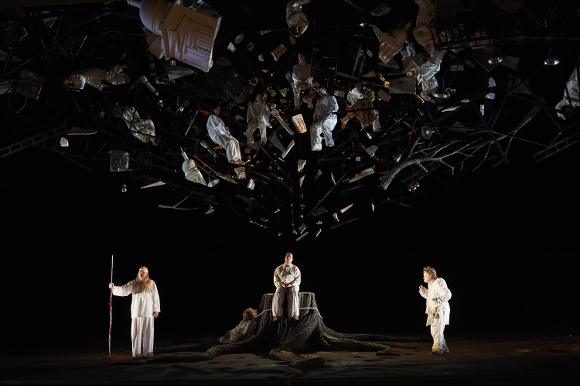
François Girard’s Siegfried, a revival of his 2006 production, opened last night at the COC. Despite using the same basic set concept as Atom Egoyan’s Die Walküre, Girard’s Siegfried, has a rather different look and feel. The fragments of Valhalla and the remains of Yggdrassil are still there but they are supplemented in imaginative fashion by a corps of supers and acrobats who play a key role in shaping the scenes. For example, in the opening scene we have Yggdrassil festooned with bodies, as if some enormous shrike were in residence. Some of these are dummies and some aerialists who come into the drama at key points. The flames in Siegfried’s forge are human arms. Acrobats make a very effective Fafner in the Niedhöhle scene and the flames around Brünnhilde’s rock are human too. Most of the characters are dressed in sort of white pyjamas which makes for a very monochromatic effect on the mostly dark stage. The one visual incongruity is the “bear” who is present, tied to Yggdrassil, throughout Act 1. Frankly it looks less like a bear than John Tomlinson after a night on the tiles. Still, all in all, the production is effective without being especially revelatory.
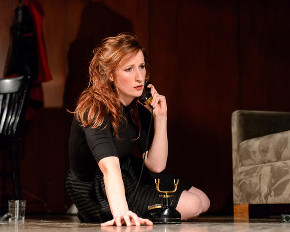 It’s another pretty busy week. There are two student shows today, both free. At 2.30pm in the MacMillan Theatre there’s a performance of a new opera based on EM Forster’s The Machine Stops. It’s by Patrick McGraw, Robert Taylor and Steven Webb. Sandra Horst conducts and Michael Albano directs. Then at 8pm in Mazzoleni Hall, Christina Campsall is performing Poulenc’s La Voix Humaine with Brahm Goldhammer providing piano accompaniment.
 FAWN Chamber Creative’s latest project is an opera called The Harvester. The libretto is adapted by Paul van Dyck from his own play of the same name and the music is by Aaron Gervais. The genesis (and we’ll come back to that) of the piece lies in the mind of soprano Stacie Dunlop who wanted a reduced orchestration version of Schoenberg’s Erwartung and a one acter that could be performed with the same band to form a double bill with it. Van Dyck’s play seemed to have the right stuff and Aaron was up for both parts of the project. Co-opting Kevin Mallon and his Aradia Ensemble and Amanda Smith to direct rounded out the project.
 I’ve spent a fair chunk of time this week following Barbara Hannigan’s stint as Stratton Visiting Artist in Music at the University of Toronto. I went to a lecture on Tuesday, a masterclass on Thursday and a concert yesterday. Twice already I have sat at the keyboard to try and document my impressions and failed miserably. It’s rare that I’m lost for words but Ms. Hannigan is really hard to describe. This time I shall apply myself with the sort of iron will that she exudes.
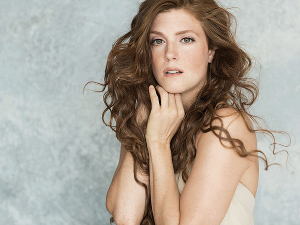 GGS and Ensemble Studio graduate Wallis Giunta will be returning to Toronto in early February for Tapestry Opera’s New Opera 101 program and the two concerts of Tapestry Songbook VI. Basically, she will be working with Jordan de Souza and a group of emerging artists on a three day series of workshops in contemporary opera which will include two concerts open to the public on February 5th and 6th. I spoke to her via Skype yesterday at her current digs in Leipzig.
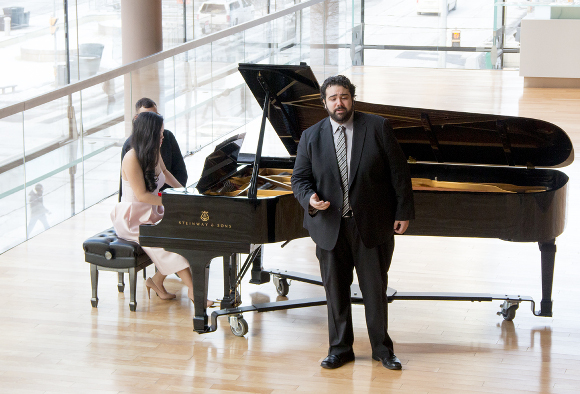
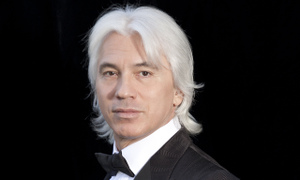 The program for Dmitri Hvorostovsky’s February 21 recital at Koerner Hall has been released. It is: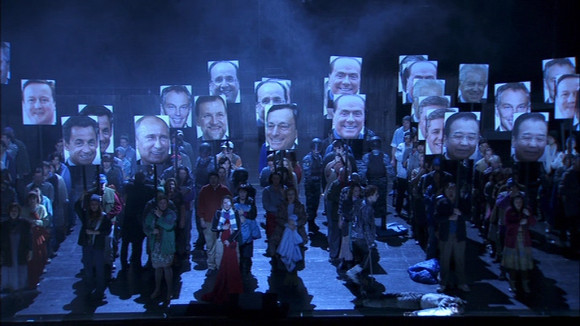
 operaramblings