
What are we to make of Handel’s Ariodante? The plot centres on the notion that female chastity is the be all and end all of life. It’s not a notion that would find much support in 21st century Toronto, even among a Sunday afternoon audience at the Four Seasons Centre. Ginevra, princess of Scotland and heir to the king, is betrothed to Ariodante. Ariodante has a rival, Polinesso who is loved in a besotted kind of way by Ginevra’s maid, Dalinda. Polinesso claims to have slept with Ginevra and offers to prove it to Ariodante. He drugs Ginevra and gets Dalinda to put on Ginevra’s clothes and invite him into her room. Ariodante disappears, apparently having committed suicide in a fit of despair. On the flimsiest of evidence Ginevra, who has no idea what happened, is condemned to death. Her accusers, including her father, don’t even bother to ask who the man in her room was. Polinesso tries to remove the now inconvenient Dalinda from the scene but fails and when Ariodante shows up again she spills the beans. Polinesso is killed by Ariodante’s brother in a duel but not before confessing. All is forgiven and everyone carries on as if nothing in the least traumatising just happened. So, what to do with this?


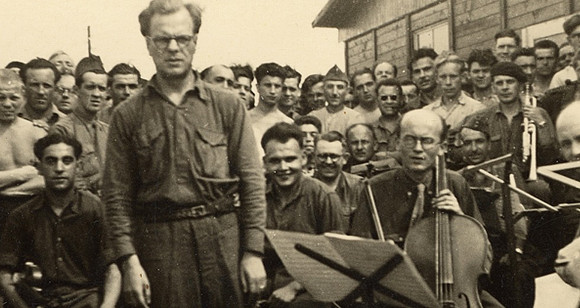
 Last night’s Soundstreams Koerner Hall presentation; Magic Flutes was an interesting experience. Aside from interesting (mostly) contemporary flute pieces it was very much an experiment in different ways of staging a concert. I’m all for breaking down the conventions of Mahlerian solemnity and I think experimentation is great. It’s in the nature of taking risks though that some things don’t quite work.
 Last night Christina Haldane gave her first DMA recital at Walter Hall. The inspiration was a painting by Manet and the programme was almost entirely made up of chansons from the late 19th and early 20th centuries; Offenbach, Charpentier, Duparc, Debussy and Berlioz. The exception was the cycle The Living Spectacle by Erik Ross which closed out the first half. I could have used more variation of mood and style.
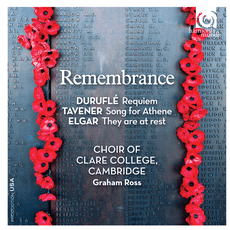 Remembrance is a new CD, on the Harmonia Mundi label, from the Choir of Clare College and their director Graham Ross to be released October 21st in time for poppy season. The main event is a performance of Duruflé’s Requiem given here in the composer’s organ reduction. It’s recorded in Lincoln Cathedral with its great Father Willis organ. It’s a very polished performance with a fair bit of drama. There’s some lovely singing and cello playing from mezzo Jennifer Johnston and cellist Guy Johnston in the Pie Jesu and bass Neal Davies also makes a couple of trenchant contributions. It’s not one of the most performed requiems but definitely worth a listen.
  Considering we begin with a holiday weekend it’s a busy week. Tuesday sees Dimitry Ivashchenko and Rachel Andrist in recital in the RBA at lunchtime with a program of Russian song that, inevitably, includes Mussorgsky’s Songs and Dances of Death and works by Rachmaninov, Borodin, and Tchaikovsky. At 7.30pm that evening Christina Haldane is giving a DMA recital in Walter Hall. This isn’t your usual student gig. Christina has covered at Salzburg and the Royal Opera and made main stage appearances in several European countries. Both recitals are free.
 VOICEBOX:Opera in Concert has announced details of their upcoming season. There are four shows:
