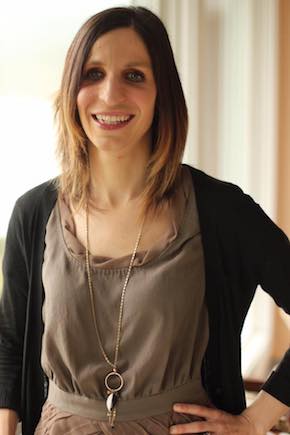
 I met with Laurie Rubin today to talk about her upcoming show with Liz Upchurch and Amplified Opera; The Way I See It. Laurie is a mezzo-soprano and she’s been blind since birth. All she can perceive visually is dark and light. We talked about her life growing up and as a professional singer and the upcoming show.
The bio is interesting going from a fairly toxic high school environment in Los Angeles where music was pretty much her salvation, to Oberlin where she first appeared on stage in actual opera to Yale Opera, which took her on the strength of her voice and then didn’t cast her in anything in her two years there (which clearly still hurts), and on to a professional career based in New York. She’s done a lot of new music including creating the role of the voice/witch in Lisa Bielawa’s episodic opera, Vireo, written for broadcast which aired in June 2017 on KCET Los Angeles and creating, with her wife Jenny Taira, an arts program in Hawaii; Ohana Arts, which in turn led to the creation of a musical Peace on Your Wings, about the life of a young Japanese girl who suffered from the Hiroshima bomb, which toured the Hawaiian islands and the US west coast. If all this, and performances too numerous to list, weren’t enough she wrote a book, Do You Dream in Color? Insights From a Girl Without Sight, which in turn became a one woman show. She has also recently become a mother.
Continue reading →

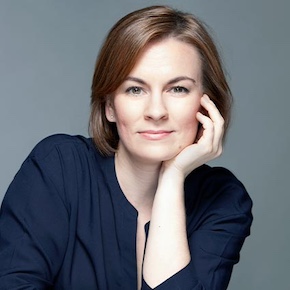 On Wednesday I sat down with Daniela Candillari at the COC’s office for a chat about her approach to opera, conducting and so on. Daniela is in Toronto to conduct the upcoming revival of Rossini’s The Barber of Seville at the COC. It’s her first Barber and something of a change of pace for someone who has conducted mainly contemporary opera including world premieres at Opera Philadelphia (for example, Jeanine Tessori’s Grounded and Rene Orth’s 10 Days in a Madhouse) and Opera Theatre of St. Louis where she is Music Director (Ricky Ian Gordon’s This House, among others). Continue reading
  A couple of days ago Joseph So interviewed Alexander Neef about various aspects of the current situation in a session organised by the IRCPA. Inevitably and appropriately it focussed heavily on the challenges facing performers; especially those at the beginning of their careers, but there were a couple or three things not related to that that really caught my attention.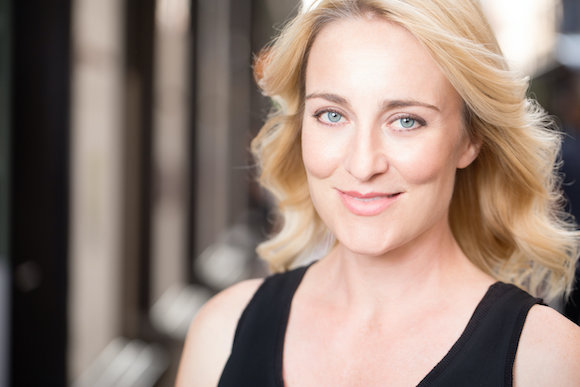
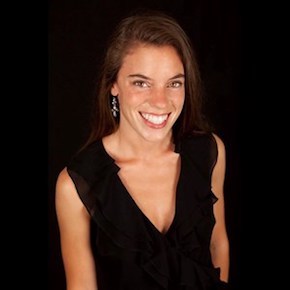 I chatted this morning with Rachael Kerr; music director of Against the Grain’s upcoming Figaro’s Wedding. I saw the
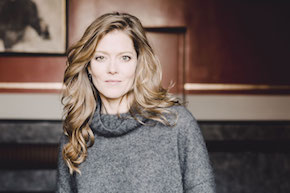 Last evening I attended a session with Barbara Hannigan under the auspices of the IRCPA. The format was an interview with William Littler followed by audience Q & A. In many ways it was typical Hannigan. She came across as smart, incredibly driven, analytical and with quite a wicked sense of humour. This I have seen before and there wasn’t much about her work methods that added to the information in
 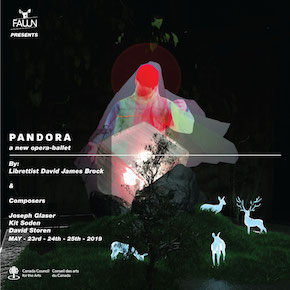 FAWN Chamber Creative and its artistic director Amanda Smith see themselves as pioneers. They champion inter-disciplinary works that don’t fit easily into any taxonomy of music, theatre or dance styles. Their latest venture; Pandora, an “opera/ballet” on a classical theme, might seem straight from the court of Louis XIV but Lully likely wouldn’t have scored it for drums, a piano, an electric guitar, a cello, a bassoon and electronics. The Sun King would likely also be somewhat taken aback by Jenn Nichol’s choreography; her long association with Opera Atelier notwithstanding.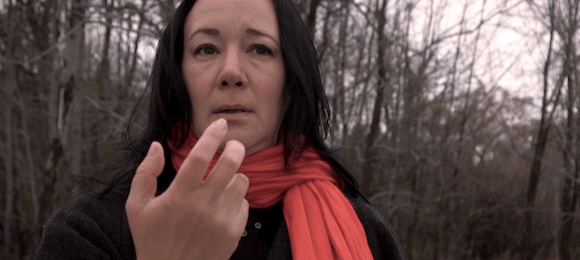
 I’m always a bit intrigued when someone comes up with a new technology solution for an old problem. If that solution is riding a particular technology trend I’m even more intrigued so when I saw PR material that a start up was creating a “platform” for linking agents, singers and casting personnel in the classical music business I wanted to find out more. Yesterday I spent some time with Danish tenor and entrepreneur Sune Hjerrild to find out what
  operaramblings