
 Miss Donnithorne’s Maggot is a sort of companion piece to Peter Maxwell Davies’ Eight Songs for a Mad King. Indeed, the idea was suggested to the composer by the librettist at the after party for the premier of Eight Songs, or at least so Maxwell Davies claims in the interview that follows the performance on the recording.
The idea comes from the life of a reclusive lady in Sydney who may have been the model for Dicken’s Miss Haversham. She’s a bit nuts but in an altogether less depressing way than king George. It’s another theatrical performance piece (apparently repeating many of the gestures from Eight Songs but, obviously that’s not apparent in an audio recording). Once again the piece is scored for.vocalist, this time a mezzo, and small ensemble. The degree of extended vocal technique required here is less than in the earlier piece, maybe on a par with something like Pierrot :Lunaire. The ensemble though is supplemented with all kinds of toys including four metronomes, a football rattle and a whistle.
 Fetter and Air was originally created by composer Dominick DiOrio and sound engineer Justin “JG” Geller as an eight channel public soundscape/display in Philadelphia. It’s now been remixed to stereo and released as a CD. It’s a kind of COVID memorial. Members of the Mendelssohn Chorus of Philadelphia separately recorded their reactions to the pandemic and DiOrio set some of it to music. The result was 562 audio files which were then mixed down into a single twenty-seven minute track.
 There’s no shortage of pandemic inspired music out there but I figured I wanted something that more closely evoked the sheer madness of life in Ontario right now. So, I turned to a 1969 piece by my fellow Manc Peter Maxwell Davies. It’s his Eight Songs for a Mad King inspired by that nutty old Hanoverian George III. The genesis of the piece is quite complex. It involves a music box, once owned by the king but by 1968 in the possession of the historian Steven Runciman. Once used by the king in an attempt to teach bullfinches to sing, it provides the inspiration for the eight “tunes” that make up the Eight Songs. The libretto is largely drawn from the king’s own words and other contemporary sources.
 American mezzo Sasha Cooke’s reaction to the endless cancellations and disappointments of 2020 was to get seventeen pairs of composers and writers to each create a song that encapsulated 2020 for them. She recorded the results with pianist Kirill Kuzmin to create the album how do I find you? As we come to the end of 2021 I find myself reflecting on how we have coped so far and what’s to come. Other people’s experience expressed in music perhaps helps.
 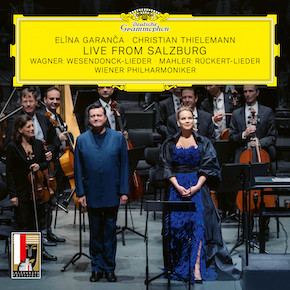 Live from Salzburg is a new CD featuring music recorded live at Salzburg during the pandemic. The performers are Elīna Garanča, The Vienna Philharmonic and Christian Thielemann. There are two sets of songs; Wagner’s Wesendonck Lieder (recorded in 2020) and Mahler’s Rückert Lieder (recorded in 2021). Both recordings were made during live performances in the Großesfestspielhaus.
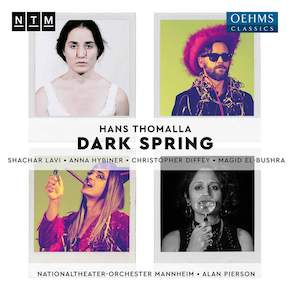 I came across Hans Thomalla’s 2019 opera Dark Spring when the record label Oehms gave me access to a pre-release of the CD version which is to be released in a couple of days time. Listening to a couple of scenes and looking at the photos in the accompanying booklet suggested to me that this was really an opera I needed to see to fully appreciate and, indeed, it turns out that there’s a lot going on that isn’t explicit in the libretto. Fortunately, as it turns out, there’s a full video recording on Vimeo. It’s not the greatest technical quality of all time but it is drawn from the same live performances at the work in Mannheim in the fall of last year as the CDs. The CDs are excellent high quality (48kHz, 24 bit) CD quality. So I think there’s a case for tracking down the video and the CD recording.
 My main reason for getting my hands on a new CD of mainly orchestral music by Sibelius featuring the Bergen Philharmonic and Edward Gardner was to listen to the couple of tracks that feature soprano Lise Davidsen. I first saw her with the TSO in 2019 and I thought
 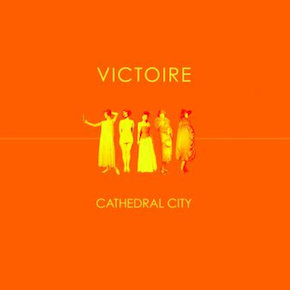 Cathedral City was the (2010) debut album of Missy Mazzoli’s ensemble Victoire. All the tracks are music composed by Mazzoli and give a pretty good feel for her non-operatic output. It’s been described as a “distinctive blend of post-rock dreamscapes and quirky minimalism” and that seems as good a description as any. Virtuosic instrumental playing is mixed with live vocals, electronics and distorted recorded speech fragments. Often the material is looped and the basic acoustic changed to create a different sound scape. The music is by turns, drivingly energetic, brutal and gently lyrical. It’s like the work of no other composer I know and I find it really compelling.
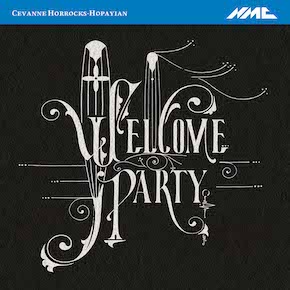 Welcome Party is a new record of music by British-Armenian composer Cevanne Horrocks-Hopayian. Much of it is inspired by her residency with the LSO at 575 Wandsworth Road. That house, now a National Trust property, was the home of Kenyan born polymath and poet Khadambi Asalache, who decorated it with his own wood carvings and murals. Asalache’s poetry provides the texts for several pieces and others are inspired directly by the house and its contents. The house is also a factor in the composer’s visual scores which sometimes use visual elements in the house to shape the music and inspire the improvisatory passages. COVID looms large on the album too; from personal tragedy to the conditions under which many of the recordings were made.
  operaramblings