
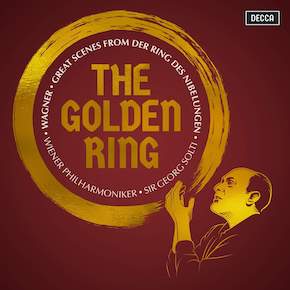
 Georg Solti’s recording of Wagner’s Ring cycle made between 1958 and 1966 has probably had more words written about it than any other classical recording. They are perhaps best. summed up by Gramophone Magazines comment that it is “The greatest of all the achievements in the history of the gramophone record”. It’s an amzing cast that no-one could afford to assemble for a studio recording today, it’s the Wiener Philharmoiker and, of course, Solti himself. But most opera lovers and certainly the audiophile ones will know all this. So why am I writing about it?
The Golden Ring
5
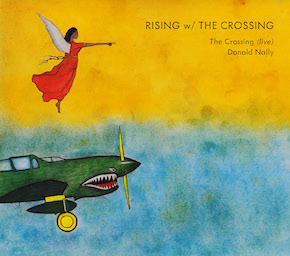 As I understand it the genesis of this recent CD from Philadelphia choir The Crossing and their conductor Donald Nally was members emailing each other clips of recordings from live concerts to keep their morale up during lockdown. I guess in that respect it’s got something in common with
 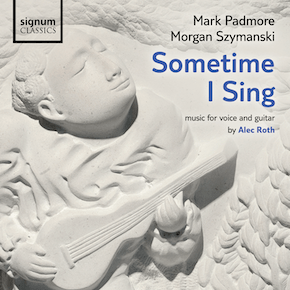 Sometime I Sing is a CD of music for tenor and guitar by Alec Roth performed by Mark Padmore and Morgan Szymanski. The most substantial work is My Lute and I which sets nine poems by 16th century poet and courtier Sir Thomas Wyatt. There’s a definite attempt here to evoke the lute with the result that the guitar part is quite muted, The texts are fairly conventional love poetry of the period and there’s a fair bit of melodic invention in the vocal line. For some reason “How?” is largely set to the tune of “The Seeds of Love”. Padmore sings very clearly and beautifully in a characteristically English way. So pleasant to listen to but not very exciting.
 Alburnum is a record of contemporary American art song from baritone Brian Mulligan (Torontonians may remember him as Enrico in the COC’s 2013 Lucia di Lammermoor) and pianist Timothy Long. There are two substantial pieces; each about 26 minutes long. The first is Walden by Gregory Spears and it sets four prose extracts from Thoreau’s work with an extremely minimalist piano accompaniment. I’m not really sure about turning prose into song and I’m not a huge Thoreau fan. Perhaps if I were I would have found this more interesting. It’s pleasant enough; it’s tonal and somewhat melodic and Mulligan has a pleasant voice but I wasn’t excited.
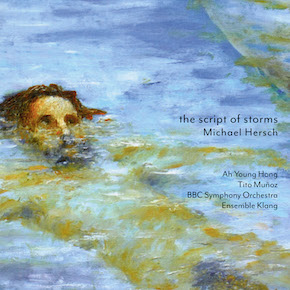 the script of storms is a new record of music by Michael Hersch. It contains two pieces; each just under thirty minutes long. The first, cortex and ankle, sets fragments of poems by Christopher Middleton. The general theme is death and decay so it’s not exactly cheerful. It was written for the Klang Ensemble and is scored for their combination of saxophones, trombone, keyboards, percussion, guitar and electronics plus soprano; in this case Ah Young Hong. The vocal line is mostly high sustained notes sung with little or no vibrato though at times it becomes speech or near speech. The accompaniment varies from extremely sparse; just the occasional note from the piano, to quite dense and sometimes abrasive and dissonant. The overall effect is quite disturbing. The recording was made in the Jurrianse Zaal (Rotterdam) in 2016.
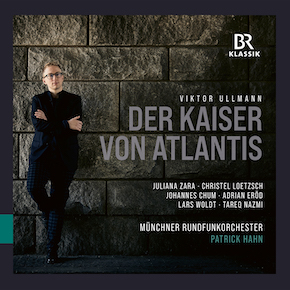 Viktor Ullmann’s “one act play” Der Kaiser von Atlantis gets talked about a fair bit but fairly rarely performed. Operabase lists only three productions worldwide in the last five years. It was written in Theresienstadt to a libretto by Peter Kien and nether composer nor librettist survived the war. It’s quite short; well under an hour, and is usually seen as a parody of Hitler and the National Socialists. I think it’s quite a gentle parody though, especially given when and where it was written.
 Continuing the contemporary CanCon theme I’ve been listening to Bestiaries; a CD of music by Bekah Simms. I first heard her music at the TSO in June and liked it enough to want to explore further. There are three pieces on the CD; each a little over ten minutes long. The first, Foreverdark, is a 2018 piece for solo cello, chamber orchestra and live electronics. It’s inspired by the compose and cellist Amahl Arulanandam shared love for metal and quotes from iconic metal albums. I’m not a metal fan but I am intrigued to hear younger composers using ideas drawn from more popular genres. Think Missy Mazzoli and electronic dance music. It’s no different really from Ralph Vaughan Williams using folk songs or Michael Tippett aking ideas from blues music. The result here is heavy textured, weird and chaotic with Arulanandam using all parts of the cello and acoustic instruments of the orchestra (the Cryptid Ensemble conducted by Brian Current) made to sound like electric, amplified ones with all the effects one usually gets from electronic manipulation generated acoustically.
 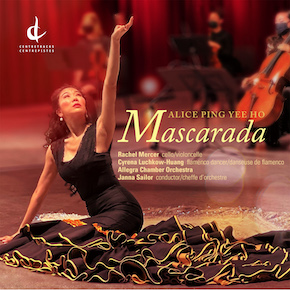 It’s not everyday you come across a work for cello, chamber orchestra and flamenco dancer but Alice Ping Yee Ho has created one. It’s about fifteen minutes long and, as one might expect in a sort of homage to the genre, it’s melodic and percussive. It was recorded in a Vancouver performance featuring Rachel Mercer on cello and dancer Cyrena Luchkow-Huang with the all female Allegra Chamber Orchestra and conductor Janna Sailor. There’s some interesting choreography beautifully danced as well as excellent music making. The sound and picture quality on Youtube is excellent and the EP version sounds fine in standard CD quality. It’s also available in other formats.
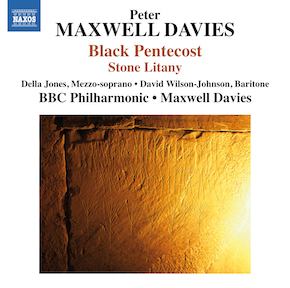 Continuing my exploration of the music of Peter Maxwell Davies I’ve been listening to a 1992 recording of a couple of very different pieces inspired by Orkney. The first is Black Pentecost from 1979. It’s somewhere between an orchestral song cycle and a symphony inspired by the threat to start mining uranium ore on Orkney (which also produced the very lovely piano piece Farewell to Stromness). It’s a four movement work for orchestra, mezzo-soprano and baritone and it’s uncompromisingly modern in idiom. The text depicts environmental destruction and decay and “the Controller”s increasingly strident justification of it as necessary to “human progress”. It begins with orchestral music evocative of the unspoiled landscape but becomes increasingly tougher with menacing brass and percussion and screechy vocals from the baritone before collapsing into a matter of fact description of environmental degradation.
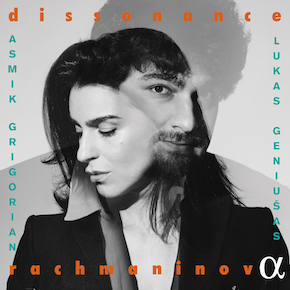 Dissonance is a new CD of Rachmaninov songs from Lithuanian pair Asmik Grigorian and Lukas Geniušas. Regular readers will know Ive been getting quite excited by Ms. Grigorian’s opera performances so I jumped at the chance to hear her sing art song; especially paired with Geniušas who is more of a concert pianist than an accompanist.
 operaramblings