
 Serious Cabaret is an album by singer Mary Carewe and pianist Philip Mayers who is also responsible for the arrangements. It’s an eclectic mix of cabaret material from the 1920s to the 1970s. There’s classic material from the Weimar Republic, including songs by Hollaender (“Oh just suppose”) and Spoliansky (“Maskulinum/Femininum”, “It’s All a Swindle”) and one I hadn’t heard before; Zemlinsky’s “Herr Bombardil” about a man who eats until he explodes. Continue reading
Serious Cabaret
Reply
 love to my liking is an album of 13th century Trouvère music from Brooklyn based ensemble Alkemie. It’s in many ways similar in style to the music of the troubadors of what is niow Southern France but being from the North the texts are in medieval French rather than Occitan. There’s a range of songs, dances and motets on the record including some in a form I hadn’t encountered before; where two, or even three, distinct texts are sung simultaneously by different singers.
 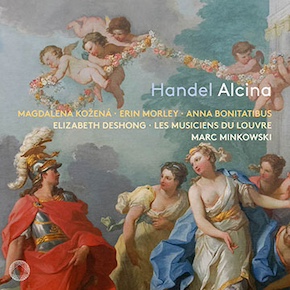 The new recording of Handel’s Alcina from Marc Minkowski, Les musiciens du Louvre and a rather starry line up of soloists is very good and quite interesting. It’s very complete. As far as I can tell all the ballet/dance music is included and so are all the Oberto scenes and all his arias. In all the staged performances I’ve seen (live or video) one or both are usually heavily truncated and I have seen versions where Oberto doesn’t feature at all.
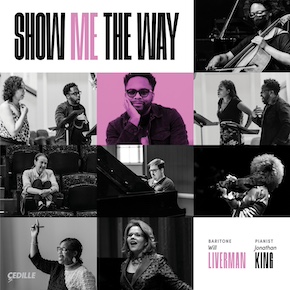 Show Me The Way is a new double CD from baritone Will Liverman, pianist Jonathan King and various collaborators featuring vocal works by female American composers. It draws on a wide range of influences from Ella Fitzgerald to Will’s mother.
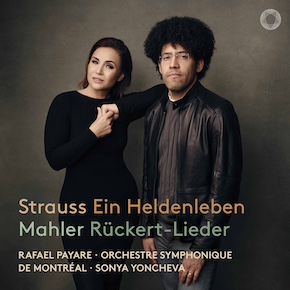 It’s an interesting idea for a CD to couple an exuberant early Strauss tone poem with a extremely introspective Mahler song cycle and that’s what L’Orchestre Symphonique de Montréal have done for their upcoming release with conductor Rafael Payare. I’m not especially familiar with Richard Strauss’ Ein Heldenleben Op. 40 but it sounds suitably Straussian and it gets a full blooded treatment from Payare with the solo violin part played quite beautifully by Concertmaster Andrew Wan.
 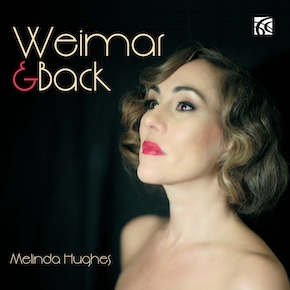 After discovering a rare Viktor Ullmann video, the Shoah Songbook concert and seeing Ute Lemper live I decided to go off and have a look for more music from Weimar, the Holocaust and resistance to Nazis; past and present. It was an interesting haul and included a 2018 album from English cabaret singer/comedienne Melinda Hughes.
 Handel’s Theodora is probably performed more nowadays as a staged opera than as an oratorio. The same is true for several of his other English language oratorios; notably Semele. It was in that format I was introduced to Theodora by
 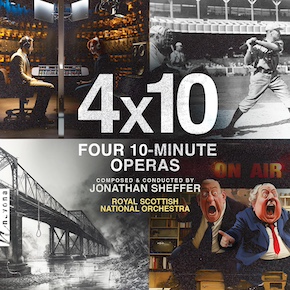 4×10: Four Ten Minute Operas is a new record from the Royal Scottish National Orchestra and composer/conductor Jonathan Sheffer. It’s a bit like a Tapestry “shorts” show but with orchestral accompaniment. There are, indeed, four operas which last roughly ten minutes each. All are to English language texts.
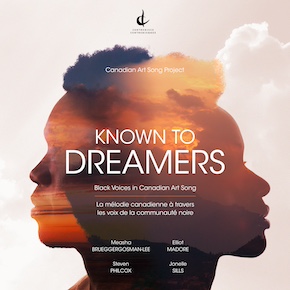 Known to Dreamers: Black Voices in Canadian Art Song is a new CD from Centrediscs and the Canadian Art Song Project containing Canadian art songs composed by or setting lyrics by Black Canadians, sung by Black Canadians. The first set on the disk is Robert Fleming’s The Confession Stone (Songs of Mary) which sets texts by Owen Dodson’s texts about the life of Christ from his mother’s point of view. It’s a very beautiful piece and must be in the running for the most performed Canadian song cycle of all time! Curiously though it’s only been recorded commercially once before (by Caroline Gélinas on ATMA Classique). The singer here is Measha Brueggergosman-Lee. She wouldn’t be my first choice for this piece but she sings it pretty well. I find her style a bit mannered but she’s accurate and her diction is good. Steven Philcox accompanies with great skill (as he does on all the tracks).
 Kamp! – Songs and Satire from Theresienstadt is a 2016 album recorded by Amelia DeMayo, Curt Buckler & Sergei Dreznin (piano) under the auspices of the World Jewish Congress. It’s a collection of 25 more or less satirical songs written in the Theresienstadt camp/ghetto by the likes of Leo Straus and Ilse Weber. They are presented here in English translation and in a breezy cabaret style which is very apt and which I liked very much.
 operaramblings